
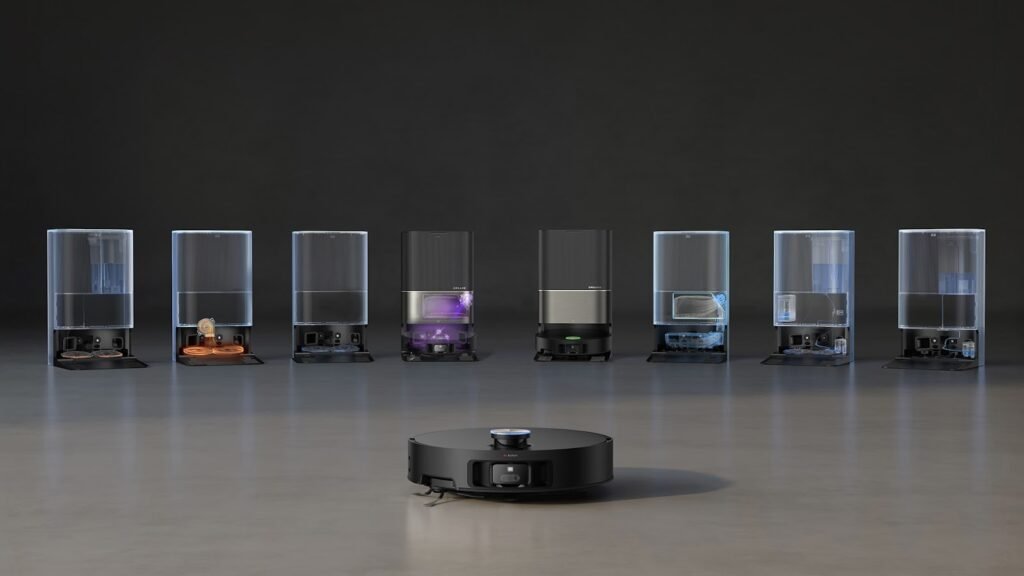
The landscape of home cleaning technology is undergoing a significant transformation, moving from passive convenience to autonomous efficiency. The latest advancements in smart home devices now actively engage in household tasks, particularly in the realm of floor care. This evolution is characterized by a shift from manual cleaning tools to sophisticated robotic systems that perform tasks previously reliant on human effort.
The Rise of Autonomous Cleaning Technology
For many years, the concept of a “Smart Home” primarily revolved around devices that enhanced convenience, such as connected lighting and programmable thermostats. These innovations allowed users to control various aspects of their home environment, but they typically required user interaction to function. The emergence of Smart Home 2.0 marks a pivotal change.
Now, devices are equipped with advanced technologies that allow them to operate independently within a household. The most notable example of this shift is the evolution of robotic vacuums and mops. Once viewed as novelties, modern iterations leverage technologies like LiDAR (Light Detection and Ranging) and vSLAM (Visual Simultaneous Localization and Mapping) to create highly detailed maps of living spaces. These devices have evolved to plan cleaning routes efficiently, ensuring comprehensive coverage of floors without requiring constant user intervention.
Redefining Floor Care with Intelligent Robotics
The early versions of robotic vacuums often struggled with basic tasks, frequently becoming stuck or requiring manual assistance. In contrast, contemporary models have adopted advanced navigational principles similar to those used in self-driving vehicles. Equipped with sophisticated sensors and artificial intelligence, these robots can now identify and maneuver around obstacles, such as pet toys or charging cables, in real-time.
This new level of intelligence allows users to set cleaning schedules via smartphone apps, effectively enabling a “set and forget” cleaning experience. There is no need to prepare the environment; the robot can autonomously manage its surroundings, significantly reducing the time and effort traditionally associated with home cleaning.
Handheld cleaning devices are also experiencing a transformation. The traditional mop and bucket have been largely replaced by smart wet-dry vacuums. These advanced devices utilize sensors to adapt their cleaning power based on the conditions of the floor. For instance, high-end models can detect the density of dirt and adjust their suction and water flow accordingly. This eliminates the need for users to manually adjust settings while cleaning, as the device optimizes its performance autonomously.
Furthermore, the inclusion of self-cleaning features in these devices addresses common issues such as mold and odors, often associated with traditional cleaning tools.
Creating a Connected Ecosystem
The hallmark of Smart Home 2.0 lies in the interconnected ecosystems these devices create. Integration with voice assistants like Alexa, Google Home, and Siri allows users to issue commands using natural language. For instance, a simple request to “clean the kitchen” is executed immediately by the robot, streamlining the cleaning process.
Moreover, users can define “No-Go Zones” through dedicated smartphone applications, allowing for tailored cleaning experiences. This feature is particularly beneficial in households with children or pets, as it enables users to restrict cleaning in certain areas during specific times.
Maintenance alerts are another advantage of these advanced systems. Instead of waiting for a device to malfunction, smart diagnostics can notify users when maintenance is required, such as when a filter needs cleaning or a water tank requires refilling.
Investing in this next generation of smart home technology is fundamentally different from purchasing entertainment devices. The focus is on productivity and time reclamation. By delegating cleaning tasks to intelligent machines, users can reclaim hours previously spent on mundane chores.
In this new landscape, the floor is no longer a surface to clean; it becomes a space that is cleaned autonomously. This shift in functionality not only enhances the efficiency of household management but also alters how individuals interact with their living environments.
The journey from passive to active cleaning in smart homes signifies a profound change in domestic life, one that promises to redefine our relationship with household chores. The future of home cleaning is not just about having the latest gadgets; it’s about embracing technology that actively improves our quality of life.