
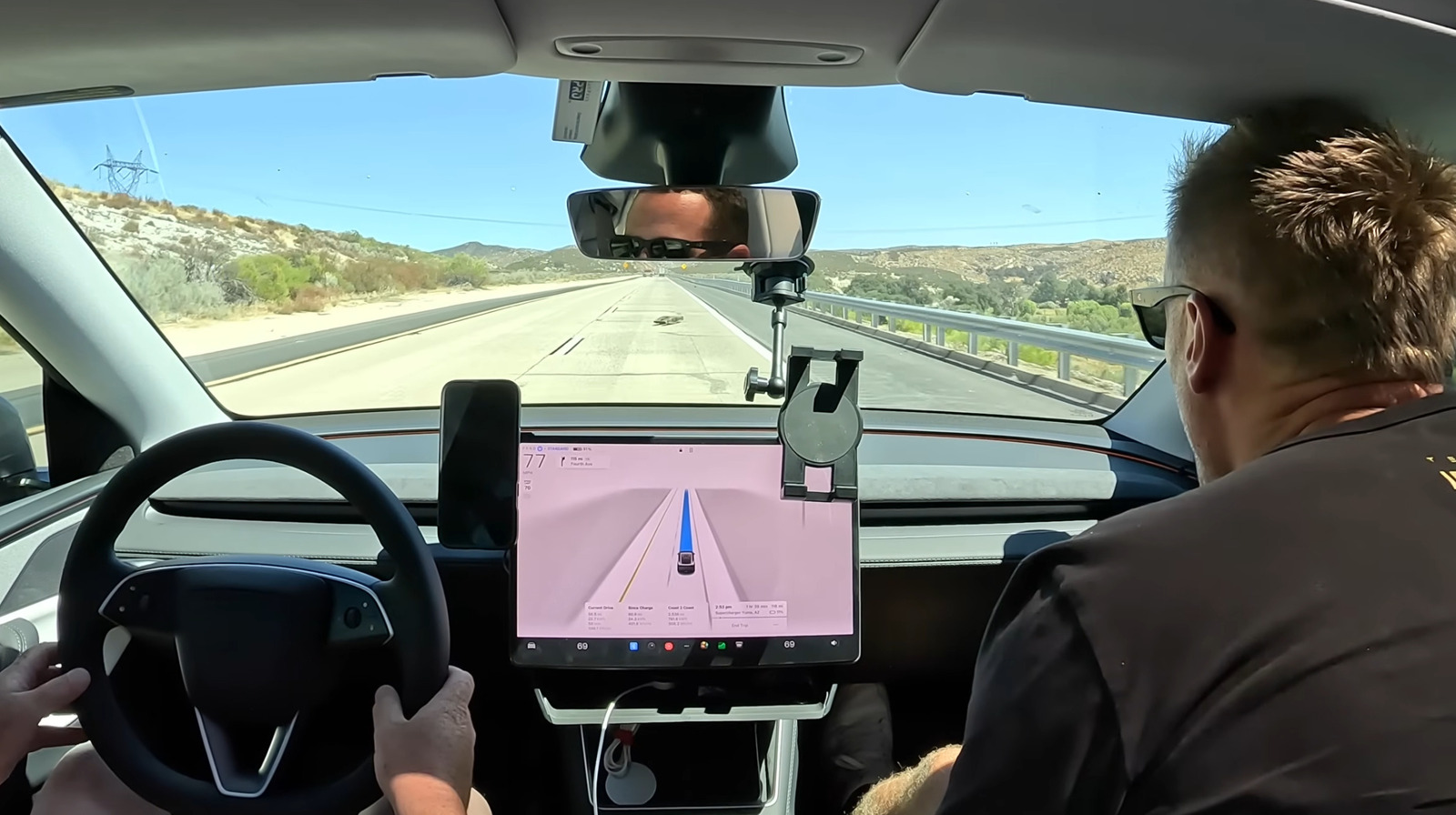
YouTuber Justin Demaree, known as the Bearded Tesla Guy, recently documented his attempt to test the Full Self-Driving (FSD) system of his Tesla Model Y during a cross-country road trip. The journey, intended to span from Orlando to San Diego, quickly took a turn for the worse just 60 miles in. Demaree’s vehicle struck a significant piece of metal on the highway, resulting in considerable damage and raising questions about the reliability of autonomous driving technology.
In the opening moments of the video, viewers can see the Model Y traveling at approximately 70 miles per hour when it hits the debris. This incident caused the loss of a sway bar bracket and damage to the bumper. Following the collision, Demaree learned that the vehicle’s battery was experiencing a cell imbalance, necessitating a visit to a service center in Arizona. While initial reports indicated the battery issues existed before the incident, it remains unclear if the FSD’s failure to slow down contributed to the overall damage.
Demaree’s experience has sparked a conversation about the responsibilities of drivers using self-driving technology. Following his encounter with the police, viewers questioned why he did not disclose that the FSD was engaged at the time of the accident. As self-driving cars become more prevalent, regulatory bodies are scrambling to establish legislation governing their use, including penalties for reckless driving.
The legal implications of self-driving technology have been highlighted by past incidents, such as the tragic case involving Elaine Herzberg, the first pedestrian killed by a self-driving vehicle. Research indicates that drivers may be placing excessive trust in these technologies, sometimes overlooking potential dangers. Notably, Tesla itself stresses that the responsibility lies with the driver to remain alert and ready to take control when using FSD. According to the Tesla Model 3 manual, “Traffic-Aware Cruise Control may not detect all objects” and could fail to respond appropriately in certain situations.
The financial repercussions of Demaree’s mishap were substantial. The damage from the highway incident amounted to approximately $22,000, with $17,000 attributed to a new battery. He faced the added pressure of potentially covering these costs, as Tesla’s warranty would likely not extend to damages incurred while operating the vehicle under FSD mode. Fortunately for Demaree, the battery was under warranty due to its pre-existing condition.
This incident serves as a critical reminder that while Tesla may cover damage resulting from autopilot failures, it does not take responsibility for damages incurred through non-compliance with its guidelines. Tesla emphasizes that drivers must remain “fully alert” when using FSD, ready to intervene if the situation demands.
Despite the setbacks, Tesla continues to develop its FSD technology, which remains a work in progress. The challenges associated with FSD highlight the ongoing difficulties the company faces in competing within the self-driving market. As the technology evolves, potential users might consider testing it in a more reliable vehicle model, ensuring they are fully aware of the associated risks.
Demaree’s experiences underscore the complexities surrounding autonomous vehicles and the need for both manufacturers and drivers to navigate this emerging landscape cautiously. As public trust in self-driving technology is tested, clear communication and adherence to safety protocols will be vital in shaping the future of road travel.