
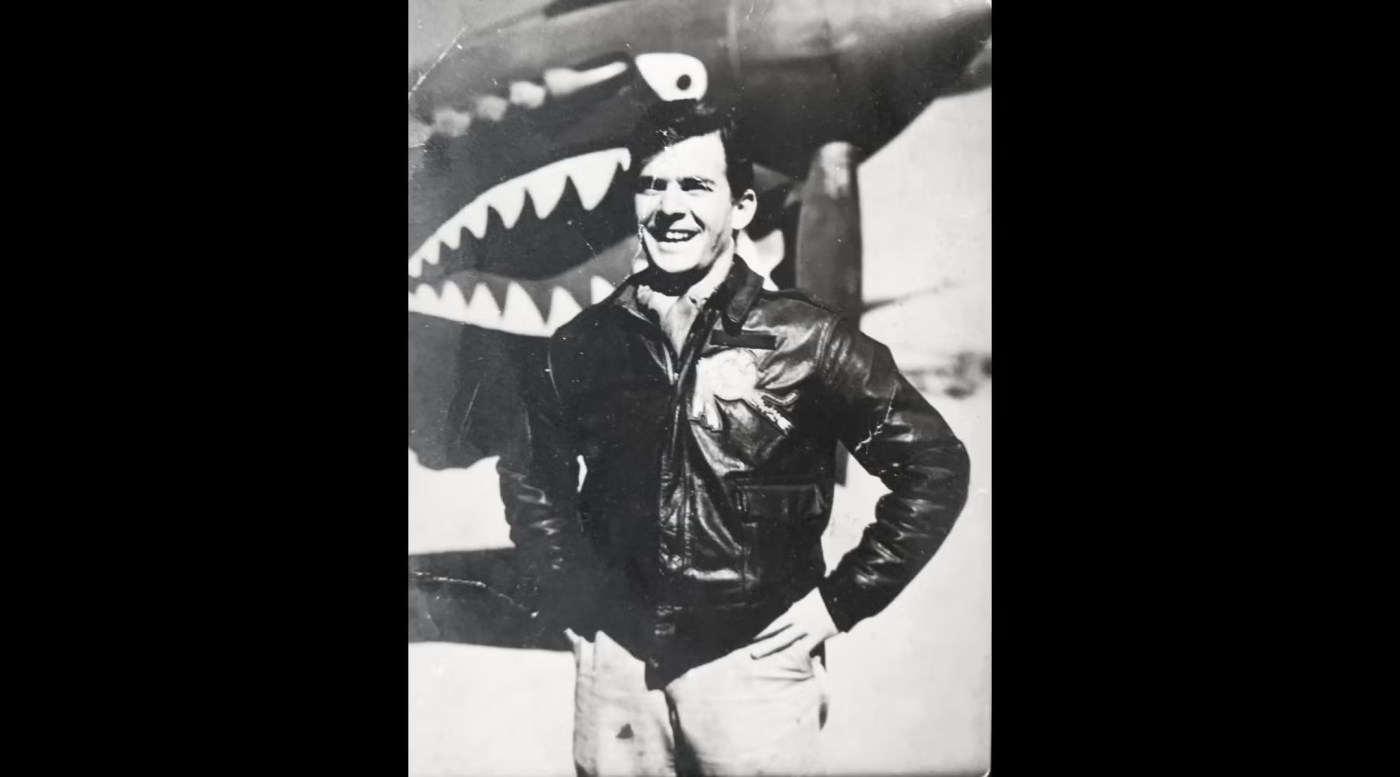
An American Jewish fighter pilot, Lt. Morton Sher, was laid to rest on December 14, 2025, in Greenville, South Carolina, 82 years after his plane was shot down during World War II. This burial coincided with what would have been his 105th birthday, marking a poignant moment for his family and the community.
Sher’s remains were identified earlier this year by the United States Department of Defense. He was a member of the renowned group known as the “Flying Tigers,” formed to defend China against Japanese forces following the attack on Pearl Harbor in 1941. On August 9, 1943, while piloting a P-40 Warhawk, Sher’s aircraft was downed by Japanese bombers. His mother, Celia Sher, received his Purple Heart that same year, a testament to his service and sacrifice.
Efforts to memorialize Sher began shortly after the war. His squadron established a memorial stone at the crash site in Xin Bai Village, China. In 1947, a review by the army concluded that his remains were destroyed, leading to the belief that they were unrecoverable. Despite attempts to locate the site in 2012 and 2019, both efforts did not yield results.
A breakthrough occurred when the Defense POW/MIA Accounting Agency excavated the crash site in 2024, leading to DNA analysis in April 2025, which confirmed the match in June. This successful identification provided closure for Sher’s family and honored his legacy.
Morton Sher was born on December 14, 1920, in Baltimore, Maryland. His family later moved to Greenville, where they became active members of the Conservative synagogue Congregation Beth Israel. During high school, Sher participated in the aviation club and enrolled in Reserve Officer Training Corps (ROTC). He was also a founding member of the B’nai B’rith Youth Organization’s Aleph Zadik Aleph chapter in Greenville, illustrating his commitment to both his faith and community.
His nephew, Steve “Morton” Traub, expressed profound admiration for his late uncle. Traub, who never met Sher but was raised by his grandfather, reflected on his uncle’s aspirations, stating, “He dreamed of being a pilot. This guy did a lot for his country. He was my hero.” Traub’s connection to Sher is deeply personal, as he feels a bond through the stories and letters he has encountered throughout his life.
The burial of Lt. Morton Sher not only honors his individual sacrifice but also serves as a reminder of the valor displayed by those who served in the Flying Tigers during a tumultuous period in history. His legacy continues to inspire future generations, and his final resting place in Greenville is a testament to the enduring impact of his service.