
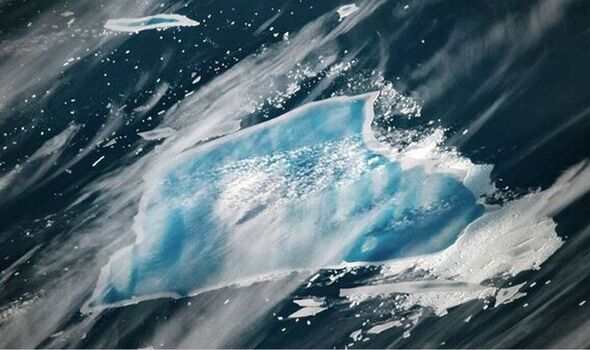
A significant transformation is occurring with the iceberg designated A-23A, which was once the world’s largest. This massive ice formation has developed a striking blue hue as it nears total disintegration, marking the end of a four-decade journey. Originally calved from Antarctica’s Filchner Ice Shelf in 1986, A-23A has diminished substantially, now exhibiting signs of rapid melting.
As of early January 2026, the U.S. National Ice Center reported that A-23A’s size has reduced to approximately 1,182 square kilometers, a dramatic decrease from its original expanse of 4,000 square kilometers, which was nearly double the area of Rhode Island. The iceberg lost significant portions of its mass between July and September 2025 as it drifted into warmer summer waters by December, leading to its current precarious state.
Indicators of Impending Disintegration
The change in color to blue is a clear indication of the extensive meltwater pooling in the iceberg. According to the NASA Earth Observatory, A-23A is “sopping with blue meltwater and on the verge of complete disintegration.” This phenomenon is not just a visual spectacle; it represents a critical environmental shift in the South Atlantic, where the iceberg is currently located, drifting between the eastern tip of South America and South Georgia Island.
Experts suggest that A-23A may completely disintegrate within days or weeks due to its deteriorating condition. Chris Shuman, a retired scientist from the University of Maryland Baltimore County, expressed skepticism about the iceberg’s longevity: “I certainly don’t expect A-23A to last through the austral summer.” He noted that while A-23A has had a notably long lifespan for an iceberg, its fate aligns with that of other Antarctic icebergs facing similar environmental challenges.
The Next Largest Iceberg
As A-23A approaches its end, scientists identify iceberg D15a, currently near Australia’s Davis Research Station, as the new titleholder of the world’s largest iceberg, measuring approximately 3,000 square kilometers. This shift highlights the dynamic nature of ice formations in polar regions and serves as a stark reminder of the effects of climate change on our planet’s ice reserves.
The disintegration of A-23A is more than just a loss of a massive iceberg; it underscores the ongoing and accelerating changes in our climate system. As the world continues to experience rising temperatures, the fate of A-23A serves as a poignant indicator of the broader impacts on the Antarctic ice sheets and global sea levels.