
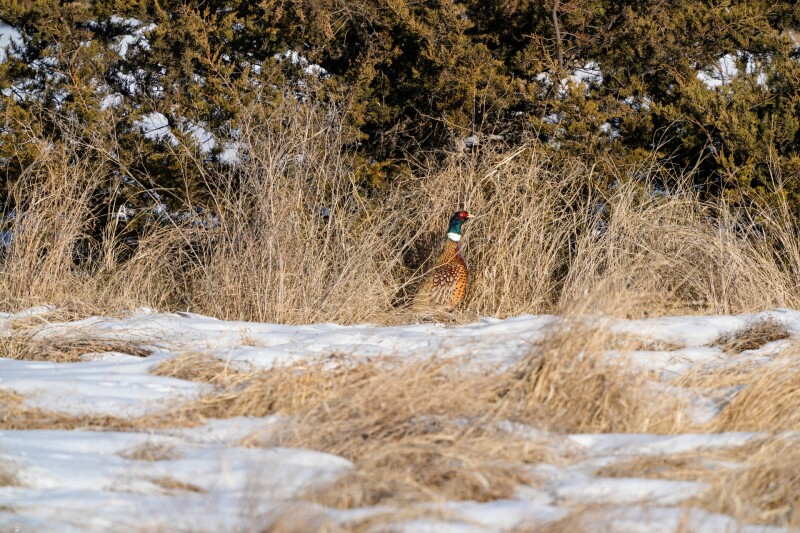
As winter lingers into March, wildlife in North Dakota faces significant survival challenges. While the days grow longer and hints of spring emerge, the reality for many animals, including pheasants and deer, is far from optimistic. Late winter often proves to be the most demanding period, with critical impacts on their survival rates.
Energy Reserves Dwindle Under Harsh Conditions
Pheasants and deer have already depleted much of their energy reserves due to prolonged cold temperatures, limited food availability, and recurring wind and snow events. By the end of winter, these animals find themselves with little margin for error, needing to conserve energy until conditions improve.
For pheasants, survival largely hinges on the availability of thermal cover and food sources. Areas that are snow-covered or iced over provide little assistance. Instead, open shelterbelts, cattail wetlands, and tall residual grass become vital for their survival during harsh weather. Birds that entered winter in good condition tend to fare better, but as the season progresses, fat reserves diminish, making the journey between cover and food increasingly strenuous.
Deer confront similar obstacles, though on a larger scale. Most deer have lost a significant portion of the fat they accumulated in the fall. Their winter coats help reduce heat loss, yet limited movement is crucial for energy conservation. Deer often concentrate in regions with suitable cover, utilizing established trails and bedding sites while minimizing exposure to the elements.
Late Winter Weather Events Heighten Mortality Risks
Late winter weather events can dramatically influence wildlife survival. Earlier winter storms typically pose less risk, as animals still possess adequate reserves. In contrast, severe snow, ice, or prolonged cold spells in late February and March can increase mortality rates among even the healthiest animals. Crusted snow can hinder movement, making it difficult to access food, while deep drifts may restrict their ability to navigate their environment.
For pheasants, snow covering waste grain or obstructing access to cattail cover can lead to starvation. Deer face similar challenges, as restricted access to browse or the necessity of traveling long distances between food sources and cover can lead to significant winterkill, particularly affecting fawns and older individuals.
Moreover, weakened animals become more susceptible to illnesses and predators, exacerbating their struggle for survival. In many instances, winter mortality is the result of cumulative stress rather than a single catastrophic event. While most winters do not result in widespread losses, the potential for mortality remains, even during milder winters.
If the weather remains moderate, wildlife may persist until conditions improve. As snow melts and temperatures rise, pheasants can regain access to food sources, while deer begin to shift towards early green-up, allowing them to rebuild their body condition. This underscores the critical importance of habitat availability.
Essential habitats, including shelterbelts, grasslands, wetlands, and standing food sources, support wildlife in maintaining their energy balance during late winter months. These resources are necessary every year, not just during harsh winters, as they help mitigate the impacts of weather variability.
Although many animals have successfully navigated the winter thus far, their survival remains uncertain until conditions stabilize consistently. The final weeks of winter are pivotal, with wildlife outcomes in spring largely determined by the availability of food, cover, and the weather during this critical period.