
UPDATE: New insights confirm that Windows 11’s virtual desktops outperform Linux workspaces in several critical areas, providing users with enhanced functionality and ease of use. This revelation is particularly noteworthy for professionals and multitaskers looking for efficient workspace management.
In a detailed analysis released earlier today, experts compared the virtual desktop features of Windows 11 with various Linux desktop environments, including KDE Plasma, GNOME, and Cinnamon. The findings indicate that Windows 11 offers superior organization and multitasking capabilities, making it a more user-friendly option right now.
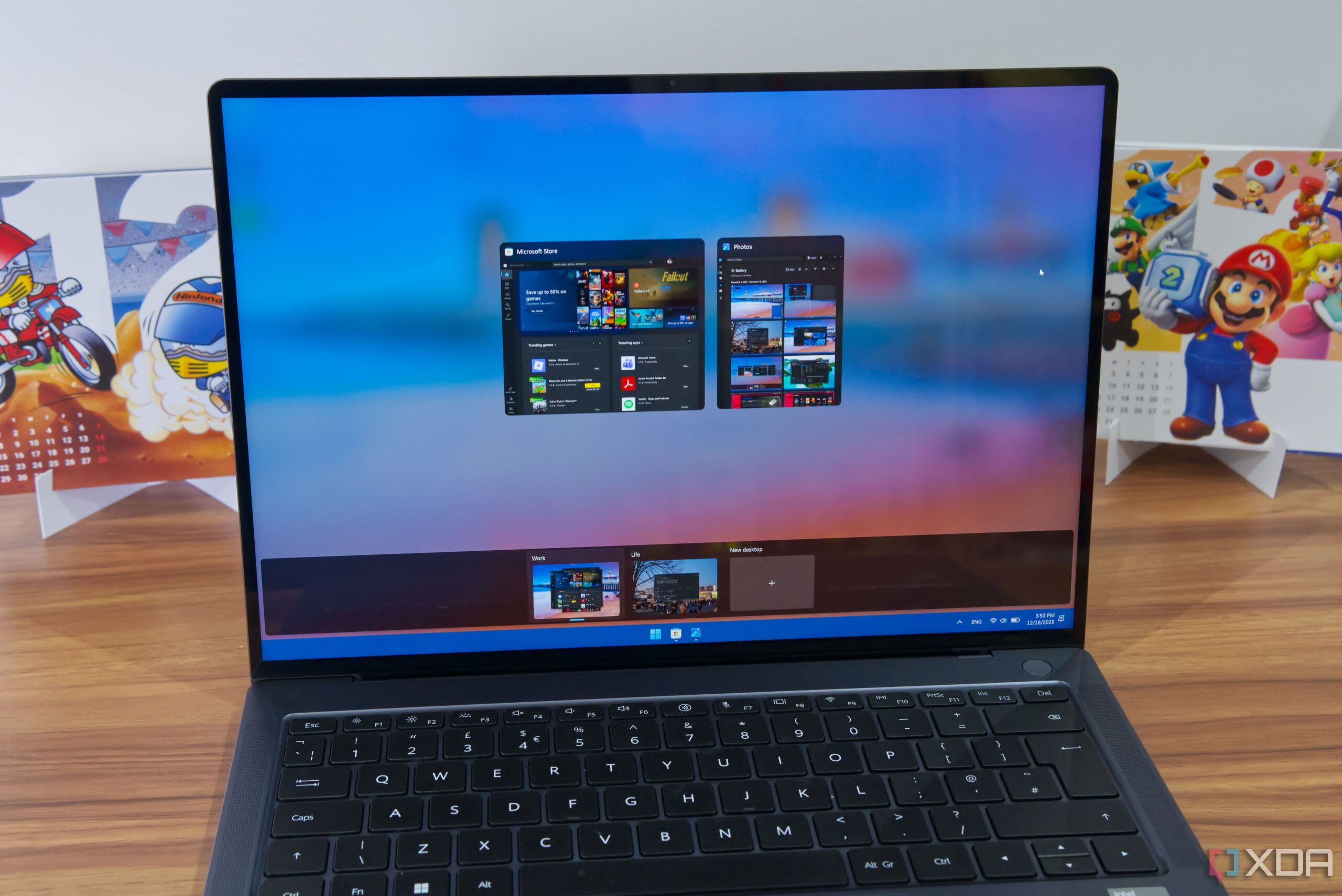
Windows 11 allows users to create distinct virtual desktops, each with its own set of applications clearly displayed, a feature that enhances focus and productivity. Unlike Linux environments, where app visibility can vary, Windows provides the ability to rename these workspaces, improving identification and navigation in the Task View.
Moreover, Windows 11 is the only platform enabling users to set unique desktop backgrounds for each virtual desktop, making it even easier to differentiate between them at a glance. This contrasts sharply with Linux, where any wallpaper change applies universally across all workspaces.
Why This Matters NOW: As remote work continues to dominate, effective workspace organization is crucial. The ease of multitasking on Windows 11—with features like Snap Layouts and Snap Assist—enables users to arrange windows into customizable layouts with minimal effort. When a user snaps an app into place, Windows automatically suggests compatible applications to fill the remaining space, streamlining workflow.
Linux environments, particularly GNOME, offer limited snapping capabilities, restricting users to basic window arrangements. This lack of flexibility could hinder productivity for those who rely on advanced multitasking.
The report also highlights the consistency of user experience on Windows 11 compared to the varying functionalities of Linux distributions. Switching between workspaces on Windows can be done effortlessly via keyboard shortcuts or touchpad gestures. In contrast, the experience fluctuates significantly among Linux distros. For example, while Cinnamon lacks touchpad gesture support, KDE Plasma offers unique shortcuts for immediate workspace switching.
Despite these advantages for Windows, the report does acknowledge that Linux environments can provide certain benefits, such as the ability to create separate workspaces for multiple monitors and a generally more responsive switching experience. However, achieving this often requires additional configuration and technical know-how, which can be a daunting task for less experienced users.
Next Steps: For individuals and professionals seeking a straightforward and effective workspace management solution, Windows 11 appears to be the clear choice. The user-friendly design and robust features of Windows 11’s virtual desktops offer a compelling case for those considering an upgrade or transition.
As technology continues to evolve, users should stay updated on the latest developments in workspace management tools. The findings from today’s analysis could significantly influence decisions for businesses and individuals alike, making it essential to consider the implications of these advancements on productivity and workflow efficiency.
For more updates on technology and workspace solutions, stay tuned to our coverage. The competition between operating systems is heating up, and it’s crucial to stay informed.