
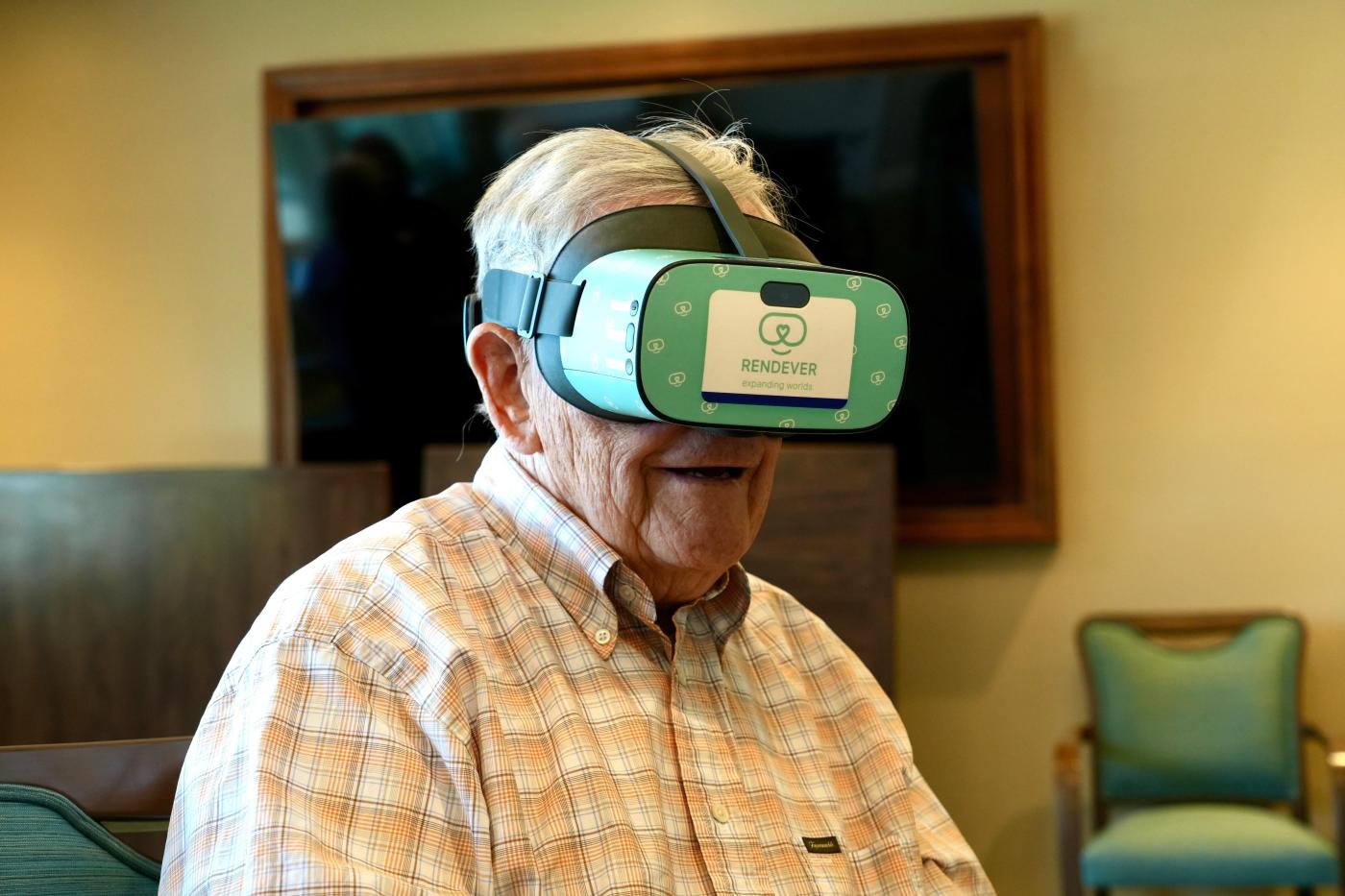
A retirement community in Los Gatos, California, is using virtual reality (VR) technology to enhance social connections among its residents. At The Terraces, seniors are engaging with VR headsets that transport them to various locations and experiences, rekindling their sense of adventure and enhancing cognitive well-being. This initiative is part of a broader trend in senior living, as communities adopt innovative technologies to counteract social isolation.
Bringing the World to Residents
Many residents at The Terraces, often in their 80s and 90s, now have the opportunity to explore places they may never visit again. With a simple headset, they can swim with dolphins or take a hot-air balloon ride, all while seated comfortably in their community. The programming is curated by Rendever, a company that specializes in using VR to foster connections among older adults. They currently serve over 800 retirement communities across the United States and Canada.
During a recent session, residents experienced a 3D underwater adventure. Ginny Baird, aged 81, expressed her enthusiasm, stating, “We got to go underwater and didn’t even have to hold our breath!” Another participant gasped in amazement during a virtual hot-air balloon ride, showcasing the immersive experiences that VR can provide.
VR technology also allows seniors to revisit their childhood neighborhoods. Sue Livingstone, 84, found her childhood home in Queens, New York, through a virtual tour. “It isn’t just about being able to see it again; it’s about all the memories that it brings back,” she noted. This capability can entice even the most hesitant residents to engage with new technology.
Connecting Through Shared Experiences
Community life director Adrian Marshall highlighted the social benefits of these VR experiences. As word spreads among residents, curiosity often leads to increased participation. “It turns into a conversation starter for them,” he said. “It really does connect people.” The shared experiences help residents discover common interests, fostering a sense of community.
Rendever’s initiatives are supported by a recent grant from the National Institutes of Health, amounting to nearly $4.5 million, aimed at studying ways to reduce social isolation among seniors. Research suggests that VR programming can enhance cognitive function and strengthen familial connections, though experts emphasize the importance of moderation. Katherine “Kate” Dupuis, a neuropsychologist at Sheridan College in Canada, cautioned against excessive screen time but acknowledged VR’s potential when used thoughtfully.
Researcher Pallabi Bhowmick from the University of Illinois Urbana-Champaign noted that VR headsets can be more accessible for seniors than traditional devices. “The stereotypes that older adults aren’t willing to try new technology need to change,” Bhowmick stated. She emphasized the engaging nature of VR, which not only entertains but also facilitates intergenerational connections.
Founded in 2016 by Kyle Rand, Rendever aims to address the emotional and mental challenges associated with aging. Rand’s interest stemmed from his personal experiences with his grandmother, motivating him to create a platform that enhances social connectivity. “A group of elderly residents who don’t really know each other can come together, spend 30 minutes in a VR experience, and then find themselves sitting down to have lunch together while continuing a conversation about the experience,” he explained.
Other companies, like Mynd Immersive, are also entering this growing market, providing tailored VR services for senior living communities. Both Rendever and Mynd Immersive offer programming that may help mitigate the effects of dementia, enhancing the quality of life for residents.
In another retirement community, The Forum, VR technology allows residents to experience nature and past memories. Bob Rogallo, a resident with dementia, found joy in a virtual hike through Glacier National Park, celebrating his 83rd birthday with his wife. “It made me wish I was 30 years younger so I could do it again,” said his wife, reflecting on the nostalgia VR can evoke.
The use of VR in retirement communities like The Terraces illustrates a significant shift in how technology can enhance the lives of older adults. By fostering social connections and providing immersive experiences, VR is proving to be a valuable tool in combating loneliness and isolation among seniors.