
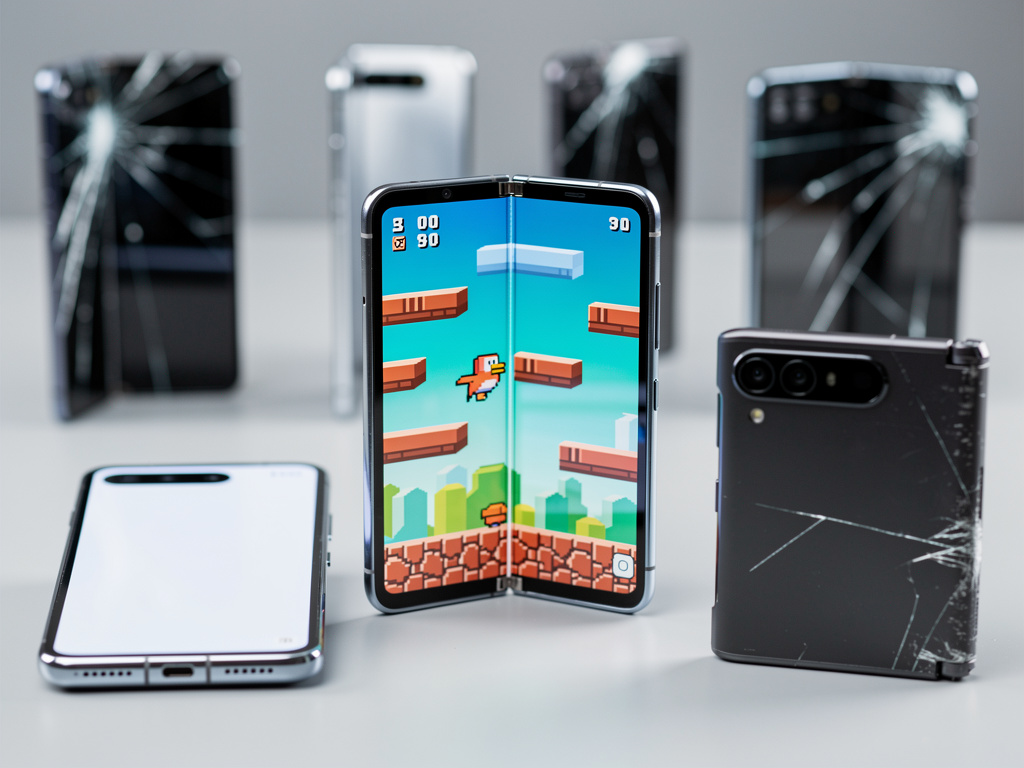
UPDATE: A new game called Foldy Bird is taking the mobile gaming world by storm, but it’s also raising urgent concerns about the durability of foldable smartphones. Developed by independent creator Rebane, this browser-based title cleverly turns the act of folding and unfolding devices into its core control mechanism, putting expensive gadgets to the test.
Players navigate a pixelated bird by physically bending their foldable phones, mimicking the flapping motion that made the original Flappy Bird a sensation in 2013. According to Digital Trends, the game detects the folding state of the phone through built-in sensors, requiring users to repeatedly open and close the device to keep the bird aloft. This gameplay not only highlights the creativity of mobile gaming but also exposes potential risks associated with foldable technology.
As excitement spreads across social media and tech forums, reports of creaking hinges and wear are already emerging. Users are sharing their experiences on platform X, prompting a broader conversation about whether high-end foldable phones, like the Samsung Galaxy Z series or Google Pixel Fold, can withstand this playful abuse.
The game’s mechanics leverage the intricate hinge technology that defines foldable phones. Players fold their devices to make the bird flap upward and unfold to descend, all while dodging obstacles. While this offers a fun twist on traditional gaming, experts warn that such repetitive mechanical actions could accelerate wear on the already scrutinized hinge components.
The stakes are high as industry insiders note that although foldables are rated for hundreds of thousands of cycles, real-world factors like dust and user force can significantly shorten their lifespan. Early adopters of Foldy Bird are already reporting issues, with one user humorously stating that their folding skills might outlast their phone’s warranty.
Industry publications like PhoneArena are sounding alarms, warning that continuous folding could lead to mechanical fatigue, producing audible “crunching” sounds from the hinge. These concerns are not unfounded; foldable phones have a history of vulnerability, with early models like the Galaxy Fold encountering significant issues shortly after their release.
Critics and fans alike are buzzing online, with mixed sentiments about the game’s impact on hardware durability. Developers caution players against excessive use, especially if they wish to maintain their device’s pristine condition. A review from Gamespew labels Foldy Bird as a “brilliant take” on the classic, while also highlighting the irony that this game may “deeply twist” expensive hardware.
As the game gains traction, it’s coinciding with a surge in discussions about hinge durability across various platforms. Some users boast of their devices holding up well, while others report peeling screen protectors and even minor cracks, reminiscent of issues faced by earlier foldable generations.
Manufacturers are closely monitoring this situation, though official responses remain limited. Samsung, a leader in foldable technology, has previously claimed its hinges can withstand over 200,000 folds. However, the unpredictable nature of games like Foldy Bird introduces stressors that manufacturers may not have fully accounted for.
Experts in materials science emphasize that while advancements in flexible OLED and ultra-thin glass have improved device resilience, the mechanical hinge remains a critical weak point. Posts from engineering professionals on X suggest that uneven folding pressure could exacerbate micro-fractures, leading to premature failures.
Looking ahead, Foldy Bird exemplifies a shift in mobile gaming toward more experiential formats that integrate hardware features in innovative ways. As foldables continue to capture market share, their durability will be a key consideration for both manufacturers and consumers.
The game’s viral spread provides a unique opportunity for community-driven testing, allowing users to contribute valuable data, albeit anecdotal, that manufacturers might leverage for future improvements. As Foldy Bird continues to gain popularity, it’s prompting users to weigh the thrill of gameplay against potential repair costs, which can run into the hundreds of dollars.
In conclusion, Foldy Bird serves as an interactive reminder of the delicate balance between innovation and practicality in mobile technology. As foldable devices become more mainstream, the lessons learned from this game could influence the next generation of durable, resilient smartphones. For now, the challenge remains: can you flap your way to a high score without sacrificing your device’s integrity?