
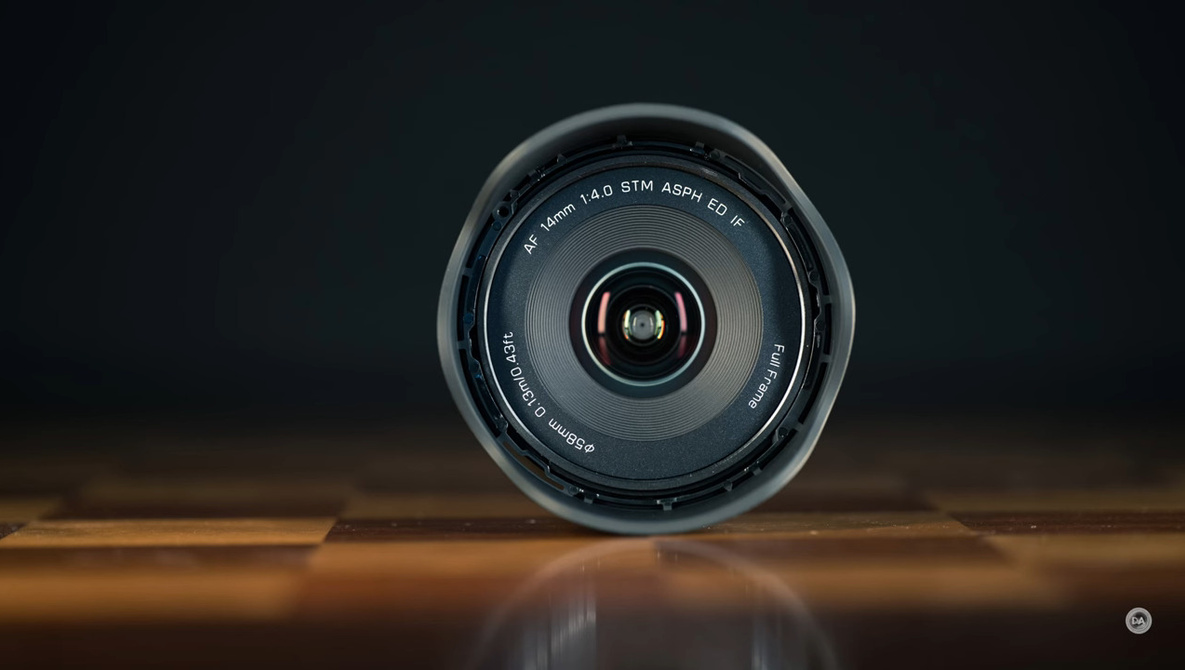
Viltrox has unveiled its new 14mm f/4 lens, designed specifically for Nikon Z camera users. This ultra-wide prime lens aims to offer a compact, affordable option for landscape, architecture, and travel photography. With its lightweight design, the lens can easily fit into a pocket while delivering high-quality performance.
In a recent video review, photographer Alex Cooke explored the lens’s capabilities on Nikon Z bodies, focusing on its performance rather than merely comparing it to the Sony E version. The STM autofocus motor demonstrated smooth and efficient focusing, allowing users to capture faces and moving subjects effortlessly. This is particularly beneficial for videographers and vloggers who require consistency without the distraction of autofocus issues.
Key Features and Performance Insights
The Viltrox 14mm f/4 lens features an optical design with 12 elements arranged in 9 groups, including four ED elements, two HR elements, and two aspherical elements. It boasts a maximum aperture of f/4, with a minimum focusing distance of just 5.1 inches (0.13 meters) and a maximum magnification of 0.23x. Weighing approximately 6 oz, it remains highly portable, making it ideal for photographers on the go.
One notable aspect of the lens is its simple control layout, which includes a single customizable ring and a USB-C port for firmware updates. Additionally, it features a 58mm filter thread, a rarity for lenses at this focal length. While the lens does lack weather-sealing, it is designed for careful handling or fair-weather use.
Cooke highlighted the differences between the Nikon Z and Sony E versions, noting that the Z-mount variant is slightly wider and longer to accommodate the larger mount and flange distance. Despite these differences, both versions remain compact and practical for daily use.
Image Quality and Handling Trade-offs
The review delved into the image quality produced by the Viltrox lens. Cooke demonstrated that the lens exhibits mild barrel distortion, which can be managed through lens profiles rather than extensive manual correction. He pointed out that vignetting is more pronounced on the Nikon Z version, particularly in bright conditions featuring snow or sky in the corners. However, he also explained that in many landscape scenarios, this effect can appear natural and even beneficial.
Resolution performance was impressive, particularly when used with the Nikon body’s high-megapixel sensor. Cooke noted that the lens maintains crisp detail across much of the frame at practical apertures, making it suitable for serious landscape photography.
While discussing its limitations, Cooke mentioned that flare artifacts become more noticeable when the lens is stopped down. He suggested using branches or architectural elements creatively to shape the sun star and minimize flare issues. Additionally, he recommended using slim screw-on filters to avoid worsening vignetting, which can impact the overall image quality.
For photographers looking to find the balance between price, size, and performance, the Viltrox 14mm f/4 lens for Nikon Z could be an attractive addition to their kit. Cooke’s thorough examination of its strengths and weaknesses provides valuable insight for potential users.
To see the lens in action and gain a deeper understanding of its capabilities, viewers can access Cooke’s full video review online.