
Air Force veteran Justin Cole is one of many enlisted veterans making a significant transition to higher education through the Warrior-Scholar Project (WSP). After serving nine years in the military, Cole’s perspective on education shifted dramatically following his experiences with natural disasters. He participated in recovery efforts after the devastating 2013 Black Forest fire in Colorado and managed communications during powerful Category 5 typhoons in Okinawa in 2018. These experiences led him to recognize the importance of climate science in national security, prompting him to pursue a degree at the Massachusetts Institute of Technology (MIT).
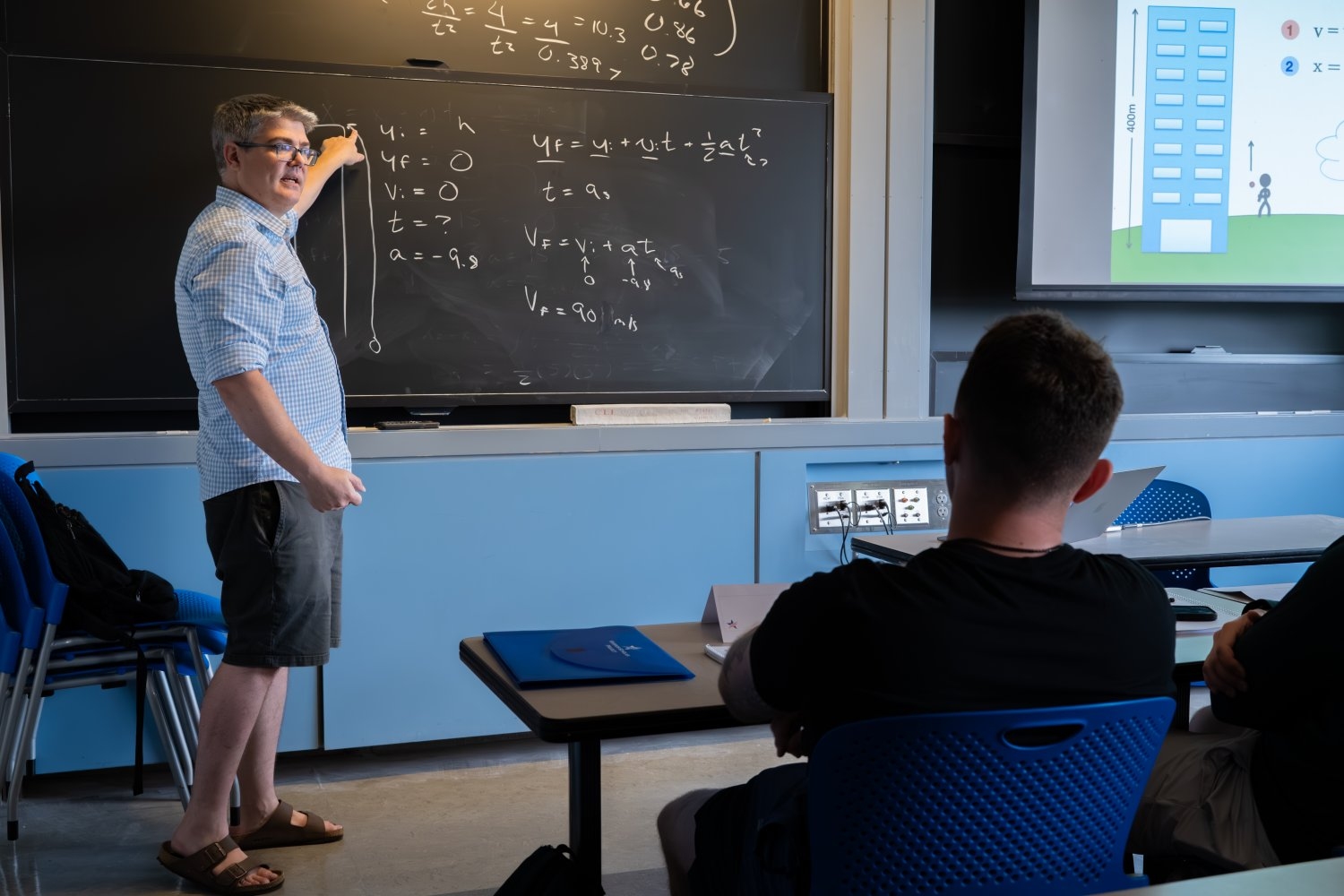
In 2023, Cole attended an intensive weeklong STEM boot camp at MIT, organized by WSP to assist veterans in their academic transition. This program aims to simulate a week of undergraduate life, helping participants acclimate to the rigors of college. Cole described the boot camp as a pivotal experience that solidified his desire to pursue higher education, stating, “It definitely reaffirmed that I wanted to continue down the path of at least getting a bachelor’s.” He transferred to MIT in 2024 and is now majoring in climate system science and engineering.
Preparing Veterans for Academic Success
The WSP, which began at Yale University in 2012, has expanded its reach to 19 universities across the United States, including MIT, which became involved in 2017. Each summer, the program focuses on three key areas: business, college readiness, and STEM education. Cole’s experience reflects the rigorous nature of the program, where participants engage in problem sets, attend faculty lectures, and participate in daily workshops that cover essential skills such as time management and effective note-taking.
Michael McDonald, an associate professor of physics at MIT and a Navy veteran, has been instrumental in leading the program since its inception. He emphasizes the enthusiasm and curiosity that veterans bring to the classroom, noting, “When I pose a question to my first-year physics class, no one wants to meet my eyes. But with these veterans, all hands shoot up, and they’re eager to engage.” This dynamic creates a unique learning environment where veterans discover that their military experiences provide a strong foundation for academic success.
Over the past decade, MIT-WSP has hosted over 120 scholars, with an impressive 93 percent continuing their education at prestigious institutions like Harvard University and Stanford University. Graduates from the program now work for major employers such as Boeing and Meta, illustrating the impact of this initiative on their careers.
Building Confidence and Community
One of the critical components of the WSP boot camp is the presence of alumni, known as fellows, who guide current participants. Cole recalls the inspiration he gained from meeting former scholars at top universities. “Just seeing people existing at these institutions made me realize, this is a thing that is doable,” he said. This sense of community reinforces the belief that academic achievement is attainable for veterans.
Former Marine Corps communications operator Aaron Kahler, who attended the program in 2024, echoed this sentiment. He was particularly inspired by a veteran PhD student during a tour of the neuroscience facility at MIT. “It was really cool seeing instances of successful vets doing their thing at MIT,” he stated.
The program also actively recruits MIT veterans like Andrea Henshall, a retired Air Force major and current PhD student in the Department of Aeronautics and Astronautics. Henshall has become deeply involved in the program, offering mentorship and sharing her journey with the participants. “It’s so inspiring to hear students say, ‘I never considered a place like MIT until the boot camp,’” she remarked.
At the conclusion of the boot camp, each scholar receives a challenge coin designed to symbolize their journey and potential. One side of the coin features Newton’s laws of motion, while the other showcases MIT’s motto, “mens et manus” (“mind and hand”). According to Olivier, this coin serves as a reminder of the scholars’ capabilities and the impact they can have on society.
Kahler, now a first-year student at MIT, keeps his challenge coin on display for inspiration. “I don’t think I would be here if it weren’t for the Warrior-Scholar Project,” he reflected.
As the WSP continues to grow, it remains committed to fostering a supportive environment for veterans transitioning to academic life, empowering them to realize their full potential in higher education and beyond. Through programs like this, veterans are not only gaining academic skills but also building a community that encourages lifelong learning and success.