
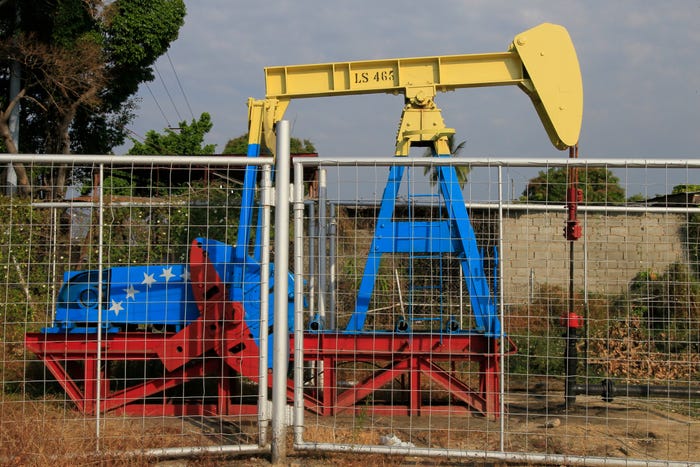
UPDATE: A potential revival of Venezuela’s oil sector is sending shockwaves through the US energy market, posing risks for smaller shale producers. As Venezuelan leader Nicolás Maduro faces increased scrutiny following a US raid over the weekend, investors are betting on a surge in Venezuelan oil production that could reshape the landscape of energy supply.
Analysts warn that an influx of Venezuelan crude could exert downward pressure on oil prices, impacting US shale firms that are already grappling with thin margins. Daan Struyven, head of oil research at Goldman Sachs, stated on the firm’s podcast that additional oil supply from Venezuela could be “negative for shale producers” that lack operations in the region. He emphasized, “If supply growth over the next five to ten years comes from Venezuela rather than from US shale, prices and volumes could come under pressure.”
The implications are significant. While major refiners on the US Gulf Coast may benefit from heavier Venezuelan crude, the shift could undermine demand for lighter shale oil. Many US refineries were designed to handle heavy crude, making Venezuelan oil a better fit. Increased access to Venezuelan reserves may benefit refiners but could force US shale producers to compete on a less favorable playing field.
As oil prices already hover around $56 per barrel for West Texas Intermediate and $60 for Brent, the potential for Venezuelan oil to re-enter the market raises alarms about future profitability for US shale companies. Philippe Le Billon, a professor at the University of British Columbia, highlighted the risks, stating, “The first casualties would likely be smaller shale firms with high debt and thin margins.”
Recent reports indicate that the US shale industry, which has been the backbone of America’s energy revolution, may face an uphill battle. The pressure on prices from a potential increase in Venezuelan oil output could complicate the narrative that the US would benefit from this revival. Researchers at Columbia University noted that even a medium-term increase in Venezuelan production could further lower oil prices, making it difficult for higher-cost US shale producers to justify new drilling activity.
The energy market is in a state of flux, and the next few months will be crucial. Investors are closely monitoring developments in Venezuela and the responses of US shale producers as the implications of this oil revival unfold. As the situation evolves, the energy sector could see a major reshuffle that could define the future of oil production and pricing in both countries.
Stay tuned for more updates as this story develops.