
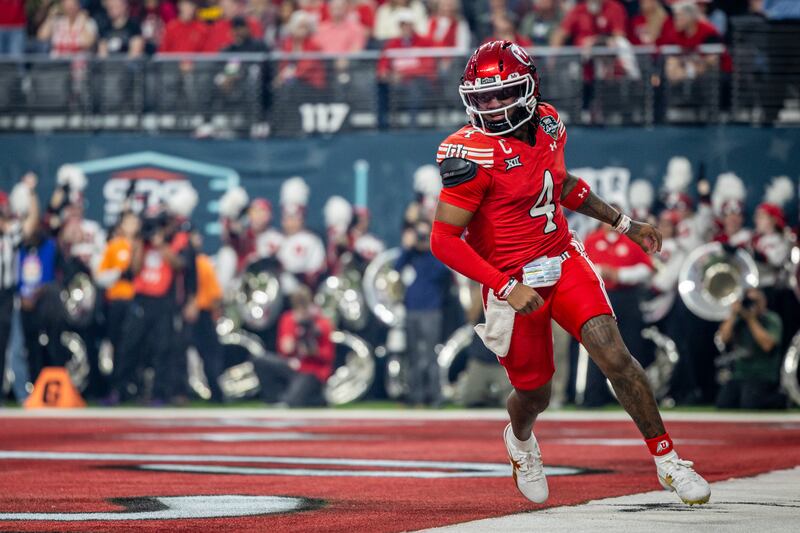
In a landmark moment for Utah football, the Utes achieved a new school record for rushing yards in a season during the Las Vegas Bowl. Quarterback Devon Dampier made history with a decisive 3-yard rush in the second quarter, propelling the team past the previous record of 3,264 yards set in 1984. This achievement was made possible by a combination of talent and strategy, showcasing the strength of Utah’s offensive line and rushing attack throughout the season.
Breaking the 41-Year Record
The old record was established by a formidable rushing ensemble led by Eddie Johnson, who tallied 1,021 yards, followed by contributions from quarterback Mark Stevens and running backs Molonai Hola and Tony Cospy. The 2025 Utes, however, had a different approach, leaning on a powerful offensive line that included projected NFL tackles Spencer Fano and Caleb Lomu. Former head coach Kyle Whittingham praised the line, stating, “We should be the best offensive line since I’ve been at the University of Utah.”
This season, the offensive line lived up to those expectations, setting the stage for a dynamic ground game. Whittingham emphasized their critical role, noting, “Without an offensive line that can do the things that our guys have done all year, that stuff doesn’t happen.” This statement underscores the collective effort behind the record-breaking performance.
Key Contributors to Success
Utah’s rushing attack featured standout performances from multiple players. Initially employing a running back by committee strategy, the Utes saw Wayshawn Parker and NaQuari Rogers share carries. Parker emerged as the primary back, particularly after a breakout game against Colorado, where he surpassed 100 rushing yards for the first time. He continued his momentum, reaching the century mark in three consecutive games, finishing the regular season with 931 yards and six touchdowns.
Offensive coordinator Jason Beck highlighted Parker’s contributions, stating, “He’s really doing a nice job helping us,” and praised his blocking skills as essential for the team’s success. Dampier also showcased his dual-threat capability, concluding the regular season with 687 rushing yards and seven touchdowns, including impressive performances against Arizona State and Kansas State.
In addition to Dampier and Parker, freshman Byrd Ficklin made significant contributions with 503 rushing yards and ten touchdowns. His ability to relieve pressure from Dampier in crucial moments proved invaluable. Beck noted, “Every time you give him more opportunities to do things, he’s responding and making the most of it.”
As the season progressed, the Utes cemented their place as a top rushing team, finishing ranked No. 2 in rushing yards per game with an average of 269.8 yards, surpassing even run-heavy programs like Air Force and Army. This impressive statistic reflects the strength of Utah’s offensive strategy, which centered on their running game.
The culmination of these efforts was evident in the Las Vegas Bowl, where Dampier further etched his name in the record books with an 11-yard rushing touchdown, bringing Utah’s season total to 39 rushing touchdowns. This achievement surpassed the previous record of 38 set by the 2022 Utes.
Overall, the 2025 season marked a significant turnaround for Utah football, characterized by an explosive rushing offense and a commitment to teamwork. The Utes’ ability to set new records while competing at a high level reflects the dedication and talent within the program, positioning them strongly for future seasons.