
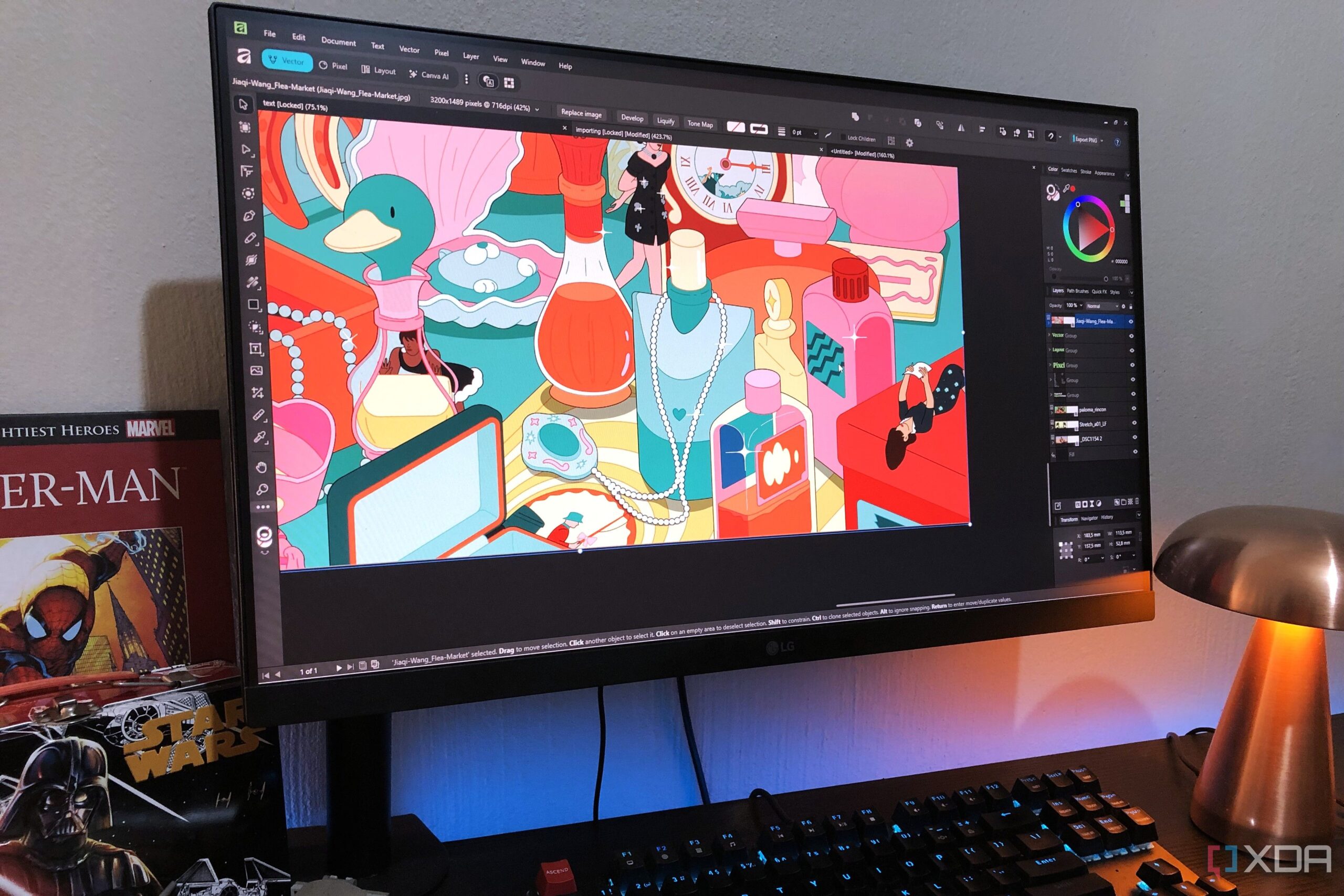
BREAKING NEWS: A growing number of users are abandoning costly Adobe subscriptions in favor of free alternatives, with two standout tools leading the charge. As of October 2023, many creators are discovering that they can achieve professional-level graphics without the hefty price tag of Adobe Creative Cloud.
The urgency of this shift is palpable. With Adobe’s subscription model becoming increasingly expensive and complex, many users are seeking solutions that are not only effective but also budget-friendly. The overwhelming number of alternatives can be daunting, but two specific tools are emerging as top contenders.
Affinity, known for its comprehensive suite including Photo, Designer, and Publisher, is gaining traction among those looking to streamline their graphics work. Users report that Affinity provides a clean, intuitive interface without the bloat of traditional Adobe software. Its Pixel workspace offers advanced editing capabilities, making it ideal for those who require precise control over their imagery.
For quick edits, many are turning to Windows Photos, a surprisingly powerful tool included with Windows operating systems. Users praise its speed and efficiency, performing tasks like lighting and color corrections in just a few clicks. The AI erase tool has garnered attention for its surprising accuracy in removing imperfections, making it a go-to for users who need fast results without the complexity of heavier applications.
“Between Affinity and Photos, there’s no reason to pay for an Adobe graphics subscription anymore,” said a freelance designer who switched tools recently. “They cover almost everything I do with my visuals without the extra installs or lagging.”
This transition represents a significant trend among non-professional designers, editors, and casual users who feel that Adobe’s offerings are excessive for their needs. Many are realizing that they can achieve high-quality results with just a couple of free tools, thus freeing themselves from the subscription burden.
The implications of this movement are vast. As more users opt for these free alternatives, Adobe may need to reconsider its pricing strategy or risk losing a significant portion of its user base. The conversation around design software is changing, emphasizing accessibility and affordability.
WHAT TO WATCH NEXT: As this trend develops, keep an eye on user reviews and comparisons between these free tools and traditional Adobe software. Will Adobe respond to this challenge by lowering prices or enhancing its offerings? The future of graphic design software may hinge on how these dynamics unfold.
In the meantime, for anyone seeking to cut costs while still producing professional-quality graphics, now is the perfect time to explore these alternatives. The message is clear: there are viable, efficient, and free options available that could revolutionize your creative workflow.