
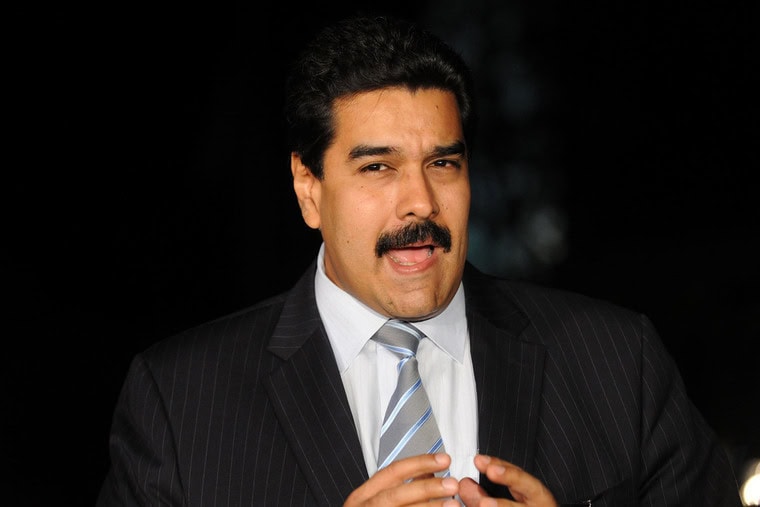
UPDATE: The United States has launched a dramatic raid on Venezuela, successfully capturing President Nicolas Maduro and his wife, Cilia Flores. This operation, conducted just hours ago, marks a significant escalation in U.S. involvement in Latin America, and officials confirm it aims to intimidate governments across the region.
Today’s raid, executed with military precision, signals a pivotal moment in U.S.-Latin American relations. Venezuela, unlike smaller nations previously targeted, is a major player with the largest oil reserves in the world. Maduro’s regime has long defied U.S. interests, and this operation is a stark reminder of America’s commitment to maintaining dominance in the Western hemisphere.
The raid follows Donald Trump‘s recent declaration asserting that “U.S. dominance in the Western hemisphere will never be questioned again.” Authorities have emphasized the necessity of a hemisphere free from what they deem “hostile foreign incursions.”
In a bold statement, Trump also noted, “We want to ensure our continued access to key strategic locations,” highlighting Venezuela’s significance in the global inter-imperialist rivalry between the U.S. and China.
This operation also comes amid ongoing tensions and accusations of imperialism, as critics within Europe and beyond express alarm over the U.S. interventionist approach. Analysts suggest that the raid is not merely about Maduro, but a broader strategy aimed at controlling vital resources and asserting U.S. influence amidst declining hegemony.
Former Secretary of State Marco Rubio has been vocal about the need to reverse Venezuela’s nationalization of oil, stating, “We’re going to have our very large United States oil companies go in.” Such statements underscore the potential for a significant shift in Venezuela’s oil production landscape.
As the dust settles, the implications for Latin America are profound. Countries like Mexico and Colombia are under threat, with Trump explicitly warning their leaders about the consequences of opposing U.S. interests. The atmosphere of fear is palpable, particularly for leaders like Cuban President Miguel Diaz-Canel, who may now feel increased pressure.
Reports suggest that the Venezuelan armed forces exhibited minimal resistance during the raid, raising questions about Maduro’s support among the populace. There is speculation that Trump may have cut deals with factions within Maduro’s regime to facilitate this operation, possibly paving the way for Delcy Rodriguez, the current Vice President, to assume a more prominent role.
Next Steps: As the situation unfolds, analysts will be watching closely for potential changes in Venezuela’s governance and its implications for U.S. foreign policy. The raid has exposed deeper issues within the region, including the fragility of political alliances and the potential for unrest as citizens react to these developments.
In light of these urgent developments, the need for a coordinated response from anti-imperialist movements around the world is more critical than ever. The ramifications of today’s actions are likely to resonate for years to come, reshaping not only Venezuela but the entire Latin American landscape.
Stay tuned for further updates as this story develops. The world is watching closely as the implications of U.S. intervention unfold.