
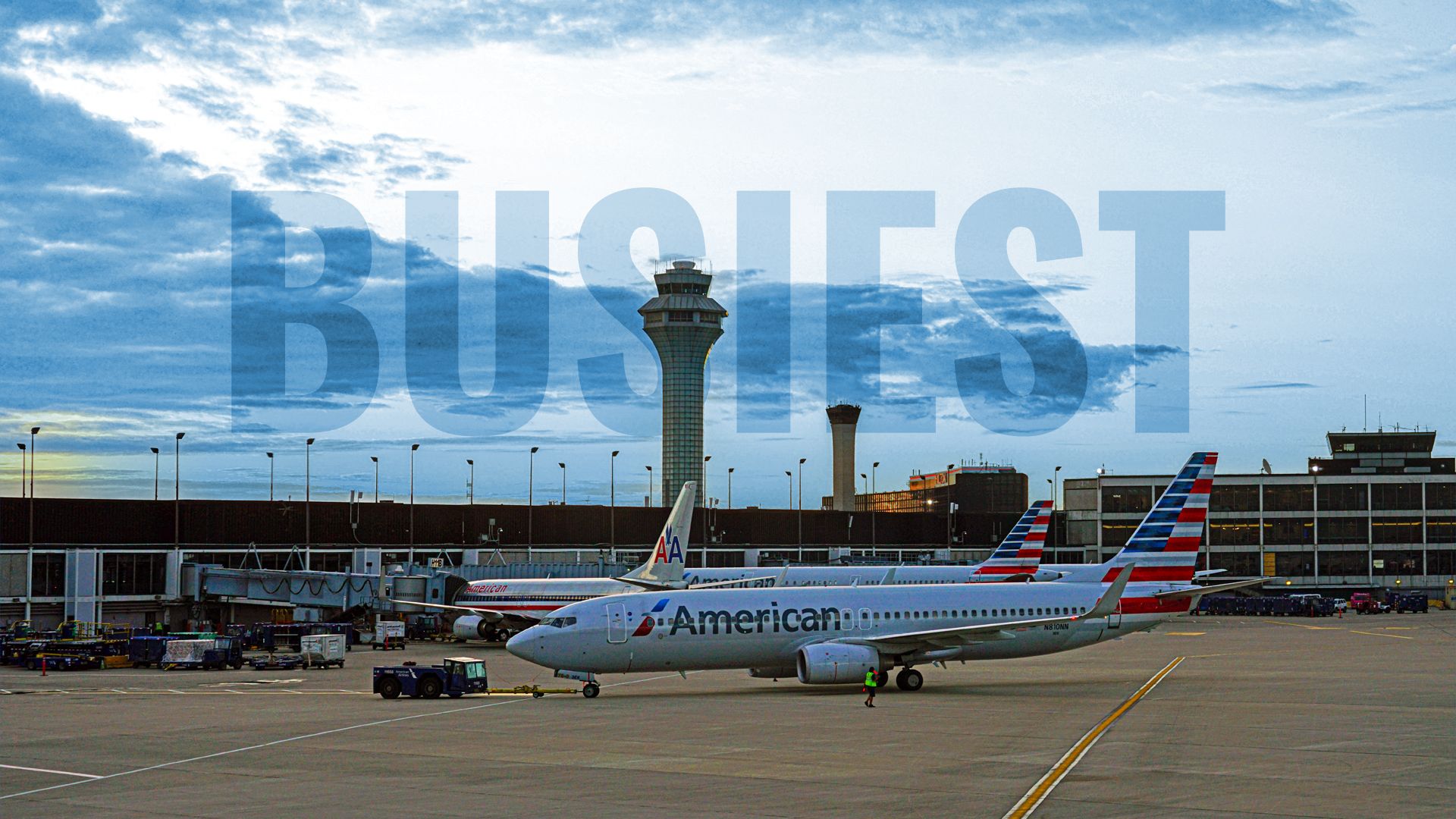
The air travel landscape in the United States is witnessing significant growth as the country’s ten busiest airports prepare for a bustling summer in 2025. According to data from OAG, these airports will account for approximately 35% of all flights, responding to a projected increase in air travel demand of about 2% compared to 2024. Leading this surge is Hartsfield-Jackson Atlanta International Airport (ATL), which is set to maintain its status as the busiest airport in the US and the world.
Top Ten Airports by Available Seats
Among the airports ranked by the number of available seats, Hartsfield-Jackson Atlanta International Airport tops the list with over 38.1 million seats. This remarkable capacity highlights the airport’s role as a vital hub for air traffic. Delta Air Lines dominates operations there, holding a commanding market share of 74%. The airport not only facilitates extensive domestic travel but also connects to long-haul international destinations, including flights to Johannesburg OR Tambo International Airport (JNB).
Following Atlanta, Chicago O’Hare International Airport (ORD) ranks as the second-busiest airport, with more than 31.3 million seats available. It serves as a key hub for both American Airlines and United Airlines, offering extensive routes across North America and international connections to cities like Frankfurt and Tokyo Haneda (HND). Notably, O’Hare has yet to surpass its pre-pandemic peak of 84.6 million passengers recorded in 2019, processing 80 million passengers in 2024.
In third place is Dallas/Fort Worth International Airport (DFW), providing over 30.7 million seats. As the largest hub for American Airlines, DFW plays a critical role in connecting various domestic and international routes. The airport set a record in 2024 with more than 84 million passengers, a figure that is expected to rise further in 2025.
Next is Denver International Airport (DEN), with over 29.7 million seats. This airport is a major hub for United Airlines, which holds a 49% market share. Denver’s connectivity extends to international destinations, including Cancun International Airport (CUN) and London Heathrow Airport (LHR), among others. Notably, one of its runways, measuring 3.03 miles (4.88 km), is the longest commercial runway in the US.
Los Angeles International Airport (LAX) comes in fifth, with 27.1 million seats. It serves as a crucial hub for both domestic and international travel. The busiest international route from LAX last year was to London Heathrow (LHR), which recorded over 1.6 million passengers. Other significant destinations include Guadalajara International (GDL) and Seoul Incheon International Airport (ICN).
Growing Traffic at Major Hubs
Other airports making the top ten list include John F. Kennedy International Airport (JFK) with 23.6 million seats, and Harry Reid International Airport (LAS), which is expected to see over 20.3 million seats. The latter experienced a record-breaking passenger count of more than 58 million in 2024, surpassing its pre-pandemic figures. Southwest Airlines is the largest carrier at Harry Reid, holding over 40% market share.
Charlotte Douglas International Airport (CLT) ranks eighth, with 20.1 million seats. American Airlines dominates operations here, with a market share of approximately 70%. The airport connects numerous domestic routes, with popular destinations including Orlando International Airport (MCO) and LaGuardia Airport (LGA).
San Francisco International Airport (SFO) and Seattle-Tacoma International Airport (SEA) round out the top ten, both offering around 19.6 million seats. Seattle serves as a major hub for both Alaska Airlines and Delta Air Lines, while San Francisco is one of the largest hubs for United Airlines.
As the summer travel season approaches, these airports are poised to experience increased passenger traffic and heightened demand for air travel across the United States. The evolving dynamics of the aviation industry, coupled with the resurgence in consumer travel, underscore the importance of these major airports in facilitating connectivity and economic growth.