
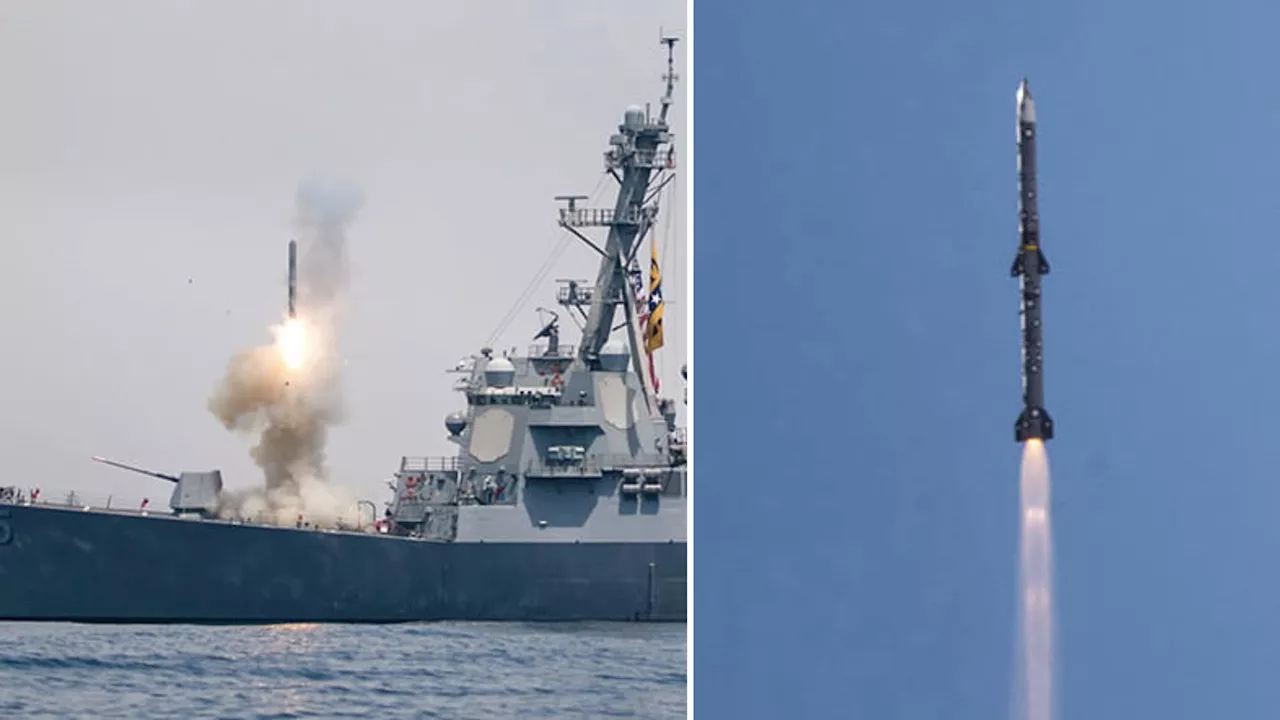
UPDATE: The United States has just announced a significant acceleration in missile production, including over 1,000 Tomahawk missiles and at least 1,900 AMRAAM missiles. This move is in response to the rising demand for precision munitions globally and aims to enhance military readiness.
In a groundbreaking development, the Department of War has signed five landmark agreements with RTX’s Raytheon to boost production capabilities. Under these agreements, annual production of the Tomahawk, a precision weapon capable of hitting targets from 1,000 miles away, will surge, with total output expected to exceed 1,000 units.
The agreements also include increased production of the AMRAAM, the world’s most widely deployed air-to-air missile, with plans to produce at least 1,900 units annually. Additionally, the production of SM-6 and SM-3 missiles will see significant increases, with some munitions expected to grow 2 to 4 times their current production rates.
“This initiative redefines how government and industry can collaborate to accelerate the delivery of critical technologies,” stated RTX CEO Chris Calio. “We are committed to ensuring that the United States and its allies maintain a decisive edge in defense capabilities.”
The urgency of this production boost is underscored by the ongoing global conflicts and heightened security threats. The Tomahawk missile has been successfully flight-tested over 550 times and utilized more than 2,300 times in operational environments, making it a crucial asset for U.S. forces to target hostile threats worldwide.
RTX has heavily invested in expanding its production capacity at facilities located in Tucson, Arizona, Huntsville, Alabama, and Andover, Massachusetts. These investments are part of a broader strategy to enhance the U.S. arsenal and fulfill long-term demand for advanced munitions.
The administration’s Acquisition Transformation Strategy is a driving force behind this initiative, aiming to deliver advanced technology faster and improve the partnership between the government and defense contractors.
As the situation continues to develop, the defense community and global allies are closely monitoring these changes in production capabilities. The next steps will involve the implementation of these agreements, with production ramping up in the coming months to meet urgent military needs.
Stay tuned for further updates on this critical development in U.S. defense strategy.