
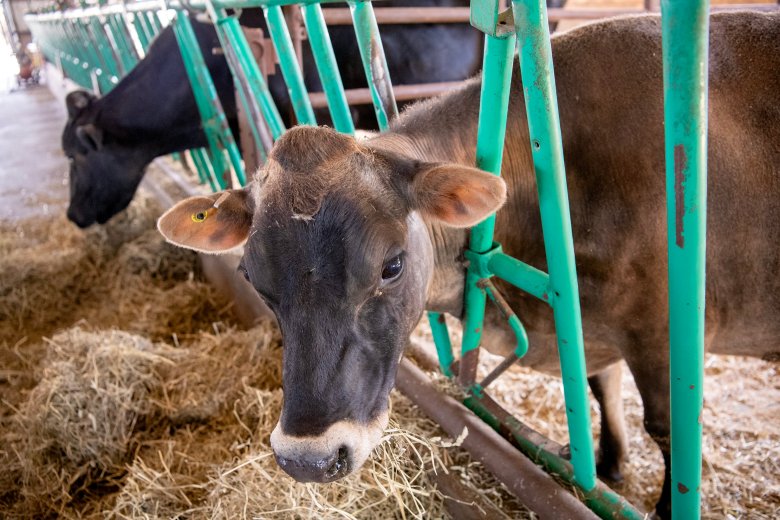
UPDATE: In a significant shift for local agriculture, Pineland Farms in New Gloucester, ME has officially transitioned its operations from traditional dairy production to educational programming. As of May 28, 2025, the barn that once housed up to 40 Holstein cows is now home to two cows, Rio and Skittles, whose roles focus solely on teaching visitors about farming and animal care.
This change comes as part of a broader initiative to promote agricultural education and sustainability in the community. Pineland Farms has recognized the growing demand for hands-on learning experiences, aiming to engage both children and adults in understanding farming practices.
In the past, the barn at Pineland Farms would see daily milk production from its Holsteins. Now, with Rio, a Holstein, and Skittles, a Jersey cow, the focus has shifted to providing educational experiences rather than traditional dairy farming. Visitors can now learn about the care and management of dairy animals, highlighting the importance of agriculture in local economies.
“Our mission is to educate the public about the importance of agriculture and sustainability,”
said an official from Pineland Farms. This initiative not only reflects changing consumer attitudes towards dairy farming but also aims to foster a deeper connection between the community and its agricultural roots.
The opening of this educational program is timely, as schools and families are looking for engaging outdoor activities. The barn is set to host interactive sessions where attendees can meet the cows, learn about their diets, and understand dairy production processes.
Looking ahead, Pineland Farms plans to expand its educational offerings, including workshops and community events that emphasize sustainable farming practices. As this initiative develops, it could serve as a model for other farms looking to pivot in response to changing market demands.
Stay tuned for more updates on this evolving story as Pineland Farms implements its new educational focus and engages the community in innovative ways. This transition marks a pivotal moment for both the farm and the local agricultural landscape.