
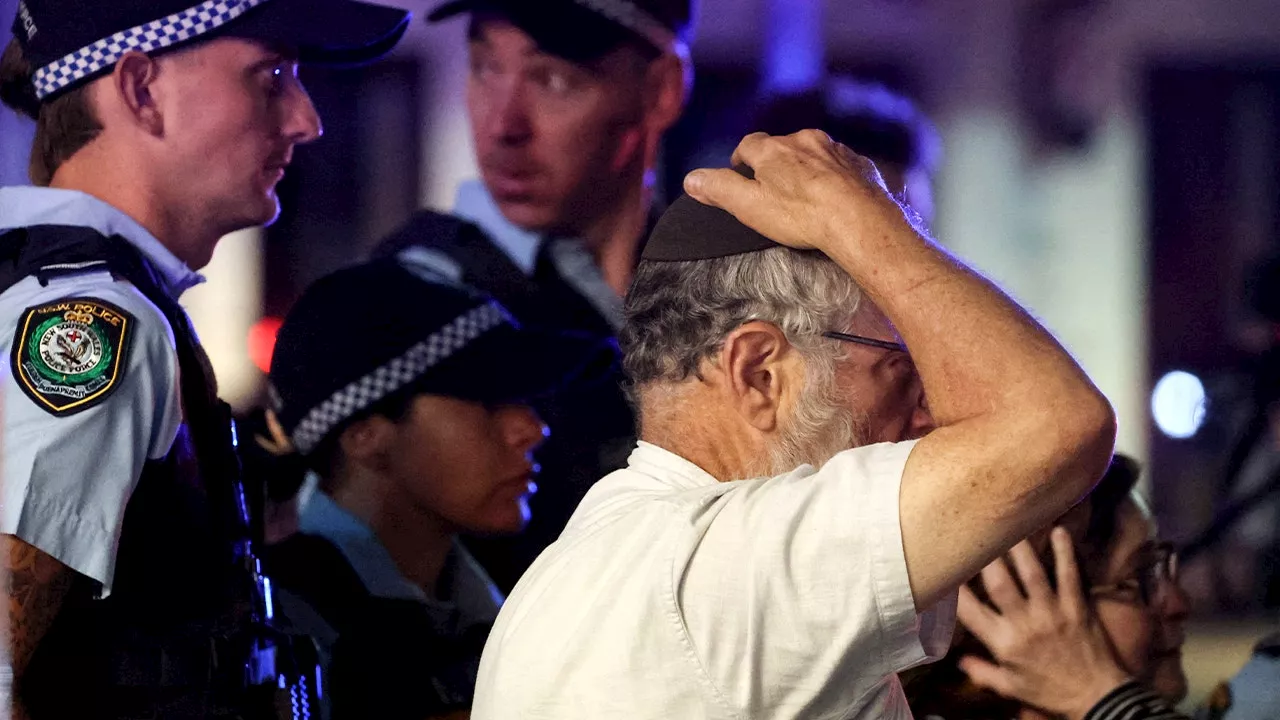
UPDATE: A shocking mass shooting during a Hanukkah celebration at Bondi Beach in Sydney, Australia, has left 15 fatalities and 40 hospitalizations, raising urgent concerns about rising anti-Jewish sentiment. The attack, carried out by a father and son duo, is being investigated as a potential act of terrorism targeting the Jewish community.
In a powerful commentary published just hours ago, New York Times columnist Bret Stephens directly links this tragedy to the controversial notion of “globalizing the intifada.” This perspective adds to the ongoing discourse surrounding the event’s motivations and the broader implications for both Australia and global politics.
Stephens, who is of Jewish heritage, argues that the roots of anti-Jewish violence are not merely external but are also influenced by domestic narratives. He asserts that the attackers were motivated by extremist slogans often heard at anti-Israel demonstrations, such as “resistance is justified” and “by any means necessary.” These phrases, while abstract to some, are interpreted literally by individuals who feel compelled to act violently.
This horrific incident at Bondi Beach underscores the urgent need for a critical examination of political rhetoric and its real-world consequences. Stephens warns that the translation of ideological beliefs into violent actions poses a significant threat, highlighting the dangers of misinterpretation and the literal adoption of political expressions.
Moreover, Stephens criticizes the Australian government, led by Prime Minister Anthony Albanese, for its perceived failure to clearly differentiate between legitimate criticism of Israel and outright anti-Semitism. He points out that the government’s acknowledgment of a Palestinian state and its condemnation of Israeli actions in Gaza may have inadvertently fostered an environment conducive to such acts of violence.
Prime Minister Albanese described the attack as “evil beyond comprehension,” yet Stephens emphasizes that for some, viewing the Jewish state as evil justifies attacking Jewish individuals, even during celebrations like Hanukkah.
The implications of the Bondi Beach shooting extend far beyond Australia, raising critical questions about the intersection of global ideologies and local acts of violence. As world leaders and communities react to this tragic event, the need for a nuanced understanding of the factors contributing to anti-Jewish attacks becomes increasingly urgent.
As the investigation unfolds, all eyes are on the Australian government’s response and the broader societal implications of this attack. What happens next will be crucial in shaping both public discourse and policy surrounding terrorism and anti-Semitism.
Stay tuned for further updates as this story develops.