
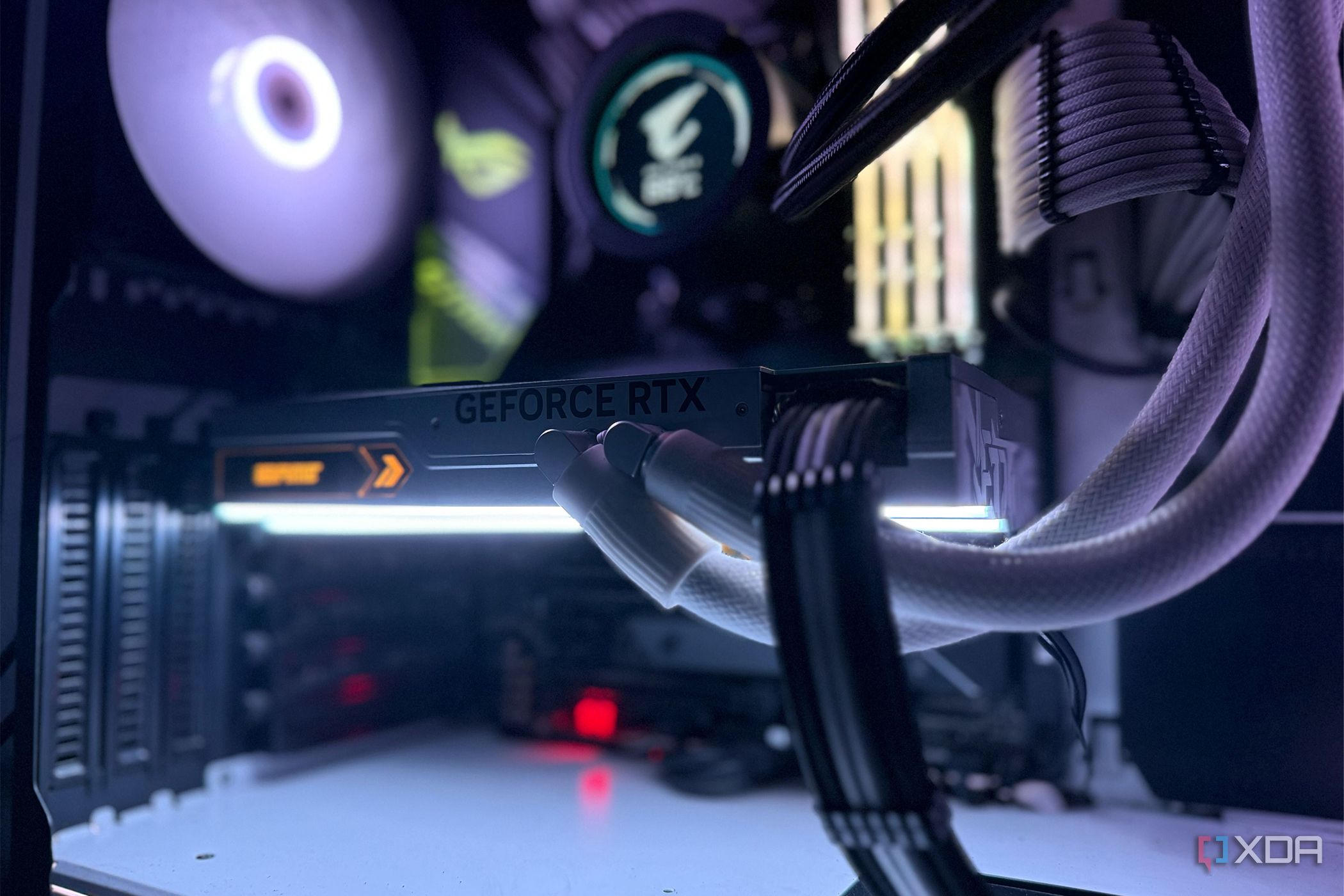
New reports confirm that many gamers are facing significant performance issues, and it’s not just their GPUs to blame. As of today, experts reveal that even with high-end graphics cards like the RTX 5090, players may still experience stuttering and poor frame rates if other components in their systems are lagging behind.
The gaming community is buzzing with frustration as enthusiasts realize that shifting blame solely onto their GPUs is misguided. Even the most powerful cards cannot deliver the performance manufacturers promise without a well-rounded system.
Gaming performance bottlenecks often reside in four critical areas: the CPU, RAM, storage, and thermal management. For players upgrading from older GPUs, such as the RTX 3090 to the RTX 4090, many experience a disappointing reality when their processors can’t keep pace. Reports indicate that users with aging CPUs like the Ryzen 9 5900X may struggle at 1080p and 1440p resolutions, leading to underwhelming gameplay experiences.
Experts stress that if your GPU usage hovers around 70-80%, your CPU is likely the true culprit behind poor performance. Upgrading to a more capable processor, like the 5800X3D, could significantly improve frame rates and gameplay smoothness.
Another often-overlooked factor is RAM configuration. Even with 16GB of RAM, gamers may find their systems pushing beyond this limit due to background applications and operating system demands. Experts warn that failing to optimize RAM settings, such as enabling XMP or EXPO in BIOS, can leave performance on the table. As gaming requirements evolve, experts predict that by 2026, 16GB could be insufficient for many titles.
Storage solutions are also crucial to gaming performance. Players still using older SATA SSDs may face issues with long load times and stutters during gameplay. Experts suggest upgrading to an NVMe drive for significant performance improvements, particularly in expansive open-world games, where rapid data streaming is essential.
Lastly, improper thermal management can thwart even the fastest systems. As CPUs and GPUs heat up, they lower clock speeds to avoid overheating, which can lead to noticeable drops in frames per second (FPS). Experts recommend investing in quality cooling solutions to maintain optimal performance levels.
Experts emphasize that gamers must take a holistic approach to their systems. Monitoring all components instead of singling out the GPU is crucial for achieving smooth, high-performance gaming. With the gaming landscape constantly evolving, it’s vital for players to stay informed about what truly impacts their performance—starting now.
Stay tuned for more updates on optimizing your gaming setup.