
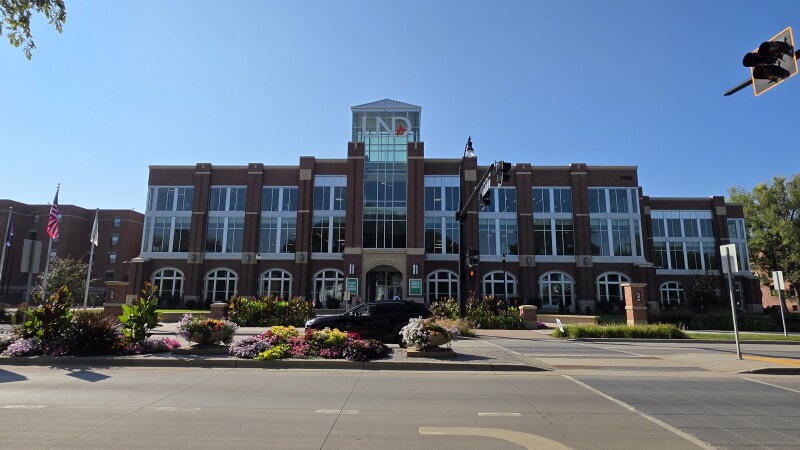
The University of North Dakota (UND) is embarking on a significant initiative aimed at modernizing its data management systems. This effort is designed to enhance the reliability and accessibility of data, ultimately bridging the gap between data collection and decision-making processes. During a meeting of the UND Senate on February 5, 2024, key officials outlined their vision for this modernization, emphasizing its critical role in supporting the university’s strategic goals.
Madhavi Marasinghe, the associate vice president and chief information officer for University IT, articulated the initiative’s primary objective: to ensure that data is utilized effectively in decision-making. “The mission is to empower the university for decision making, but making sure that we can rely on our data and it’s accessible to our people as well,” she stated. This emphasis on data integrity and accessibility reflects a broader trend in higher education, where informed decision-making is increasingly reliant on quality data.
Framework for Effective Data Governance
Marasinghe, alongside Matt Berosik, the chief data officer for university analytics and planning, detailed how the data modernization will transform various aspects of data handling on campus. The initiative will introduce a comprehensive framework for data governance, which will dictate how data is collected, secured, integrated, analyzed, and utilized across the university.
The framework aims to establish clear ownership of data, implement standards for its collection, and ensure responsible use and storage. Marasinghe emphasized the importance of good data governance for the effective functioning of artificial intelligence systems, which rely heavily on high-quality data.
Berosik addressed potential concerns surrounding the term “governance,” which can evoke fears of excessive control. He clarified that the objective is not to diminish the authority of data owners. “The data owners are still going to be the owners,” Berosik asserted. “They’re still going to have the final say in terms of how their data is used and collected.” Instead, the initiative seeks to provide a unifying framework that facilitates collaboration and enhances the overall data vision at UND.
Collaborative Efforts and Future Directions
To kickstart the process of establishing data governance, a workshop was held in April 2023 with a third-party organization. This workshop served as a foundation for the ongoing discussions and planning surrounding the initiative.
The February Senate meeting also covered a range of other topics. The Senate reviewed a report from the Curriculum Committee, which included the inactivation of several programs, such as certificates in health and wellness coaching and instructional design in technology. Additionally, terminations were noted for certificates in communication sciences and disorders, a Master of Arts in geology, and a second degree program in social work. In contrast, five new programs were introduced, including certificates for K-12 principal and K-12 superintendent roles, along with three programs related to aerospace engineering.
Attention was also given to the Academic Policies and Admissions report for the 2024-2025 academic year, indicating increased activity for the 2025-2026 period. Ongoing discussions regarding UND’s academic honors policy were highlighted, alongside a report on community engagement initiatives.
Furthermore, members reviewed a University Library Committee report that focused on enhancing engagement with campus libraries, ensuring research articles are publicly accessible, and the potential for joining the Association of Research Libraries.
Vice Provost Eric Link updated the Senate on new policies from the State Board of Higher Education. These policies now grant certain institutions, including UND, the authority to pilot programs offering up to two reduced credit Bachelor of Applied Science degrees for a duration of approximately four years. This marks a notable expansion of UND’s academic offerings.
Senate Chair Adam Matz announced proposed bylaw revisions concerning Senate memberships and committees, aiming to clarify existing language and incorporate information from the committee manual. These revisions are expected to be voted on in the next meeting.
Additionally, Vice Provost for Faculty Affairs Randi Tanglen discussed the potential expansion of Follett access programs, which aim to provide students with digital course materials from the first day of class. The initiative has been piloted in two introductory courses, and the Senate Executive Committee will determine whether to extend this option to all faculty and courses.
In a final update, UND Student Body President Jonathan Blankenship reported that the Student Senate passed a resolution aimed at improving the accessibility of the University Counseling Center for students. Another resolution was also approved for the Student Government elections scheduled for April 15, 2024.
Through these initiatives and discussions, the University of North Dakota demonstrates its commitment to enhancing data management and academic offerings, positioning itself as a forward-thinking institution in the higher education landscape.