
As the demand for engaging documentaries continues to rise, an intriguing gap has emerged in the genre. While platforms like Netflix offer extensive libraries focusing on well-trodden subjects such as climate change and World War II, there remains a wealth of bizarre and lesser-known historical events that could captivate audiences. Here are 14 peculiar incidents that warrant further exploration in documentary formats.
London’s Waste Crisis and the 1858 Sewer Reform
Between 1800 and 1850, London faced a population explosion, with numbers soaring to 2.5 million. This rapid growth overwhelmed the city’s waste disposal systems, leading to dire public health issues. The River Thames, which served as a primary source of drinking water, became heavily polluted with human waste, causing unbearable odors and contributing to the spread of diseases.
In the summer of 1858, the stench from the Thames became intolerable, prompting Benjamin Disraeli, then Leader of the House of Commons, to propose a new sewer system. Within just 18 days, the bill was passed, marking a significant public health reform in response to the crisis.
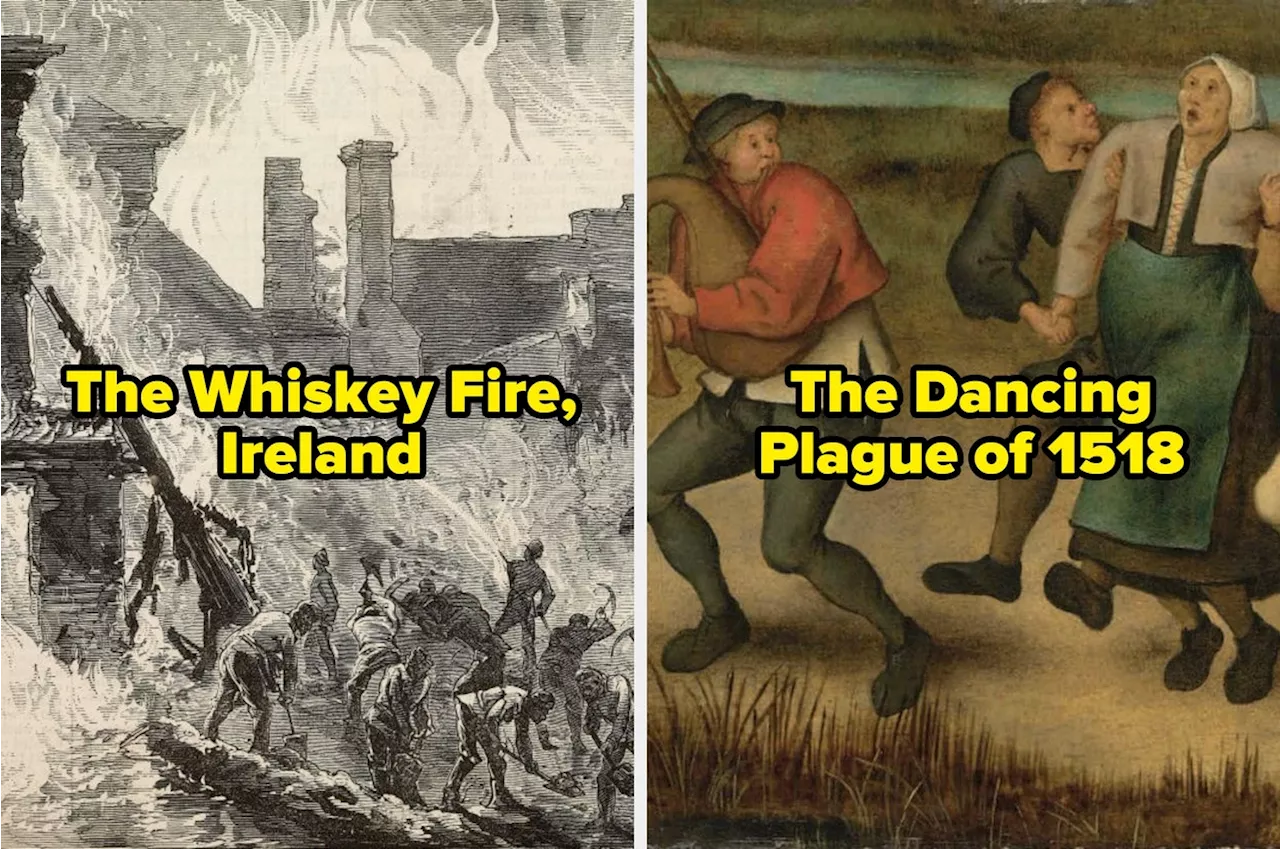
The Dublin Whiskey Fire of 1875
On June 18, 1875, a fire broke out in Dublin’s Liberties district, engulfing Malone’s Malt and Storehouse. The blaze reached heights of 30 feet as flames consumed approximately 5,000 barrels of whiskey. Efforts by the Dublin fire brigade to contain the fire, including the use of sand and gravel, proved ineffective, leading to an unusual solution: horse manure was eventually used to create barriers against the spreading whiskey.
The fire was extinguished by 4 a.m. the next day, although it resulted in at least 13 deaths from subsequent alcohol poisoning, showcasing the unexpected consequences of this bizarre incident.
The California Shelling Incident of 1942
On February 23, 1942, a Japanese submarine surfaced off the coast of Santa Barbara, California, firing shells at an oil field. Although the attack caused minimal damage, it heightened national anxiety during World War II. The following night, military radar detected what appeared to be an enemy aircraft, leading to a chaotic response from anti-aircraft units in Santa Monica.
The incident resulted in no significant injuries, yet at least five individuals lost their lives due to heart attacks or accidents during the ensuing blackout, highlighting the panic that gripped the nation.
The Dance Mania of 1518
In a puzzling episode in 1518, a woman in Strasbourg began dancing uncontrollably in the streets. Her behavior escalated, drawing in over 400 individuals who joined the spontaneous dance party. City authorities attempted to contain the situation by creating designated dance areas, but many participants faced severe exhaustion, with some even dying as a result.
The cause of this bizarre phenomenon remains unresolved, making it a compelling subject for investigation and documentary storytelling.
The Enigma of the Voynich Manuscript
The Voynich Manuscript, discovered in 1921 by Dr. Wilfred M. Voynich, has baffled experts for decades. This ancient text features elaborate drawings of plants, astrological diagrams, and an unknown script that remains undeciphered. Despite attempts by various cryptologists, including renowned figures like Alan Turing, the manuscript’s secrets remain locked away, presenting a tantalizing mystery for historical inquiry.
The Hoax of Life on the Moon
In August 1835, the New York Sun published a series of articles claiming the discovery of life on the Moon. Attributed to Dr. Andrew Grant, the articles featured sensational descriptions of lunar inhabitants and lush vegetation, captivating readers and driving sales. Initially taken seriously, the newspaper later revealed the stories to be a satire, yet not before they sparked widespread belief and intrigue.
Women’s March on Versailles
The Women’s March on Versailles, occurring on October 5, 1789, was a pivotal moment in the French Revolution. Driven by food scarcity and discontent with the monarchy, Parisian market women marched to Versailles, demanding reforms. This event significantly challenged the authority of the monarchy and is often overshadowed in historical narratives.
The USS Scorpion Incident
The disappearance of the USS Scorpion, a nuclear-powered submarine, on May 21, 1968, remains a haunting mystery. The sub was reported missing after sending its last position 250 miles southwest of the Azores. It was later discovered 11,000 feet underwater, with all crew members lost. Speculations surrounding the cause of its sinking range from mechanical failure to hostile attack.
Oliver Cromwell’s Posthumous Trial
After his death in 1658, Oliver Cromwell’s body was exhumed and subjected to a grotesque trial by his political enemies. The trial, led by Pope Stephen VI, involved the public humiliation of Cromwell’s corpse, which was eventually executed and displayed as a warning to others. This macabre event serves as a stark reminder of the tumultuous political landscape of the time.
The Defenestration of Prague
On May 23, 1618, Bohemian nobles threw representatives of the Habsburg monarchy out of a window in Prague Castle, an act known as the Defenestration of Prague. The incident sparked the Thirty Years’ War, showcasing the escalating tensions between Catholic and Protestant factions in Europe.
The Republic of Rose Island
In 1967, an Italian engineer declared independence for his floating micronation, the Republic of Rose Island, built off the coast of Rimini. Although it offered amenities such as a restaurant and post office, the Italian government demolished the platform in 1969, marking a brief yet fascinating chapter in the pursuit of national identity.
The Emu War: An Unconventional Conflict
The so-called Emu War in 1932 saw Australian farmers battling large flocks of emus that devastated crops during the Great Depression. The military was called in to assist, yet the operation was met with failure, as the birds proved elusive. After 45 days, only 2,500 emus were killed, leading to calls for more humane treatment of the animals.
The Eruption of Mount Tambora
In April 1815, Mount Tambora in Indonesia erupted, causing significant climatic changes known as the “Year Without a Summer.” The explosion led to widespread agricultural failures and food shortages, impacting lives across the globe and serving as a reminder of nature’s power.
Pope Formosus and the Cadaver Synod
In a bizarre chapter of papal history, Pope Formosus was put on trial by Pope Stephen VI in 897, months after his death. The trial, known as the Cadaver Synod, involved the exhumation and public mocking of Formosus’s corpse. This grotesque event turned public sentiment against Pope Stephen, resulting in his deposition.
These historical episodes, rich with intrigue and peculiarity, present a plethora of narratives that deserve to be explored in-depth through the lens of documentary filmmaking. Each story not only reflects the complexities of human behavior but also showcases the unpredictable nature of history itself.