
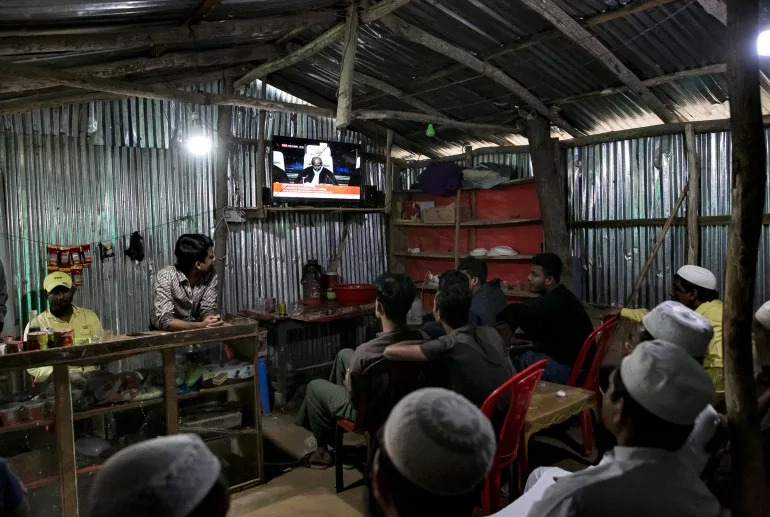
The International Court of Justice (ICJ) is set to hold public hearings next month on a significant case accusing Myanmar of committing genocide against its Rohingya community. This historic case, the first of its kind the ICJ has examined on its merits in over a decade, could have wide-reaching implications, including influencing South Africa’s legal actions against Israel related to the conflict in Gaza.
Hearings will commence from January 12 to January 15, 2024, with The Gambia, a predominantly Muslim nation in West Africa, presenting its arguments. The Gambia initiated this case in 2019 under the backing of the Organisation for Islamic Cooperation, asserting that Myanmar’s actions against the Rohingya ethnic group, who are mostly Muslim, constitute genocide.
Following The Gambia’s presentation, Myanmar will have the opportunity to respond from January 16 to January 20. The ICJ has also scheduled three days for the examination of witnesses, which will occur behind closed doors. According to an ICJ statement, “The hearings will be devoted to the merits of the case and will include the examination of witnesses and an expert called by the Parties.”
The case stems from allegations that Myanmar authorities violated the United Nations Genocide Convention during a brutal military campaign against the Rohingya in 2017. This crackdown resulted in over 742,000 Rohingya fleeing to neighboring countries, particularly Bangladesh. Witnesses have reported horrific incidents, including murders, sexual violence, and the destruction of entire villages.
In a ruling issued in 2020, the ICJ ordered Myanmar to “take all measures within its power” to prevent acts of genocide. At a recent high-level meeting of the United Nations General Assembly on the Rohingya situation, Dawda Jallow, The Gambia’s Minister of Justice, expressed hope for a court judgment “soon after” the upcoming hearings. “We filed our case in November 2019, almost six years ago. Now, we are preparing for the oral hearing on the merits in this case,” Jallow noted.
The situation for the Rohingya remains dire, with vast numbers now residing in the world’s largest refugee camp in Cox’s Bazar, Bangladesh. Approximately one million Rohingya fled Myanmar prior to the military’s crackdown, comprising a small percentage of the country’s total population of 55 million. Conditions in the refugee camp are challenging, with many living in poverty and facing ongoing risks during attempts to reach other countries.
Wai Wai Nu, executive director of the Women’s Peace Network-Myanmar, emphasized the importance of international intervention. She remarked that the number of countries supporting The Gambia’s case is “actually very powerful,” suggesting that collective action could help address ongoing atrocities in Rakhine State, where violence against the Rohingya persists.
As the hearings approach, the world watches closely, recognizing the potential for these proceedings to not only address past wrongs but also to influence current and future international legal standards regarding genocide and human rights.