
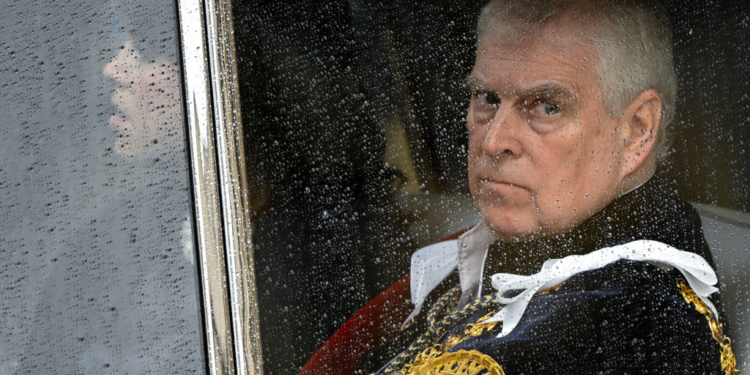
Police activity intensified on Friday at the former residence of Andrew Mountbatten-Windsor as political leaders discussed the implications of his recent arrest. The British government has confirmed it is evaluating whether new legislation is necessary to remove Andrew from the royal line of succession, following his arrest on Thursday morning on suspicion of misconduct in public office.
Authorities conducted a thorough search of the property, reflecting the seriousness of the situation. Despite losing his royal title in October 2022 and now facing a criminal investigation, Andrew currently remains eighth in line to the throne. This status can only be altered through an act of Parliament, which adds another layer of complexity to the ongoing discussions.
James Murray, Chief Secretary to the Treasury, stated, “The government is considering any further steps that might be required, and we’re not ruling anything out.” His comments underscore the potential for significant changes in the royal succession laws. The last time a royal was formally removed from the succession was King Edward VIII after his abdication in 1936, when legal amendments excluded him and his descendants.
In the wake of Andrew’s arrest, Luke Pollard, Defence Minister, indicated that ministers and Buckingham Palace are collaborating to address the matter. He noted that any decisive action regarding Andrew’s status would likely wait until the police investigation is complete. Pollard expressed optimism that any proposed changes could garner “cross-party support.”
Andrew’s arrest is a culmination of years of public scrutiny related to his connections with Jeffrey Epstein and allegations made by Virginia Roberts Giuffre, who claims that Andrew had sexual relations with her when she was just 17 years old. Andrew has consistently denied these allegations.
In a statement issued through Buckingham Palace, King Charles III expressed his deep concern regarding the arrest. He emphasized the royal family’s commitment to cooperating fully with authorities, stating, “Let me state clearly: the law must take its course.” The king refrained from further comment while the investigation is ongoing.
The legal implications of Andrew’s situation are significant. The Crown Prosecution Service has indicated that misconduct in public office can carry a maximum sentence of life imprisonment. As the investigation unfolds, the political ramifications of Andrew’s status within the monarchy continue to evolve.
In October 2022, Andrew announced he would “no longer use my title or the honours which have been conferred upon me,” following increasing pressure and controversy. Buckingham Palace subsequently confirmed that Andrew would now be referred to as Andrew Mountbatten Windsor.
As the British government deliberates its next steps, the outcome of the police investigation and its findings could have major implications not only for Andrew but also for the monarchy’s public image and the legal framework surrounding royal succession.