
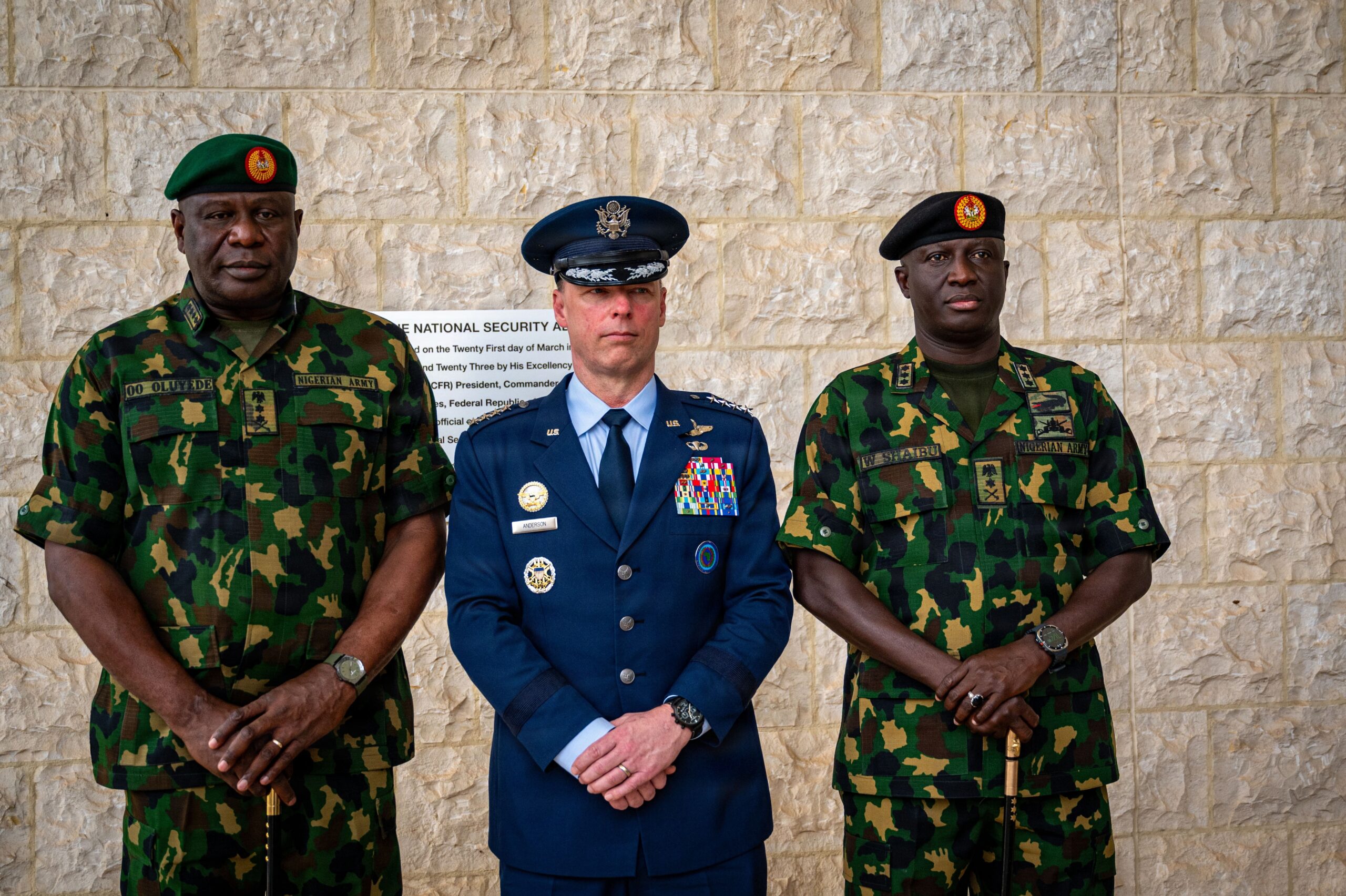
The United States is set to deploy approximately 200 troops to Nigeria to assist in training the nation’s armed forces as they confront an ongoing Islamist insurgency. According to a U.S. official, these troops are expected to arrive in the coming weeks and will join a small contingent of American military advisors already working alongside Nigerian forces. The Wall Street Journal first reported on this imminent deployment.
Nigerian officials have clarified that the new American troops will not engage in combat. Maj. Gen. Samaila Uba, a spokesperson for Nigeria’s Defense Headquarters, stated that the troops will act primarily as “technical and training personnel.” This effort reflects a commitment to bolster Nigeria’s capacity in combating terrorism, particularly against groups such as Boko Haram and ISIS-West Africa.
The timing of this deployment follows recent military actions in Nigeria. On December 25, 2022, President Donald Trump announced that U.S. forces had conducted airstrikes targeting ISIS militants in the country. The U.S. Africa Command indicated that its preliminary assessment suggested that “multiple ISIS terrorists” were killed in the strikes in Sokoto State. The operation was described by Trump as a symbolic gesture, highlighting his administration’s focus on countering terrorism in the region.
In the lead-up to the airstrikes, President Trump utilized social media to advocate for the protection of Christians in Nigeria, stating that they were being “mass slaughtered.” He emphasized that the U.S. military would take decisive action if these attacks continued. During a speech at the National Prayer Breakfast, Trump remarked, “When Christians come under attack, [their assailants] know they’re going to be attacked violently and viciously by President Trump.”
Despite these claims, the Nigerian government has contested the notion of a Christian genocide, asserting that extremist groups do not discriminate between religious affiliations when perpetrating violence. Both Christians and Muslims have fallen victim to the brutality of Boko Haram and ISIS-West Africa, with attacks occurring at churches, mosques, and various communities.
The violence in Nigeria is driven not only by religious tensions but also by historical disputes over land and water resources. In response to the escalating threat posed by these extremist groups, Gen. Dagvin Anderson, commander of U.S. Africa Command, reaffirmed the U.S. commitment to collaborating with Nigerian and regional partners to enhance counterterrorism efforts. He stated, “Our goal is to protect Americans and disrupt violent extremist organizations wherever they are.”
This deployment underscores the United States’ strategic interest in Nigeria, which is Africa’s most populous nation and a critical partner in regional security efforts. As the situation develops, the collaboration between U.S. and Nigerian forces may play a pivotal role in addressing the complex security challenges facing the region.