
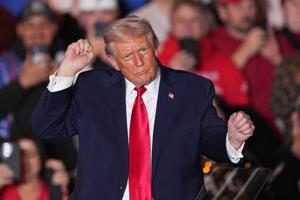
President Donald Trump announced that the United States has seized an oil tanker off the coast of Venezuela. This action reflects the Trump administration’s intensified efforts to exert pressure on the government led by President Nicolás Maduro. The seizure is part of a broader strategy aimed at undermining Maduro’s authority and disrupting the Venezuelan economy.
The tanker, identified as the “Grace 1,” had been transporting oil to the state-owned Venezuelan oil company PDVSA. According to the U.S. Department of Justice, this operation is a continuation of the sanctions imposed against Venezuela in response to the country’s political and economic crisis. The U.S. government has accused Maduro’s administration of corruption and human rights abuses.
The seizure occurred on April 1, 2020, as tensions between the U.S. and Venezuela escalated. This incident follows a series of sanctions and diplomatic efforts aimed at isolating the Maduro government. The Trump administration has consistently argued that these measures are necessary to support democracy and human rights in Venezuela.
Impact on Venezuelan Oil Industry
The seizure of the tanker signifies a significant blow to Venezuela’s already struggling oil industry. Once a major oil exporter, the country has seen production plummet as a result of mismanagement, U.S. sanctions, and ongoing political turmoil. The U.S. aims to further cripple Venezuela’s economy by targeting its oil exports, which form the backbone of its revenue.
In recent years, Venezuela has faced severe shortages of food, medicine, and other essential goods. The U.S. government contends that Maduro’s grip on power is sustained through the illicit sale of oil. By intercepting oil shipments, U.S. officials hope to diminish the financial resources available to the Maduro regime.
International Reactions
The international community has responded with mixed reactions to the U.S. seizure of the tanker. Some countries support the U.S. actions as a necessary step toward restoring democracy in Venezuela, while others view it as a violation of international law and an act of aggression.
Nicolás Maduro has condemned the seizure, labeling it a “theft” and a violation of Venezuela’s sovereignty. In response, Maduro’s government has vowed to protect its territorial integrity and maintain control over its oil resources.
The situation remains fluid as the U.S. continues to ramp up its pressure tactics against the Maduro administration. The implications of this seizure could resonate beyond Venezuela, potentially impacting global oil markets and international relations in the region.
As the crisis unfolds, analysts will be closely monitoring the effectiveness of U.S. policies in altering the course of Venezuela’s political landscape and alleviating the humanitarian crisis facing its citizens.