
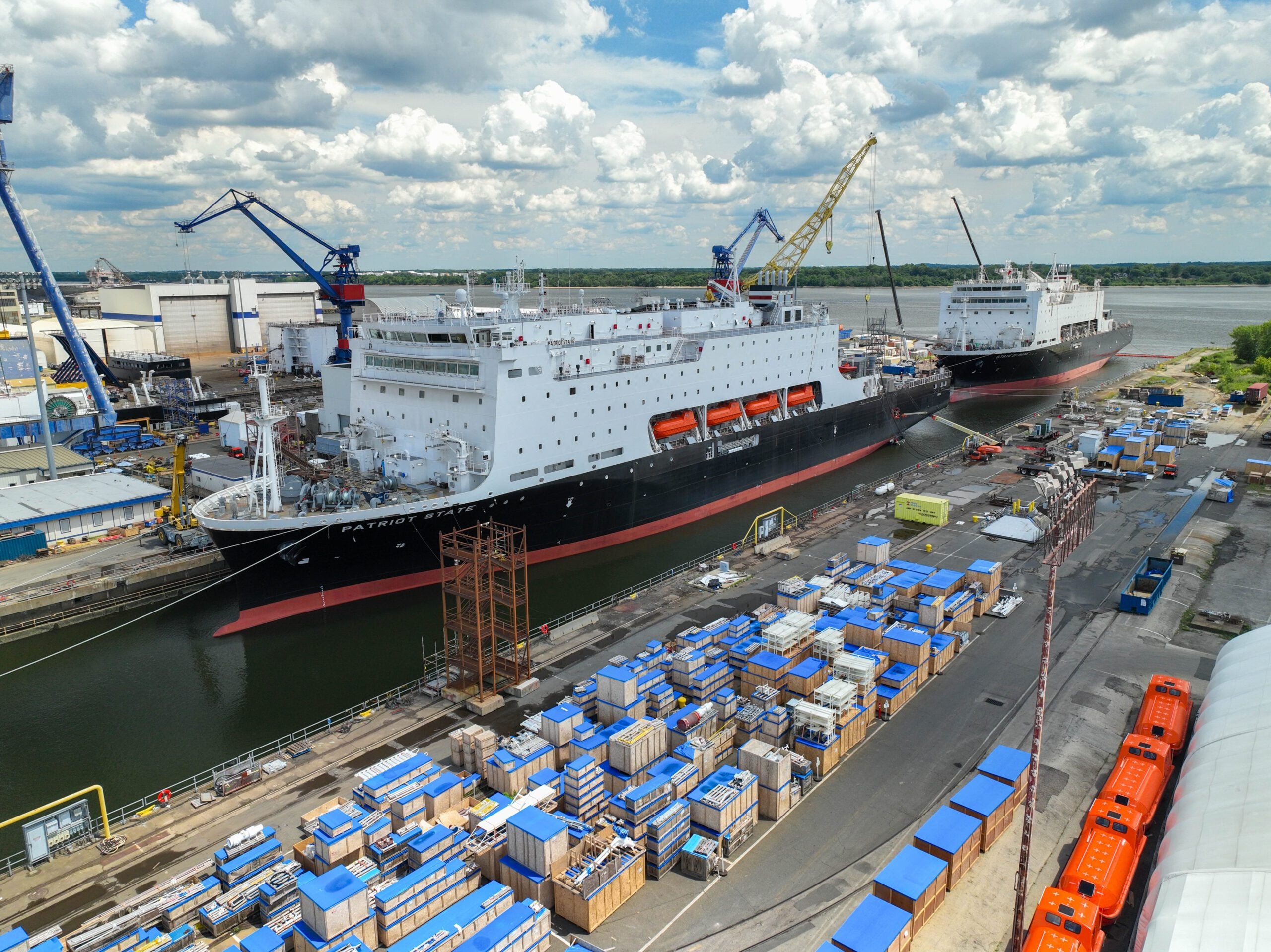
U.S. Maritime Administrator Stephen Carmel emphasized the necessity of a complete overhaul of the American maritime ecosystem during his address at the CMA Shipping conference in Stamford, Connecticut, on October 3, 2023. He asserted that merely increasing shipyard capacity is insufficient for the United States to regain a competitive edge on the global stage.
Carmel began by presenting a stark reality: “Today the United States produces about 0.1% of global commercial shipbuilding.” He noted that U.S. shipbuilding for the export market has dwindled to zero, illustrating the critical need for a comprehensive strategy. “Shipbuilding does not lead to maritime power. Maritime systems do,” he stated, highlighting the interconnected nature of shipbuilding, cargo demand, logistics networks, and port infrastructure.
The administrator referenced historical precedents to underscore his point. He spoke of Jeremiah Thompson, the founder of the Black Ball Line, who revolutionized shipping in the early 19th century by introducing the world’s first scheduled liner service between New York and Liverpool. “For the first time, ships sailed on fixed schedules whether their holds were full or not,” Carmel explained, emphasizing how this innovation fostered trust and subsequently generated cargo demand, leading to fleet expansion and increased shipbuilding.
In a more recent example, he mentioned Malcolm McLean, who transformed the logistics industry with the advent of containerized shipping. “McLean didn’t invent the steel box or the containership,” he said, “but he organized existing technologies into a new system that could scale globally.” This historical context serves as a reminder that systemic innovation is essential for maritime growth.
Carmel warned that the maritime industry is facing systemic challenges once again. He pointed to various disruptions, including pandemic-related supply chain issues, geopolitical tensions, and warfare in Europe, which complicate the industry’s operational landscape. “In that kind of environment, prediction becomes very difficult,” he noted. “The question is no longer simply what the future will look like. The more important question is how far out we can see and how quickly we can pivot when it changes.”
A critical aspect of the U.S. government’s Maritime Action Plan is to focus on rebuilding the entire maritime ecosystem rather than merely increasing shipbuilding output. Carmel clarified, “At its core, the plan is not a shipbuilding plan. It is an effort to rebuild the entire maritime ecosystem — cargo generation, resilient logistics architecture, a revitalized maritime workforce, modernized shipbuilding and ship repair capacity, and an innovation ecosystem capable of driving the next generation of maritime technology.”
He also addressed the scale of global competition, particularly from China, which currently produces approximately half of the world’s commercial ships. “But China did not achieve that position simply by building shipyards,” he remarked, “China built a maritime system — shipyards, logistics companies, state financing, industrial policy, and a deliberately cultivated workforce.”
Carmel underscored that maritime power is fundamentally reliant on collaboration across various sectors. “It rests on engineers who design ships, steelworkers who build them, mariners who operate them, and logisticians who move cargo across global networks — all working together inside a national industrial system.”
Emerging technologies such as artificial intelligence and digitalization could serve as crucial catalysts for future transformations in maritime logistics. “Maritime innovation rarely occurs simply because a new technology appears,” he stated. “It occurs when technology becomes part of a new system architecture.”
Looking to the future, Carmel declared that the next era of maritime shipping will depend on those who can construct the next integrated maritime system. He warned policymakers and industry leaders, “The time for studies and hearings is passing. We must transition to doing rather than studying — or we will soon be having hearings not about how to achieve maritime dominance, but how to live without it.”
Carmel’s remarks underscore a pivotal moment for the U.S. maritime industry, as it navigates the complexities of a rapidly evolving global landscape. The challenge ahead is not merely to build ships but to foster an entire ecosystem that supports maritime innovation and resilience.