
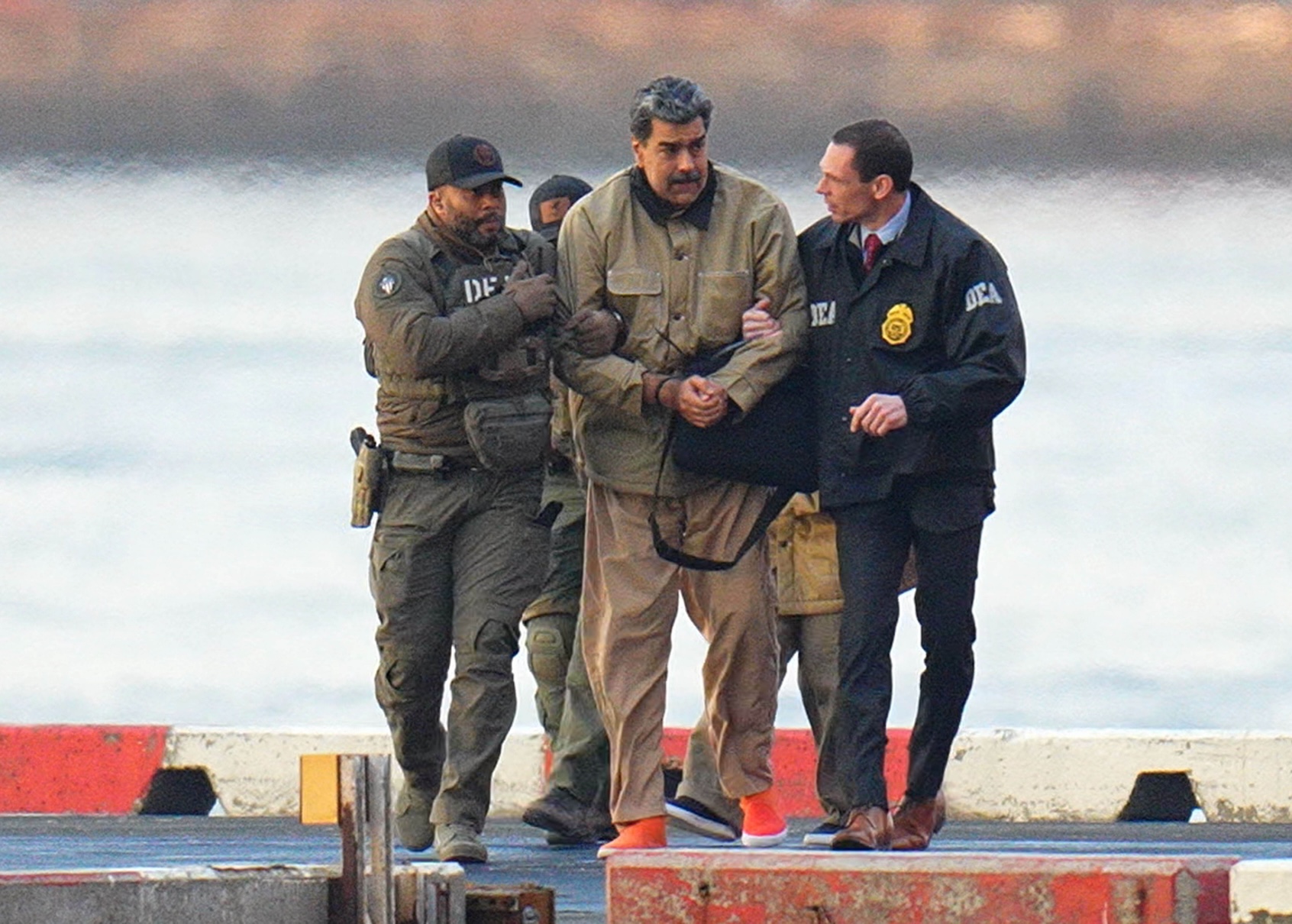
The U.S. Department of Justice has made notable adjustments to the indictment against Venezuelan President Nicolás Maduro, significantly downplaying the previously emphasized role of the so-called Cartel de Los Soles. The revised indictment, released on Saturday, reduces references to the alleged drug trafficking network to just two mentions, contrasting sharply with the original 2020 grand jury indictment, which cited it 32 times and labeled Maduro as its leader. Maduro has pleaded not guilty to the charges, which include “narco-terrorism conspiracy.”
The Cartel de Los Soles, a term coined by Venezuelan journalists in the 1990s, has been used to describe a network of high-ranking officials allegedly involved in drug trafficking. This phrase references the sun symbols worn on the uniforms of many Venezuelan military officials. The updated indictment now refers to this entity as a “patronage system,” omitting the explicit characterization of its members as part of an organized cartel.
Shifting Narratives and Official Statements
Despite the Justice Department’s revisions, the U.S. Department of State designated the Cartel de Los Soles as a foreign terrorist organization in November 2025. The designation, made by Secretary of State Marco Rubio, followed sanctions from the Department of the Treasury announced earlier that year. Secretary of the Treasury Scott Bessent stated that these sanctions aimed to expose the Maduro regime’s support for narco-terrorism through groups like the cartel.
Rubio reiterated this characterization during an appearance on NBC’s “Meet the Press,” referring to the cartel as an actual organization led by Maduro, despite the recent changes in the indictment. He stated, “We continue to reserve the right to take strikes against drug boats that are bringing drugs towards the United States that are being operated by transnational criminal organizations, including the Cartel de Los Soles. Of course, their leader — the leader of that cartel — is now in U.S. custody … and that’s Nicolás Maduro.”
In a similar vein, Senator John Cornyn took to social media, asserting that Maduro was not only an illegitimate president but also the head of a significant drug trafficking network involving high-ranking military officers and government officials. Following a briefing on the matter, Speaker of the House Mike Johnson described the Maduro regime as functioning as a criminal organization disguised as a government, claiming that its activities were coordinated with designated narco-terrorists and transnational criminal organizations.
Implications of the Revised Indictment
The changes to the indictment reflect a broader shift in how U.S. authorities view the Venezuelan government under Maduro. The reduced emphasis on the Cartel de Los Soles may signal a recalibration of the narrative surrounding the Maduro regime’s activities. While the U.S. government continues to pursue legal action against Maduro, the revisions highlight the complexity of the situation in Venezuela, where political, economic, and criminal elements intertwine.
As the legal proceedings unfold, the implications of these changes will likely reverberate through political discourse in the United States and Venezuela. The adjustments may also influence how international observers perceive the legitimacy of the U.S. government’s allegations against Maduro and his administration.
The evolving narrative around the Cartel de Los Soles underscores the dynamic nature of U.S.-Venezuela relations, particularly as the Biden administration grapples with the broader implications of its policies in Latin America. The outcome of Maduro’s legal challenges could have significant ramifications for the region’s stability and the ongoing humanitarian crisis in Venezuela.