
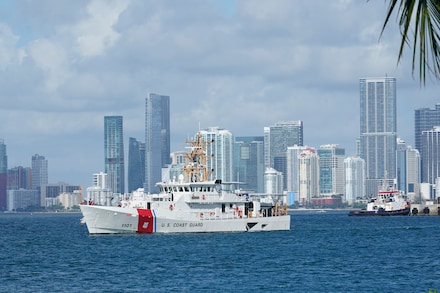
The United States has intercepted another vessel as part of an intensified blockade on Venezuelan oil shipments. This action follows President Donald Trump’s announcement on October 19, 2023, regarding a “complete blockade” against all sanctioned oil tankers entering or leaving Venezuela. The U.S. aims to increase pressure on the government of President Nicolás Maduro, which it accuses of undermining democracy and engaging in corrupt practices.
The U.S. Coast Guard reported that it seized the vessel just days after the president’s directive. According to the Office of Foreign Assets Control (OFAC), this blockade is intended to restrict the flow of oil, a key revenue source for the Maduro administration. The U.S. government has emphasized that it seeks to prevent any oil shipments that could benefit the Venezuelan government.
The blockade is part of a broader strategy employed by the Trump administration, which has included sanctions targeting Venezuelan officials and the oil industry. In recent months, the U.S. has ramped up its enforcement measures, demonstrating a commitment to curtailing Venezuela’s oil exports. This latest interception is a clear indication of that strategy in action.
Details of the Interception
The intercepted vessel was reportedly identified as attempting to transport oil from Venezuela to a foreign destination when it was seized. The U.S. Coast Guard has not disclosed the name of the vessel or its cargo details, citing operational security. This operation is part of a series of maritime patrols aimed at enforcing the blockade effectively.
Following the seizure, authorities reiterated their stance on the illegality of trading Venezuelan oil under current U.S. sanctions. The administration has stated that it will continue to take action against those who attempt to evade these restrictions.
In his announcement, President Trump highlighted the importance of the blockade as a means to restore democracy in Venezuela. He called on other nations to join the U.S. in imposing similar measures, urging a collective effort to isolate the Maduro regime. The U.S. has previously faced criticism for its heavy-handed approach, with some arguing that sanctions disproportionately affect the Venezuelan populace.
The Implications of the Blockade
The blockade’s long-term effects on Venezuela’s economy remain to be seen. Oil exports have already plummeted significantly due to previous sanctions, leading to severe economic hardship for many Venezuelans. The U.S. government hopes that increased pressure will lead to change in the country’s political landscape, although the effectiveness of such measures is debated.
Analysts suggest that while the blockade may hinder Venezuela’s oil revenues, it could also lead to further entrenchment of the Maduro government. The regime has historically relied on nationalistic rhetoric to rally support, often blaming external forces for domestic challenges.
The situation is evolving, and the U.S. continues to monitor maritime activities closely. As the blockade takes effect, the international community watches closely for both political and economic ramifications. The U.S. remains firm in its commitment to pressuring the Maduro administration until there is a significant change in governance in Venezuela.
This ongoing conflict over oil trade highlights the complex interplay of international politics, economic sanctions, and local governance in Venezuela, making it a critical issue in contemporary global affairs.