
The United Kingdom’s electricity grid is under significant strain, driven by increased demand and a surge in renewable energy generation. Wind farms in Scotland have doubled their output over the past decade, yet the infrastructure is struggling to keep pace. As of March 2024, construction delays on a new 3,280-megawatt nuclear power plant west of London have exacerbated the situation. Transmission lines from Scotland to southern England are already maxed out, and new connections are at least three to four years away from becoming operational.
U.K. Prime Minister Keir Starmer has committed to expanding wind power and reducing fossil fuel reliance by 2030, emphasizing that low-carbon energy is both cheaper and more secure than natural gas imports. However, the lack of sufficient transmission capacity has led to grid congestion, preventing some of the carbon-free energy from reaching consumers. This has resulted in an estimated additional cost of £196 million (approximately $265 million) in 2024 alone, as grid operators must increase gas-fired generation to meet southern demand while compensating wind farm operators for curtailed output.
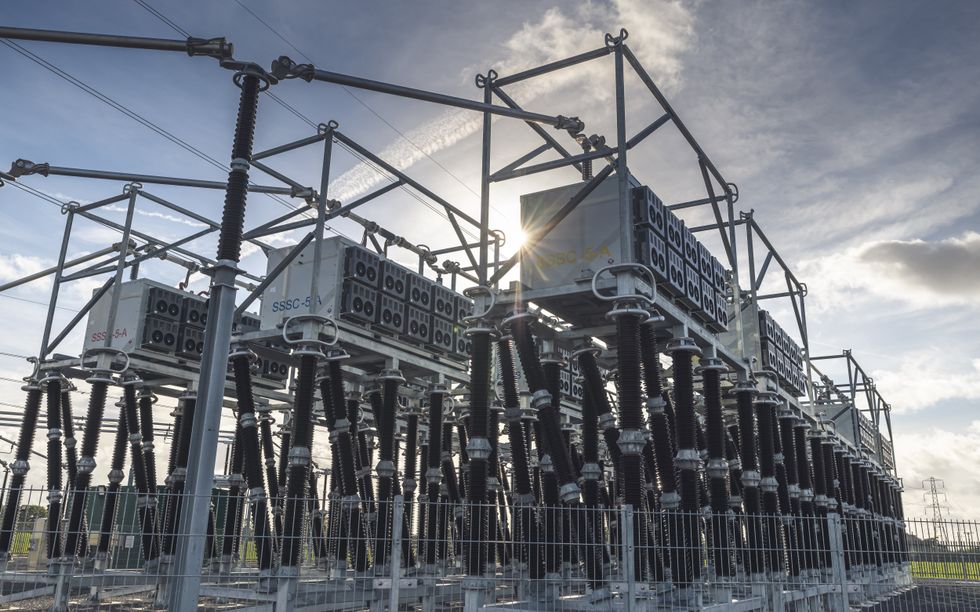
To alleviate these pressures, the U.K. has begun deploying innovative solutions. SmartValves, advanced electronic power-flow controllers, have been installed at three substations in northern England—Penwortham, Harker, and Saltholme—with a fourth under construction at South Shields. These devices enable grid operators to reroute electricity from congested lines to those with spare capacity, significantly enhancing the system’s efficiency.
Innovations in Grid Management
Grid operators are utilizing new technologies, termed grid-enhancing technologies (GETs), to maximize existing infrastructure. Julian Leslie, chief engineer at the National Energy System Operator (NESO), highlighted the cost-effectiveness of GETs, stating, “These technologies allow us to operate the system harder before an investment arrives and save a substantial amount of money.” The implementation of GETs represents a low-cost interim solution while awaiting new transmission lines.
The urgency surrounding grid congestion has positioned the U.K. as a leader in testing and deploying GETs. However, the rapid introduction of these technologies comes with risks, as interventions in the interconnected power system can have widespread implications. Experts, including Robin Preece from the University of Manchester, express caution regarding the complexities introduced by these systems and the potential for destabilizing feedback loops.
One particularly effective GET involves the use of electronic power-flow controllers, like the SmartValves developed by Smart Wires. These devices have allowed for enough additional wind energy to flow through congested areas to replace an entire gas-fired generator. Installed four years ago, the SmartValves at the Penwortham substation are expected to enhance their impact as more units are deployed.
Addressing Infrastructure Limitations
The congestion at Penwortham is particularly problematic, located just north of the U.K. grid’s most significant bottleneck, known as Boundary B7a. This bottleneck limits the collective capacity of the circuits running south from Penwortham, leading to stranded wind energy and increased costs for consumers. The National Grid Electricity Transmission is actively seeking ways to improve capacity, including deploying more SmartValves and upgrading existing infrastructure.
The SmartValves’ ability to quickly adjust power flows contrasts sharply with older technologies like phase-shifting transformers, which are cumbersome and slow to respond. The new devices can shift power flows in milliseconds, offering a more flexible and responsive solution to managing grid congestion.
Furthermore, the National Grid is implementing dynamic line rating technology, which uses sensors to monitor real-time weather conditions, allowing for increased capacity during favorable conditions. This technology is projected to save consumers an estimated £33 million annually.
While the U.K. is making strides in integrating GETs, challenges remain. Operators must balance the rapid deployment of new technologies with the need for thorough understanding and management. As grid operators explore the full potential of these innovations, the focus will be on creating a more resilient and efficient power system capable of meeting future demands.
Ultimately, the U.K.’s experience with grid congestion and the implementation of GETs could serve as a model for other regions facing similar challenges in the transition to renewable energy. The path forward will require continued investment in both technology and infrastructure to ensure a reliable and sustainable energy future.