
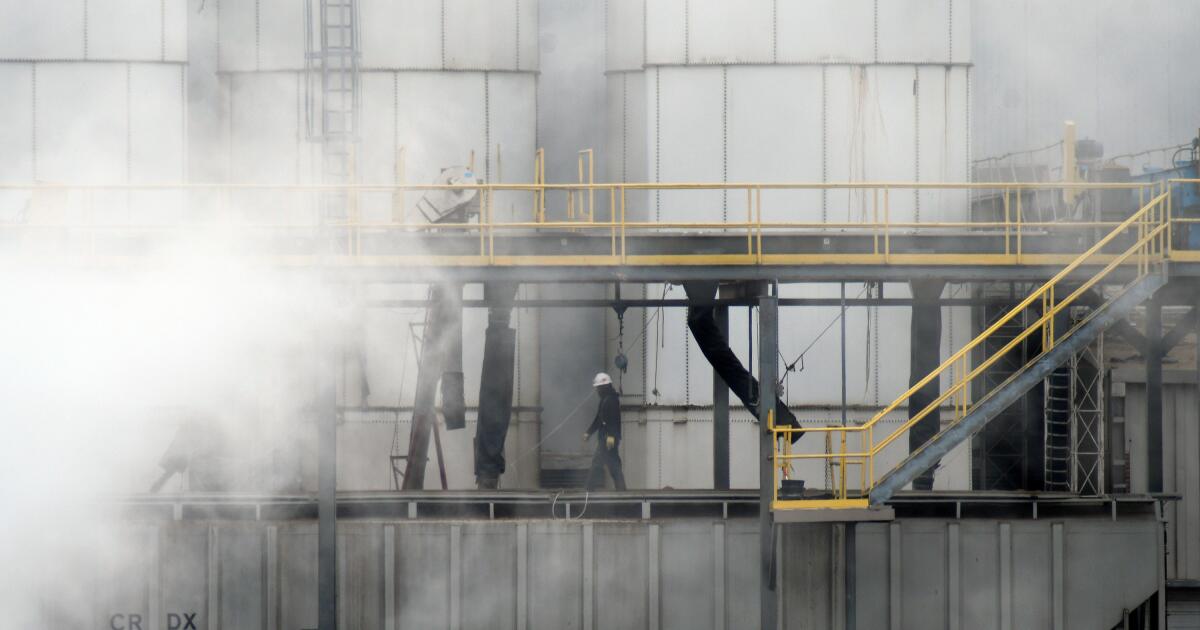
BREAKING: Tyson Foods has announced the imminent closure of its beef processing plant in Lexington, Nebraska, set for January 20, 2024. This decision threatens the livelihoods of 3,200 workers, sending shockwaves through the community of just 11,000 residents. As families brace for the financial fallout, local leaders warn of an impending economic crisis.
The closure comes as Tyson aims to “right-size” its beef operations amidst record low cattle herds and projected losses of $600 million in the next fiscal year. Many workers, like Alejandra Gutierrez, express despair over the sudden job loss. “Your world closes in on you,” she said, reflecting the anxiety felt by numerous families who depend on the plant for their livelihoods.
Economist Michael Hicks describes the impact as unprecedented, stating, “Losing 3,000 jobs in a city of 10,000 to 12,000 people is one of the largest closures we’ve seen in decades.” The ripple effects are expected to reach beyond the plant, impacting local businesses such as restaurants, shops, and service providers that rely on the steady influx of Tyson employees.
A recent report from the University of Nebraska, Lincoln indicates that total job losses could reach 7,000 across Lexington and surrounding areas, resulting in an estimated annual loss of $241 million in wages and benefits for former Tyson employees. The community, which has thrived with a diverse population and robust local services, now faces uncertainty as many families consider relocating to seek employment elsewhere.
Inside St. Ann’s Catholic Church, parishioners gathered in distress, sharing their fears for the future. Gutierrez recalled receiving the plant closure news just before Thanksgiving, shattering hopes for her daughter Kimberly’s college education. “Where would we get the money to pay for college?” she lamented, highlighting the deep personal impact of the impending shutdown.
For many, the plant was more than just a job; it was a lifeline that enabled them to build a future. “Tyson was our motherland,” said Arab Adan, a Kenyan immigrant and plant worker. As he pondered his children’s future, he faced the harsh reality of joblessness amidst a tight-knit community that had thrived under the plant’s operations.
As local businesses brace for a downturn, restaurateurs like Armando Martinez, owner of Los Jalapenos, fear for their survival. “If I can’t keep up with bills, the restaurant will close,” Martinez said, emphasizing the interconnectedness of the community’s economic health.
Despite the grim outlook, residents remain hopeful for potential solutions. City Manager Joe Pepplitsch stresses the need for Tyson to assist the community during this transition, advocating for the sale of the plant to a new operator that could restore jobs. “Tyson owes this community a debt,” he stated, echoing the sentiments of many who feel abandoned by the company.
As retraining workshops are organized to help displaced workers navigate unemployment and job searching, the emotional toll is palpable. Many older workers find themselves entering an unfamiliar landscape, unsure of how to adapt to a job market that favors younger applicants. “It won’t be easy,” said Fernando Sanchez, a long-time Tyson employee.
With the clock ticking down to the closure, the urgency for immediate action grows. The residents of Lexington are left to grapple with the reality of losing not just their jobs, but the very fabric of their community. As families prepare for the worst, the call for support and intervention from Tyson and local officials becomes increasingly critical.
In a community defined by resilience and diversity, the fate of Lexington hangs in the balance as they confront this unprecedented crisis. The next few weeks could determine whether the American dream remains a possibility for those who have called this town home.