
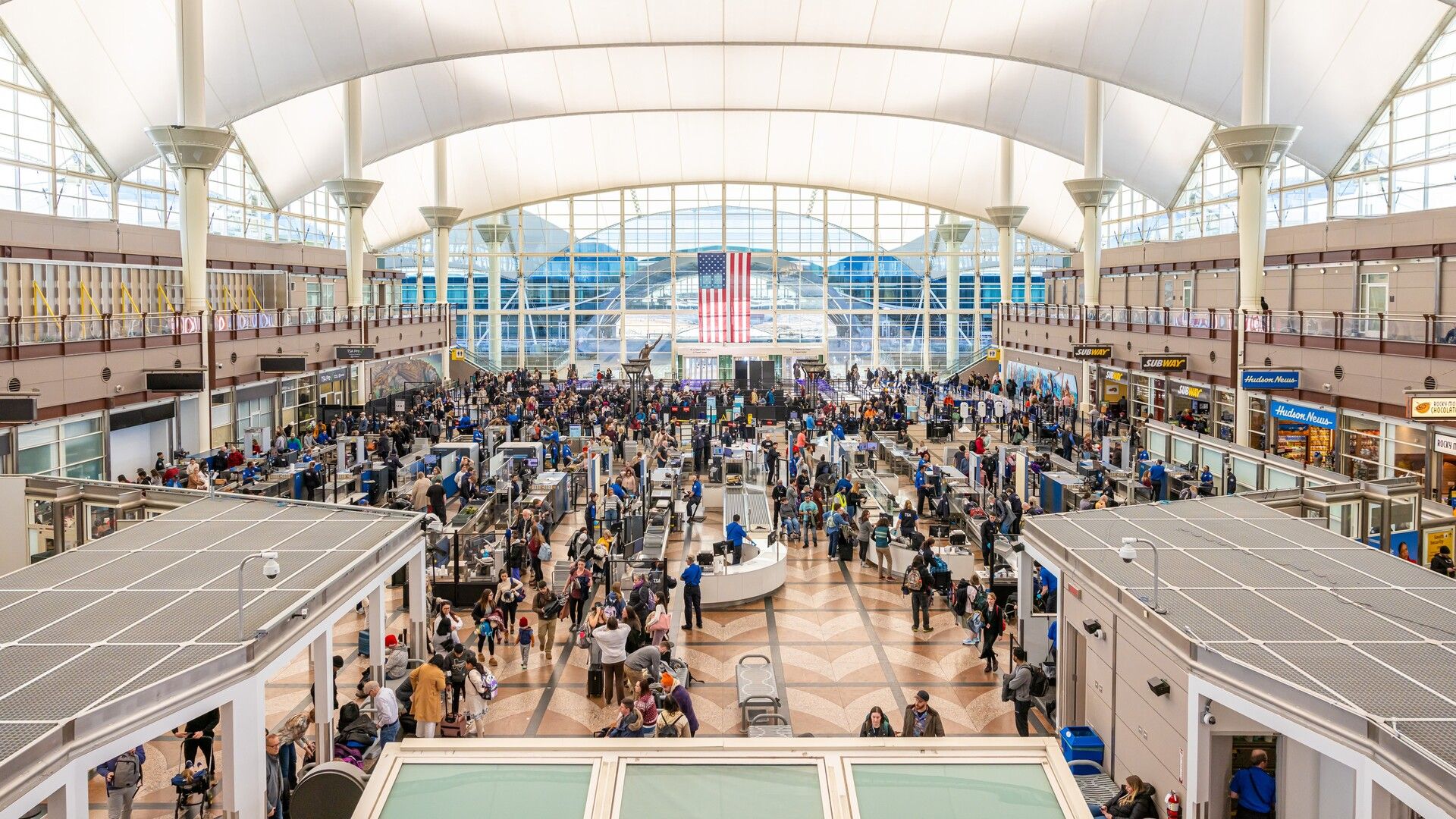
The United States achieved a historic milestone in air travel on November 30, 2025, when the Transportation Security Administration (TSA) confirmed that over 3.13 million passengers were screened at airports across the nation. This record surpasses the previous high of 3.09 million passengers set earlier this year, marking a significant increase of 1.4% from the post-Thanksgiving Sunday in 2024.
This surge in air travel comes amid a challenging backdrop for the aviation industry. The sector is still recovering from disruptions caused by a government shutdown and faced severe weather conditions over the Thanksgiving weekend. Additionally, concerns related to software updates from Airbus added to the uncertainty surrounding travel plans.
Despite these challenges, TSA agents processed a staggering 3,133,924 individuals on that Sunday, representing the highest number of screenings in the agency’s history. The previous record was set on June 22, 2025, with 3,096,797 passengers screened. For context, the average daily passenger volume is approximately 2.48 million, indicating a notable increase of around 14,000 travelers per day compared to 2024.
Adam Stahl, the deputy TSA administrator, acknowledged the remarkable travel numbers while also expressing gratitude to TSA personnel. He stated, “The Sunday after Thanksgiving is the busiest travel day of the year, and this year we have seen record numbers of holiday travelers taking to the skies. We are extremely grateful for the tireless work of our TSA Officers, who show up every day to ensure Americans can travel freely and safely.”
A Record Year for Passenger Screenings
The year 2025 has seen an unprecedented number of days with over three million passengers screened. Prior to this year, this milestone had only been reached on two occasions. Now, it has occurred on seven separate days. Interestingly, while the Sunday following Thanksgiving is traditionally the busiest travel day, summer months consistently feature prominently in the overall rankings of high passenger volume days.
The top ten busiest travel days on record demonstrate this trend, with several summer dates included. Notably, the start of the 2025 summer travel season ranks as the second-busiest day overall, and all four Sundays in July appear in the top ten.
Here are the top ten record travel days for TSA screenings:
1. November 30, 2025 – Sunday after Thanksgiving: 3,133,924
2. June 22, 2025 – Start of summer travel season: 3,096,797
3. December 1, 2024 – Sunday after Thanksgiving: 3,088,836
4. July 6, 2025 – Sunday after Fourth of July: 3,041,954
5. July 20, 2025 – Mid-summer peak: 3,040,346
6. July 27, 2025 – Mid-summer peak: 3,017,408
7. July 7, 2024 – Sunday after Fourth of July: 3,013,622
8. May 23, 2025 – Start of Memorial Day weekend: 3,010,183
9. July 13, 2025 – Mid-summer peak: 3,005,374
10. July 17, 2025 – Mid-summer peak: 2,998,091
The travel surge in 2025 comes despite initial predictions of weaker demand. Airlines anticipated that policies from the current US administration, including tariffs and stricter immigration controls, would lead to a decrease in travel. Contrary to these forecasts, airlines have adapted, resulting in lower fares and increased passenger numbers. Reports indicate that travel costs declined year-over-year for six consecutive months from March to August, with summer airfares dropping by 7.4%.
Airport Dynamics Amid Increased Traffic
While TSA screenings provide valuable data, they do not fully capture the extent of airport traffic. For instance, Hartsfield-Jackson Atlanta International Airport (ATL), known as the world’s busiest airport, has recorded daily screenings of up to 114,000, yet actual passenger numbers can be up to three times that figure. Similarly, Chicago O’Hare International Airport (ORD), which reached a record of 117,871 screenings on August 4, welcomed over 8.26 million passengers in July alone, averaging about 266,000 travelers each day.
ORD is currently a focal point for competition between United Airlines and American Airlines, both of which operate hubs at the airport. United has expanded its presence, offering 47% of all seats from ORD, while American has responded by adding destinations and enhancing aircraft on existing routes. This competition has led to increased capacity and lower fares, resulting in an 11% year-over-year uptick in airline traffic thus far in 2025.
As the aviation industry continues to navigate challenges and adapt to evolving passenger demands, the record-breaking travel day reflects a resilient sector poised for growth and adaptation in an ever-changing environment.