
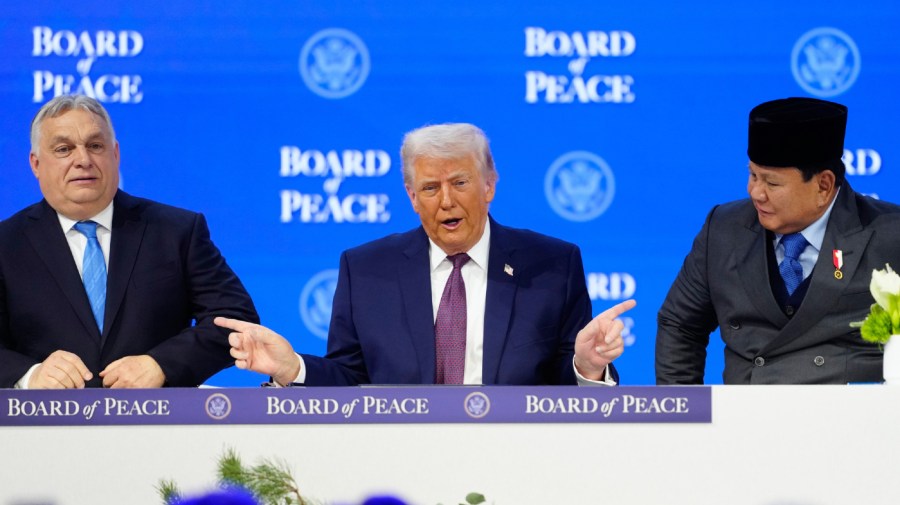
Donald Trump’s recently announced Board of Peace is drawing criticism as a potential distraction from the vital role of the United Nations in global peace efforts. Critics, including comedian Jimmy Kimmel, have labeled this new initiative “The Legion of Doom,” suggesting that it undermines established international mechanisms for conflict resolution.
The Board of Peace aims to bring together influential figures to address pressing global issues, yet its effectiveness remains uncertain. Many observers argue that without the backing of established institutions like the UN, the board may struggle to achieve meaningful outcomes. The UN, founded in 1945, has played a crucial role in mediating conflicts and facilitating peace agreements, making its contributions hard to overlook.
Trump’s Initiative Raises Questions
Critics have expressed concern over the leadership and objectives of Trump’s Board of Peace. The chairman, who has been criticized for appearing disengaged, raises questions about the commitment to peace. This skepticism is compounded by the fact that many of the board’s proposed actions lack the support of international law and established diplomatic protocols, which have governed peace efforts for decades.
In a world where conflicts often require nuanced approaches, the unilateral nature of the Board of Peace may not provide the comprehensive solutions needed. The UN has long been recognized for its multilateral approach, uniting countries to address complex geopolitical issues. A shift away from this structure could lead to fractured international relations.
The Role of the United Nations
The UN has established various frameworks for maintaining peace, including the Security Council and the General Assembly. These bodies have facilitated numerous peace agreements and resolutions that have contributed to global stability. For instance, the UN’s involvement in the 2015 Paris Agreement showcased its ability to unite nations around a common goal—addressing climate change.
The Board of Peace, while potentially bringing fresh perspectives, lacks the institutional knowledge and diplomatic weight that the UN possesses. With global tensions rising, the necessity of effective international cooperation cannot be overstated. As Donald Trump seeks to redefine approaches to diplomacy, the implications of sidelining established bodies like the UN could have significant consequences for international peace and security.
As the Board of Peace develops, observers will be watching closely to see if it can prove its worth or if it will ultimately highlight the irreplaceable role of the UN in fostering global cooperation. The legacy of the UN is not easily dismissed, and as history has shown, the pursuit of peace is a complex endeavor that requires collective effort and commitment.