
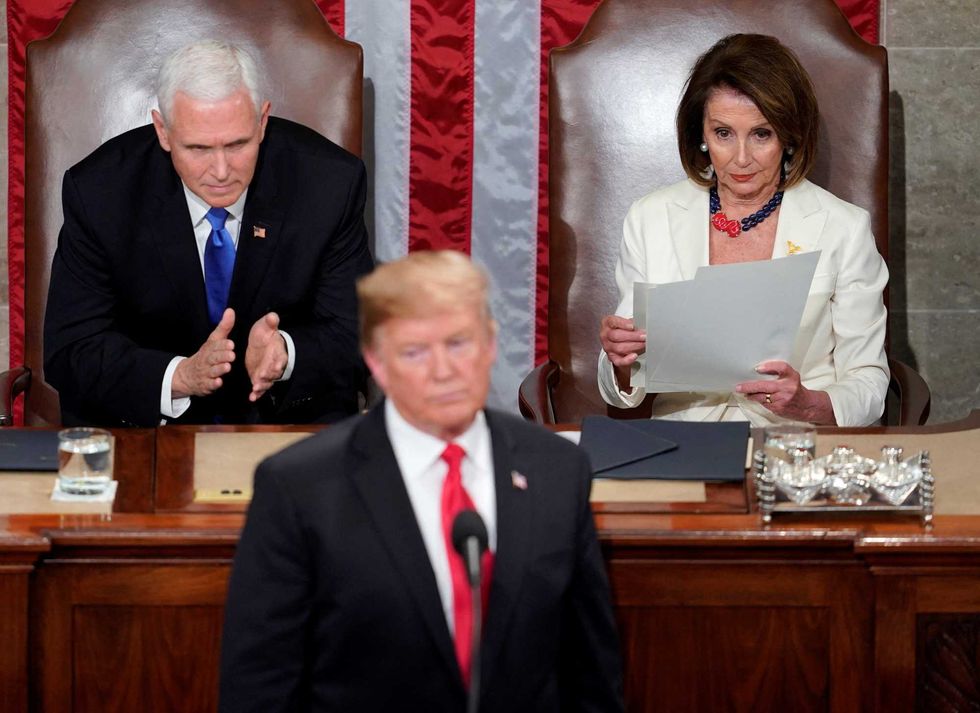
The leadership role of the Speaker of the House in the United States has undergone a significant transformation, particularly under the influence of former President Donald Trump. As the current Speaker, Mike Johnson navigates a challenging political landscape, the position has shifted from a nonpartisan moderator to a powerful, party-centric role, raising questions about the future of congressional authority.
From the inception of the U.S. Constitution in 1787, the framers emphasized the importance of a representative legislative branch. Article I defines the House of Representatives and the Senate, granting them broad powers, including the ability to levy taxes, declare war, and approve treaties. In contrast, Article II outlines the president’s responsibilities in a more concise manner, reflecting the framers’ intention for Congress to be the primary policymaking body.
Evolution of the Speaker’s Role
Initially, the Speaker was envisioned as a neutral figure to facilitate debate and coalition-building in Congress. Over the years, however, this ideal has evolved. The early 19th-century Speaker Henry Clay, for example, used his position to advocate for the War of 1812. By the late 19th century, Speakers like Thomas Reed and David Henderson began implementing procedures that allowed the majority party to dominate legislative discussions, setting a precedent for future leaders.
The 20th century witnessed a further centralization of power within the Speaker’s office. Joseph Cannon, who served as Speaker in 1903, took control of the Rules Committee, enabling him to dictate which legislation would be brought to the floor for a vote. This trend continued with Newt Gingrich, who, upon his election in 1995, expanded the Speaker’s responsibilities and centralized resources, reinforcing the notion of the Speaker as a party leader rather than a neutral manager.
Current Challenges and Implications
Today, the role of the Speaker is more complex than ever. Mike Johnson inherits an office equipped with significant resources but faces the challenge of leading a Republican Party that remains deeply loyal to Trump. Recently, Johnson’s decision to keep Congress out of session for eight weeks during a government shutdown exemplifies the ongoing tension between party loyalty and congressional effectiveness.
This absence from legislative activity resulted in no committee meetings or policy debates, undermining Congress’s oversight capabilities and allowing executive branch decisions to dominate. The shift from a coalition-building approach to one that prioritizes party allegiance highlights a departure from the original intent of the framers of the Constitution, who sought to empower Congress as a check on executive authority.
As the Speaker’s role continues to evolve, the implications for American democracy are significant. The growing centralization of power within the Speaker’s office can lead to a more responsive legislative body but may also foster dependency on a single leader to uphold the responsibilities of Congress. The historical context of the Speaker’s office underscores the delicate balance between party politics and the foundational principles of governance envisioned by the framers.
In conclusion, the influence of Trump and the evolving dynamics within the House of Representatives pose critical questions about the future of congressional power. As Mike Johnson grapples with these challenges, the effectiveness of Congress as a representative body remains at stake, reflecting the broader complexities of American political life.