
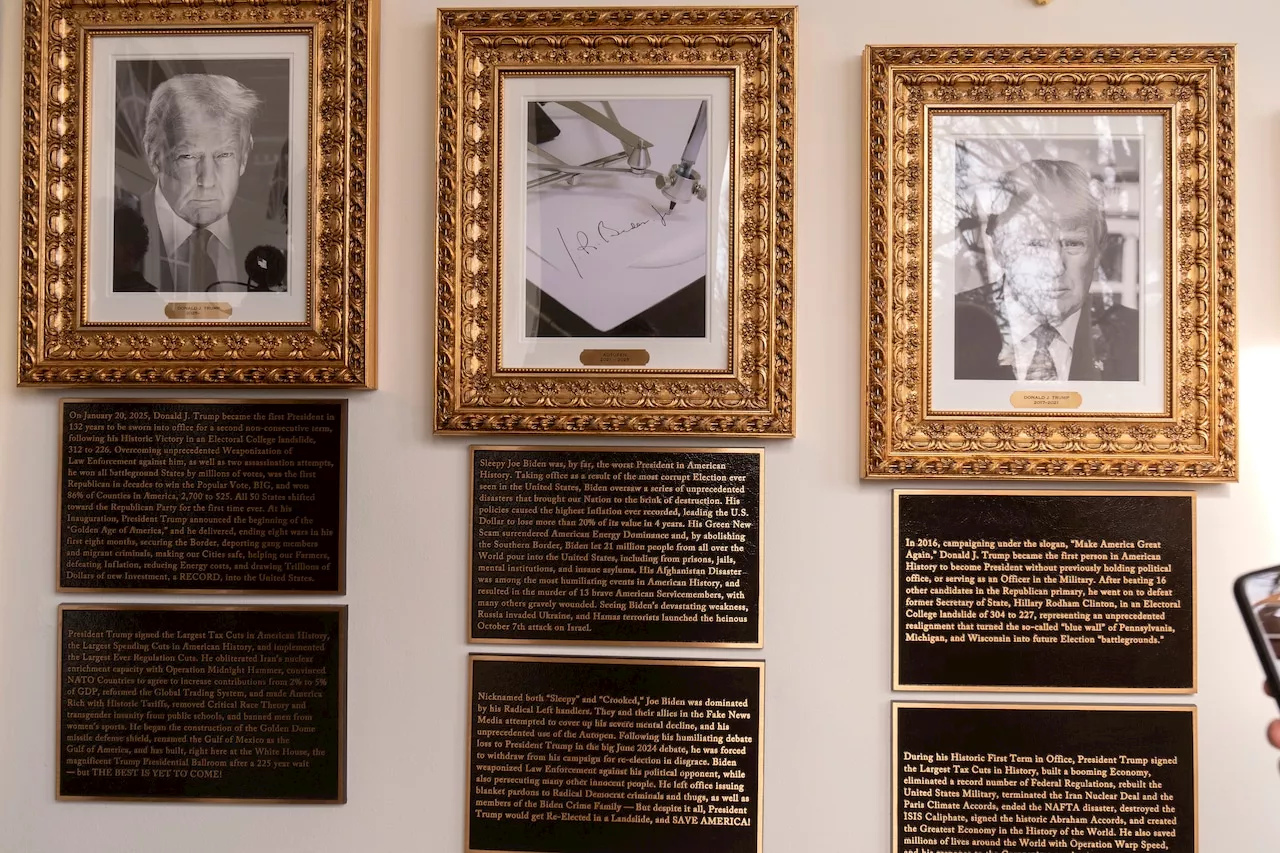
The recent installation of plaques beneath the portraits of former Presidents Barack Obama and Joe Biden at the White House has ignited a lively debate among Fox News hosts. Brian Kilmeade expressed concern over the plaques, which feature critical commentary about both presidents, diverging from the lighter stance taken by fellow commentator Jesse Watters.
On December 17, 2025, the plaques were unveiled as part of what has been termed Trump’s “Walk of Fame” at the White House. The plaques contain pointed remarks about Biden’s presidency and Obama’s administration, with Biden’s plaque referencing baseless claims about the 2020 election. It reads, “Taking office as a result of the most corrupt Election ever seen in the United States, Biden oversaw a series of unprecedented disasters that brought our Nation to the brink of destruction.”
Obama’s plaque is equally controversial, labeling him “one of the most divisive political figures in American History.” It criticizes his policies, including the Affordable Care Act, stating, “He crippled small businesses with crushing regulation and environmental red tape, devastated American coal miners, and weaponized the IRS and Federal bureaucracies against his political opponents.”
Kilmeade, during a discussion about the plaques, suggested a less confrontational approach. “Just put the profiles up there. I am not for dispelling or saying anything bad,” he stated. He noted that historical perspectives on presidents often shift over time, referencing Ulysses S. Grant as an example of a president once viewed unfavorably but later reassessed more positively.
The installation of these plaques has raised questions about the appropriateness of such partisan displays in a setting typically reserved for respectful recognition of past leaders. It has led to discussions among political commentators regarding the state of political discourse in the United States, especially in the context of a deeply divided electorate.
As the debate continues, the implications of Trump’s actions will likely reverberate beyond the walls of the White House, influencing the broader conversation about presidential legacies and political civility.