
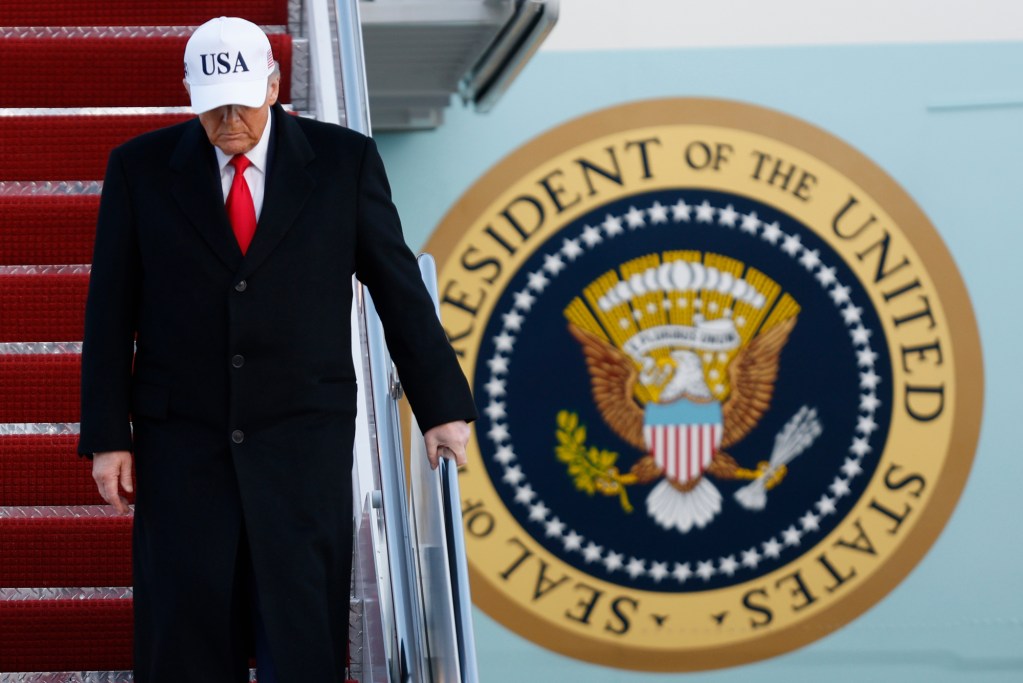
President Donald Trump announced on February 1, 2024, that his administration will deny federal funding to any states that harbor local governments resisting federal immigration policies. This marks an expansion of previous threats directed specifically at so-called sanctuary cities, which limit cooperation with federal immigration enforcement.
During a speech at the Detroit Economic Club, Trump stated, “We’re not making any payments to sanctuary cities or states having sanctuary cities, because they do everything possible to protect criminals at the expense of American citizens.” He emphasized the implications of such policies, suggesting they contribute to fraud and crime. When pressed by reporters regarding the specifics of the funding cuts, Trump simply replied, “You’ll see. It’ll be significant.”
The potential fallout from this decision is substantial, affecting not only jurisdictions that are openly supportive of immigration protections but also areas that may not have a particularly antagonistic stance toward noncitizens. Previous attempts by Trump to cut funding to sanctuary jurisdictions faced significant legal challenges. Courts have previously ruled against similar actions, asserting that the administration could not withhold funding without clear justification or specific conditions.
The Justice Department had previously issued a list of approximately three dozen jurisdictions classified as sanctuary areas. This list predominantly includes Democratic-controlled regions, such as California, New York, and Connecticut, alongside cities like Boston and counties including Baltimore County and Cook County. This updated list replaced an earlier, broader compilation that faced backlash from local officials who questioned the criteria used for their inclusion.
In recent months, the federal government has initiated moves to suspend funding across various programs, already facing legal disputes. The U.S. Department of Agriculture has warned states that resisted providing data on recipients of the Supplemental Nutrition Assistance Program (SNAP) that they may lose administrative funds. A legal challenge regarding this information request was already in progress prior to the warning.
Additionally, the U.S. Department of Health and Social Services announced that it would halt funding for childcare subsidies and other support to low-income families in five states led by Democrats due to unspecified fraud suspicions. However, a court subsequently intervened to halt these funding cuts.
The administration’s push for financial pressure has also focused on Minnesota, where federal officers have been deployed as part of an immigration crackdown. The Agriculture Department is reportedly freezing funding in the state without providing detailed explanations. Furthermore, the Centers for Medicare and Medicaid Services indicated plans to withhold $515 million every three months from 14 Medicaid programs deemed “high risk” due to alleged fraud, an amount representing a quarter of federal funding for those programs. State officials have announced plans to appeal these decisions.
As this situation unfolds, the implications for state and local governments that resist federal immigration policies could be extensive, raising questions about the future of federal funding and cooperation between various levels of government.