
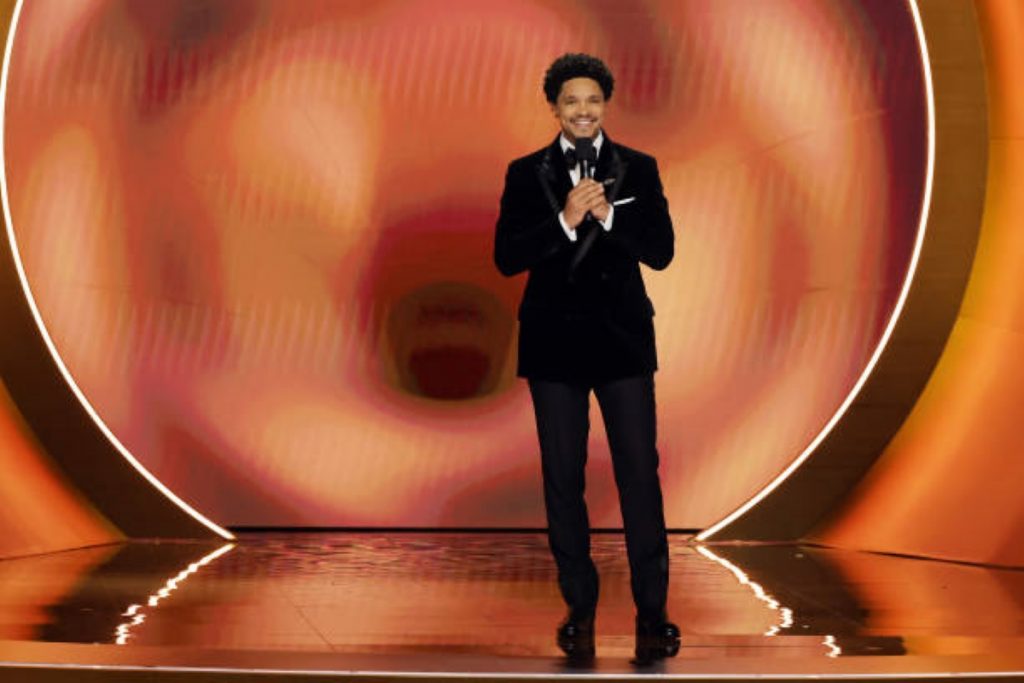
Donald Trump has threatened to sue comedian Trevor Noah following a joke made during the 2026 Grammy Awards. In a post on Truth Social, Trump accused Noah of making “false and defamatory” remarks related to his past associations with Jeffrey Epstein. The controversy has ignited a significant reaction on social media, particularly on X, where Trump’s comments have gone viral.
The incident stems from a brief, observational joke that Noah delivered while hosting the awards show. It referenced Trump and former President Bill Clinton in the context of Epstein’s infamous island. Trump’s response included a series of insults directed at Noah, labeling him a “total loser” and a “poor, pathetic, talentless dope of an M.C.” He also announced plans to “send my lawyers” to pursue legal action, though as of February 2, no lawsuit has been filed.
Understanding the Joke and Its Impact
Noah’s joke was intended as cultural commentary rather than an accusation. It drew upon well-known public information without alleging any specific wrongdoing. The reaction to Trump’s threat has been overwhelmingly skeptical and mocking, with many users framing it as a typical response from the former president. Common sentiments expressed on X include “Trump can’t take a joke” and “Here we go again,” highlighting a perceived pattern of Trump’s outrage and legal threats.
Supporters of Trump argue that the joke crossed a line into defamation, asserting that it was untrue and harmful. Trump has consistently denied visiting Epstein’s island and claims he has never faced allegations related to Epstein. Critics, however, emphasize that satire is generally protected under free speech laws, especially when it involves public figures. Notably, some online users pointed out that Trump’s name appears in documents related to Epstein, complicating his defense.
A Cultural Flashpoint
The incident has rekindled discussions about the role of awards shows in political discourse. Pro-Trump accounts on X criticized the Grammys as “woke” and “unwatchable,” while supporters of Noah argued that Trump’s overreaction only underscored the humor in the original joke. Neutral commentators noted that this scenario illustrates how awards ceremonies can inadvertently become platforms for political debate.
For South Africans, Noah’s home country, this situation resonates deeply. As a comedian known for his global perspective and nuanced humor, Noah occupies a unique position. The local reaction leans towards viewing the incident as a spectacle rather than a scandal, reflecting a broader theme of powerful figures responding poorly to humor.
While there is currently no legal action underway, Trump’s history suggests that such threats may not always lead to formal lawsuits. His tendency to issue legal threats without follow-through is well-documented. Nonetheless, the attention generated by the joke and its aftermath has reached millions, with memes and discussions proliferating across social media.
In today’s digital economy, online reactions often hold more value than legal resolutions. Whether or not Trump follows through on his threat, the heightened engagement surrounding the incident demonstrates his ability to amplify the very discourse he criticizes. Trevor Noah delivered a joke, Trump responded with a threat, and the internet continues to engage and react, shaping the narrative in real-time.