
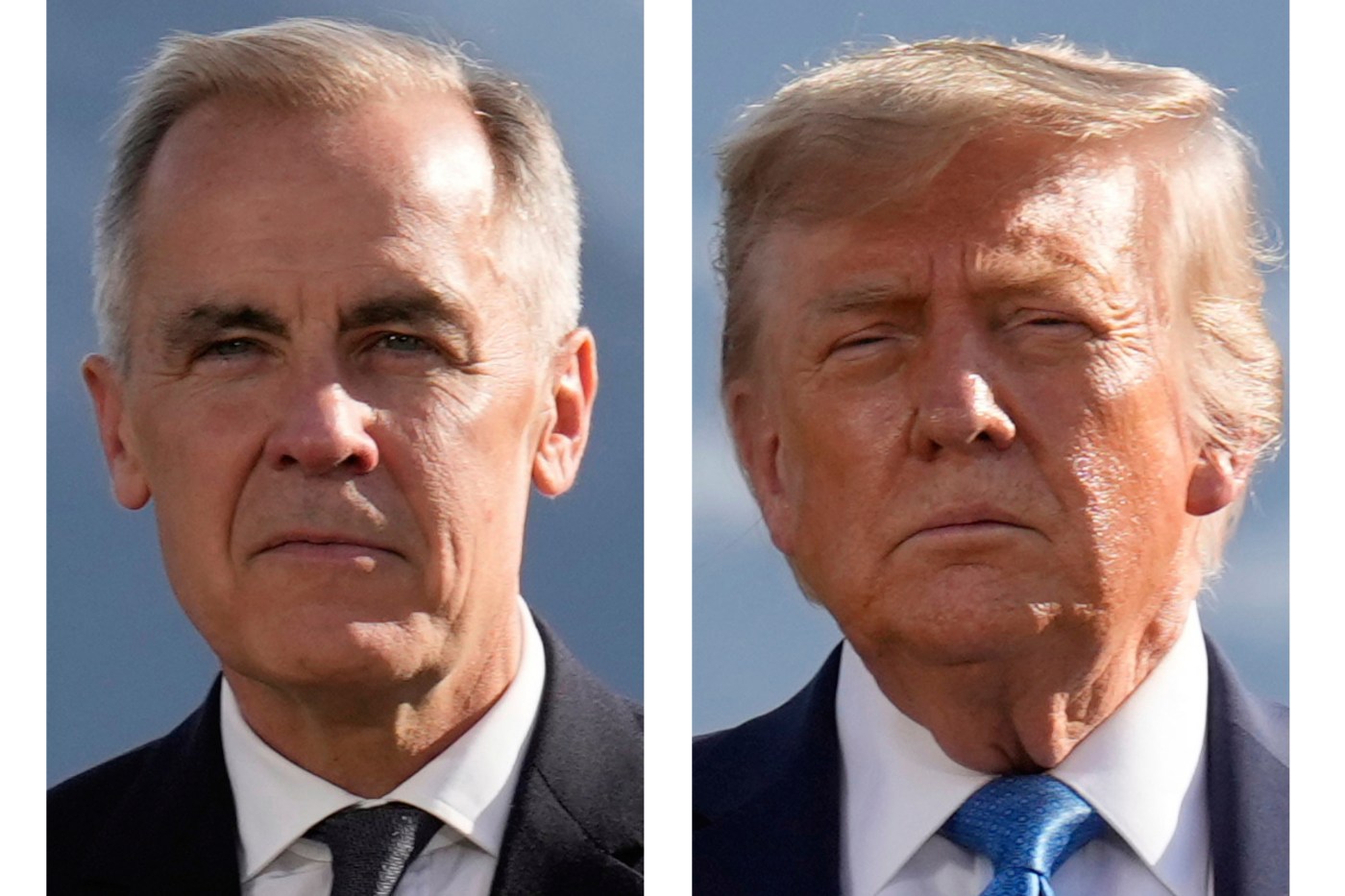
President Donald Trump has issued a stark warning to Canada, threatening to impose a 100% tariff on goods imported from the country if it proceeds with its trade agreement with China. This escalation in tensions marks a significant moment in U.S.-Canada relations, particularly in light of recent comments made by Canada’s Prime Minister Mark Carney at the World Economic Forum in Davos.
In a social media post, Trump stated, “If Carney thinks he is going to make Canada a ‘Drop Off Port’ for China to send goods and products into the United States, he is sorely mistaken.” This response follows Canada’s negotiation of a deal earlier this month aimed at lowering tariffs on Chinese electric vehicles in exchange for reduced import taxes on Canadian agricultural products. Initially, Trump had praised Carney for pursuing a trade agreement that he deemed beneficial.
Trade Minister Dominic LeBlanc clarified that while Canada has resolved “several important trade issues” with China, it is not seeking a free-trade agreement. Tensions between the two leaders have been growing, especially as Trump has pushed for the acquisition of Greenland, straining the NATO alliance. During his comments in Davos, Trump asserted that “Canada lives because of the United States,” prompting a rebuttal from Carney, who emphasized, “Canada thrives because we are Canadian.”
The relationship between Trump and Carney appears to have deteriorated further, as Trump revoked Carney’s invitation to join his “Board of Peace,” an initiative aimed at addressing global conflicts. Trump’s comments regarding Canada’s sovereignty and his suggestion that it might become the 51st state reflect an increasingly confrontational stance.
Political analysts, such as Daniel Béland from McGill University, note that Trump’s attitude towards Carney has shifted dramatically. Béland remarked that after Carney’s recent achievements, including a highly praised speech at Davos, “the gloves are off.” Carney, emerging as a prominent figure advocating for collective action among nations to counter U.S. dominance, stated in Davos, “Middle powers must act together because if you are not at the table, you are on the menu.”
Trump’s recent posts have included dire warnings about China’s potential influence over Canada, stating, “China will eat Canada alive, completely devour it, including the destruction of their businesses, social fabric, and general way of life.” He later asserted that “the last thing the World needs is to have China take over Canada.”
Despite the escalating rhetoric, Canada has not yet reached an agreement with Trump regarding the reduction of tariffs affecting key sectors of its economy. However, Canada has been somewhat insulated from the fallout of Trump’s tariffs through the Canada-U.S.-Mexico Agreement, which is set for review this year.
The ongoing trade situation is complex. Following Trump’s imposition of tariffs, Canada mirrored some of these measures, imposing a 100% tariff on electric vehicles from China and a 25% tariff on steel and aluminum. In response, China imposed similar tariffs on Canadian exports, including canola oil and pork.
As Canada navigates its relationship with both the United States and China, Carney has acknowledged the complexities involved, particularly regarding differing views on human rights. LeBlanc reaffirmed Canada’s commitment to ensuring that its trade relationship “benefits workers and businesses on both sides of the border.”
Canada remains a crucial trade partner for the United States, with approximately US $2.7 billion worth of goods and services crossing the border daily. Canada supplies around 60% of U.S. crude oil imports and is the largest foreign supplier of steel, aluminum, and uranium to the U.S. As the landscape of international trade continues to evolve, the dynamics between these nations will likely remain a focal point in global discussions.