
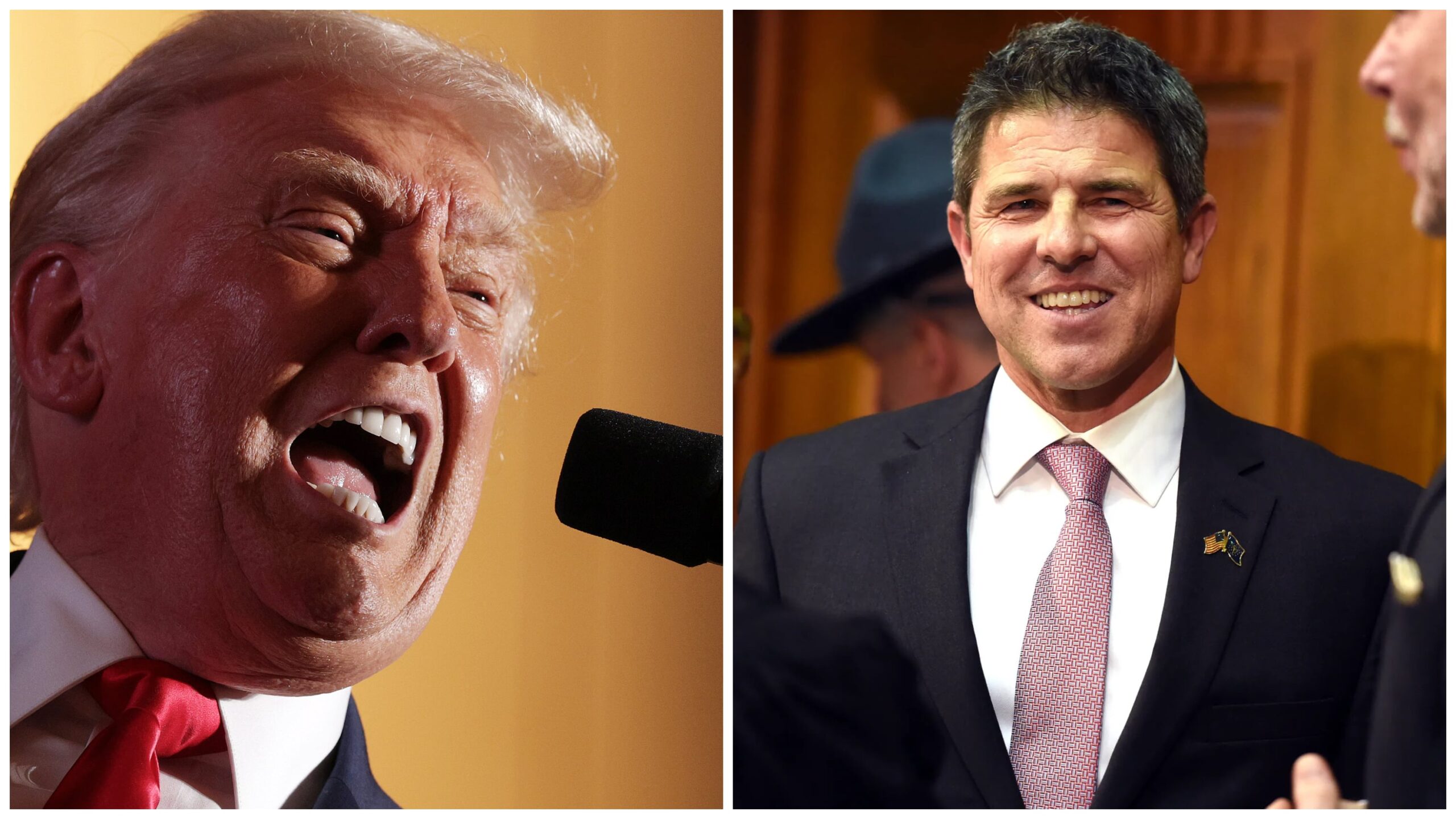
Former President Donald Trump has launched a fresh wave of criticism against Rod Bray, the leader of the GOP-controlled Indiana State Senate, following the Senate’s rejection of a proposed congressional map that would have significantly favored Republican candidates in the upcoming elections. In a post on Truth Social, Trump expressed his discontent early on Saturday, stating, “Republicans in the Indiana State Senate, who voted against a Majority in the U.S. House of Representatives, should be ashamed of themselves.”
The controversy erupted after the Indiana State Senate voted 31-19 against a redistricting plan designed to eliminate the state’s two Democratic congressional districts, potentially allowing the GOP to secure all nine congressional seats in Indiana for the 2026 midterm elections. The proposal aimed to follow the lead of other Republican-dominated states like Texas and Ohio, which have enacted gerrymandering strategies to bolster their political power. However, Indiana’s Senate showed reluctance to adopt similar tactics.
Internal GOP Struggles and Legislative Dynamics
Senate President Pro Tem Rodric Bray had indicated in November that the redistricting effort lacked sufficient support to pass. He subsequently declined to convene the Senate for a special session to consider the matter. Yet, after Trump’s public outcry and intervention from House Speaker Mike Johnson, Bray agreed to bring the redistricting proposal to a vote.
Despite needing only a simple majority of 26 votes, 21 Republicans, including Bray, sided with Democrats to defeat the proposal. Several senators cited Trump’s aggressive rhetoric and his history of divisive comments as motivating factors for their opposition. Among those who publicly voiced their dissent was GOP State Senator Greg Walker, who stated, “I refuse to be intimidated. I made a choice.” Walker, along with others, faced backlash, including threats of violence for their votes against the redistricting plan.
Trump’s Ongoing Engagement with Indiana Politics
Trump’s sustained criticisms of Bray and other Indiana Republicans have been notable. He has suggested that Bray and his supporters should face primary challenges, stating, “I will be there to help!” During a recent press interaction in the Oval Office, however, Trump appeared uncertain about Bray’s identity, referring to him as “a man named Bray.” This confusion raised questions about Trump’s engagement with local political dynamics in Indiana.
The fallout from the redistricting vote highlights the ongoing tensions within the Republican Party as it navigates the complexities of maintaining unity while addressing the evolving political landscape. As the 2026 midterms approach, the implications of this episode may resonate well beyond Indiana, influencing party strategies and candidate alignments across the nation.
The situation in Indiana illustrates the challenges faced by both Trump and local party leaders as they negotiate their political futures in a landscape increasingly marked by significant polarization and strategic maneuvering.