
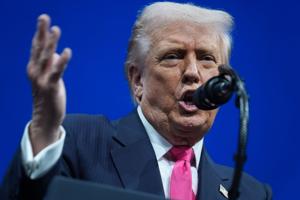
President Donald Trump has issued a new executive order aimed at limiting state-level regulations on artificial intelligence (AI). This directive encourages states to refrain from imposing their own rules, asserting that such regulations stifle innovation and hinder economic growth.
The executive order, announced on March 15, 2024, reflects a growing concern among some Republican leaders that regulatory frameworks could impede the development of AI technologies. Trump’s administration believes that a unified federal approach will better support the burgeoning AI sector.
Support for Deregulation
Proponents of the order, including members of the Republican Party, argue that a deregulated environment fosters competition and accelerates advancements in AI. They contend that stringent state regulations could create unnecessary barriers for startups and established companies alike, ultimately impacting job creation and economic progress.
The National Economic Council, an advisory body within the White House, has endorsed this initiative, suggesting that a consistent regulatory landscape will enable the United States to maintain its leadership position in AI development globally. This perspective aligns with the broader Republican agenda of promoting business-friendly policies.
Conversely, critics express concerns that this move disproportionately benefits large technology companies, allowing them to operate with minimal oversight. Advocates for regulation argue that without adequate safeguards, issues such as data privacy, security, and ethical considerations may be overlooked.
Impact on the Tech Industry and Society
The executive order has sparked a contentious debate within the tech community and beyond. Major players in the AI field, including Google, Microsoft, and Amazon, stand to gain from a more relaxed regulatory environment. These companies have invested heavily in AI technologies and assert that excessive regulations could hinder their ability to innovate.
On the other hand, consumer advocacy groups warn that without regulatory oversight, there is a risk of increased bias in AI algorithms and potential harm to users. The absence of clear guidelines could lead to scenarios where AI systems make decisions without accountability, raising ethical questions about their impact on society.
As the implications of this executive order unfold, states now face the challenge of navigating the balance between fostering innovation and ensuring public safety. Some states may choose to comply with the federal directive, while others could push back by implementing their own regulations, further complicating the landscape for AI development.
The outcome of this initiative will likely shape the future of AI in the United States, influencing everything from business operations to individual privacy rights. As this debate continues, stakeholders from various sectors will be watching closely to see how federal policies evolve and their effects on the technology landscape.