
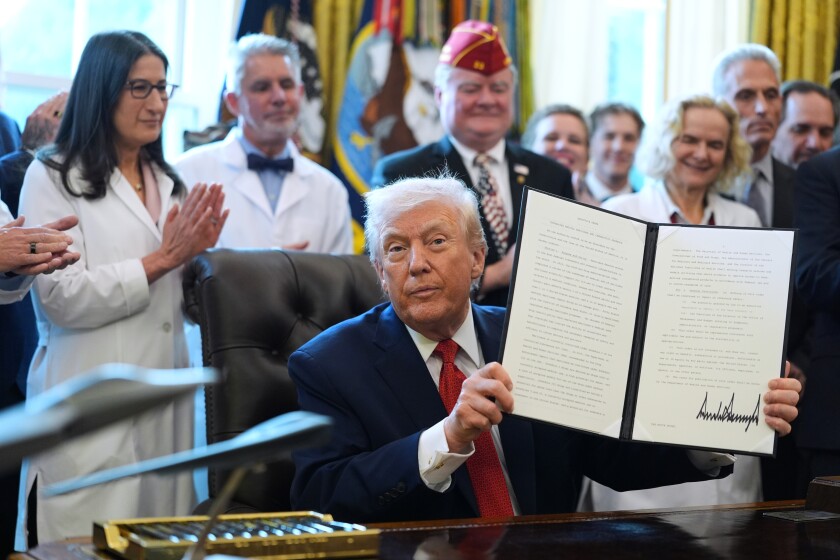
President Donald Trump has ordered a significant shift in the classification of marijuana, moving it from Schedule I to Schedule III of the Controlled Substances Act. This change, announced recently, acknowledges the potential medical benefits of marijuana, a stance long advocated by proponents of cannabis reform. The reclassification is expected to facilitate research and development in medical applications, although it stops short of legalizing the substance.
Historically, marijuana has been classified as a Schedule I substance, which includes drugs considered to have a high potential for abuse and no accepted medical use. This classification was established in 1970 and has faced criticism over the years. In a notable decision nearly four decades ago, Francis Young, then chief administrative law judge at the Drug Enforcement Administration (DEA), concluded that marijuana should not be classified as such. Young argued that marijuana had “currently accepted medical use” and was “one of the safest therapeutically active substances known to man.” His findings, however, were overruled by then-DEA Administrator John Lawn.
The recent reclassification follows a review by the U.S. Department of Health and Human Services (HHS), mandated by President Joe Biden. The review found “credible scientific support” for marijuana’s effectiveness in treating conditions such as pain and nausea associated with chemotherapy. HHS noted that the majority of marijuana users do so in a manner that does not lead to dangerous outcomes. After assessing the risks, HHS concluded that marijuana should be classified in Schedule III, which includes less restrictive substances like ketamine and anabolic steroids.
In May 2024, Merrick Garland, then Attorney General, endorsed HHS’s recommendation, paving the way for Trump’s executive order. Trump presented the reclassification as a victory for “American patients suffering from extreme pain, incurable diseases, aggressive cancers, seizure disorders, neurological problems and more.”
Despite this shift, the reclassification does not equate to full legalization. Medical use will still require approval from the Food and Drug Administration (FDA) for specific cannabis-based products. Furthermore, state-licensed marijuana businesses will continue to operate under federal prohibition, though they may experience some relief from high tax rates thanks to the ability to claim standard deductions on their income tax returns.
Currently, 40 states have legalized marijuana for medical use, with 24 of those states also permitting recreational use. This creates a complex landscape where state laws conflict with federal prohibition, a situation that many argue is increasingly out of touch with public opinion. Polls indicate that a majority of Americans support the reform of marijuana laws.
Trump emphasized that his order “doesn’t legalize marijuana in any way, shape or form.” While this statement is technically accurate, it highlights the continuing tensions between evolving societal norms and existing federal policies. As the landscape of cannabis reform continues to shift, the implications of this reclassification will be closely monitored by advocates, researchers, and lawmakers alike.