
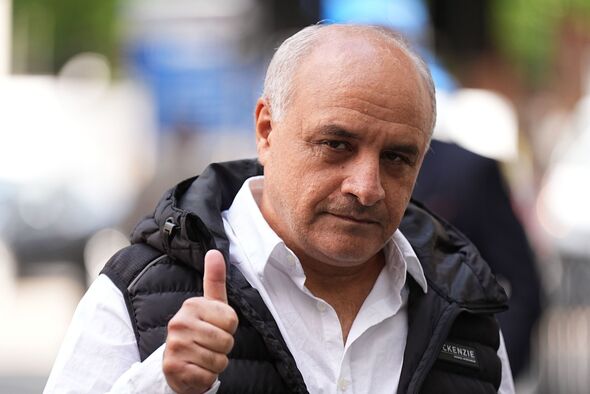
UPDATE: In a significant and controversial move, the Trump administration is preparing to offer refugee status to Hamit Coskun, a man convicted in the UK for burning a Koran, if he loses his appeal in a critical court case on February 17, 2025. This announcement is set against a backdrop of heated debates over free speech, intensifying tensions between the UK and the US.
Coskun, aged 51 and of Armenian-Kurdish descent, was found guilty last year of a religiously aggravated public order offense after he set fire to a copy of the Koran outside the Turkish consulate in London. His conviction was overturned last June, but the Crown Prosecution Service (CPS) is contesting that decision at the High Court, with a ruling expected soon. If he loses, the Trump administration has indicated it will welcome him as a political refugee.
This potential intervention raises urgent questions about the state of free speech in the UK, particularly under the leadership of Sir Keir Starmer. Critics argue that freedoms are eroding, with Coskun himself stating, “I may be forced to flee the UK and move to the USA, where President Trump has stood for free speech and against Islamic extremism.”
On February 13, 2025, during his public protest in Rutland Gardens, Coskun displayed the burning Koran while shouting anti-Islamic remarks. A District Judge condemned his actions as “provocative and taunting,” resulting in a fine of £240 plus costs. The CPS clarified that Coskun is not being prosecuted for blasphemy, a charge abolished in the UK, but rather for his disruptive behavior.
The Free Speech Union has taken up Coskun’s case, arguing that his prosecution represents a broader issue of free expression being stifled in the UK. Lord Young of Acton, the Union’s general secretary, warned that losing this appeal would symbolize the “death of UK free speech,” saying, “It will create a stabber’s veto.”
The Trump administration’s stance is likely to escalate debates surrounding transatlantic free speech rights. Vice President JD Vance, speaking at the Munich Security Conference last year, criticized the decline of free speech in Britain, suggesting that Europe is drifting away from American values.
As this story develops, the implications for Coskun, the UK’s free speech landscape, and US-UK relations remain urgent and complex. Should Coskun seek refuge in the US, he would be able to apply for political asylum and potentially continue his anti-Islamic protests from abroad.
This situation is unfolding rapidly, with many watching closely for the High Court’s decision on February 17. The outcome will not only affect Coskun’s future but also the broader conversation about free speech rights in both the UK and the US.
Stay tuned for more updates as this critical story develops.