
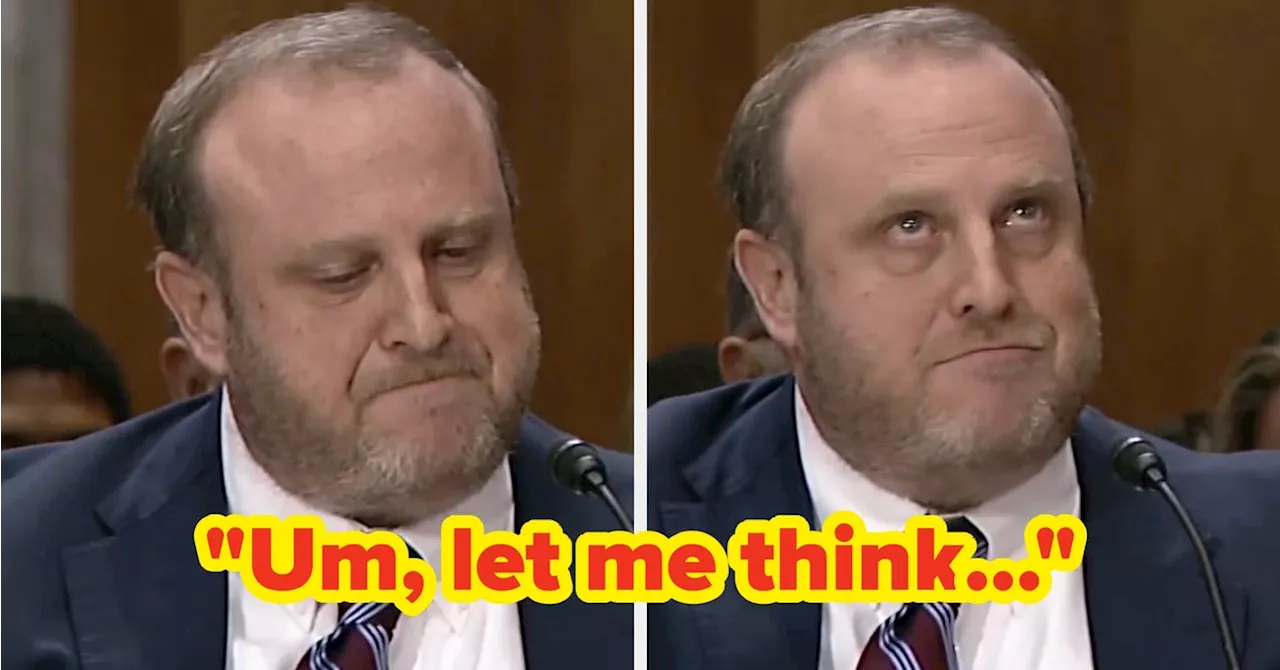
During a recent Senate confirmation hearing, Jeremy Carl, nominated by Donald Trump for a key position in the State Department, encountered significant scrutiny regarding his views on racial identity. The questioning, led by Senator Chris Murphy, centered on the complexities of defining “white culture” and its distinctions from other cultural identities.
Carl’s responses appeared hesitant as he attempted to articulate the values associated with “white identity.” He referenced the book “Born Fighting” by a fellow senator to illustrate aspects of Scotch-Irish military culture, but Murphy pressed him on this reference, stating, “You’re now retreating to ethnic identity.” The senator demanded clarity on how “white identity” is conceptually different from “Black identity.”
In response, Carl suggested that differences could be observed in cultural expressions such as church styles, food, and music. He pointed out that, on average, the tone and style of the white church differ from that of the Black church. When he mentioned the Super Bowl halftime show, noting it was not performed in English this year, Murphy interjected with a chuckle, suggesting that Carl’s argument implied a loss of access to “white churches, or white food, or white music.”
Carl expressed concerns over what he described as a balkanization of American culture due to mass immigration. He stated, “I think that weakens us…I’m not apologizing for it.” His comments sparked laughter and applause from some audience members, who saw Murphy’s line of questioning as a necessary challenge to Carl’s assertions.
Murphy did not shy away from confronting Carl further, suggesting that his difficulty in answering indicated an underlying belief that “white culture is just simply better.” The senator’s remarks drew both support and criticism, with one audience member remarking, “Racism is mostly an emotional reflex. Trying to rationalize it in front of intelligent people doesn’t go well.”
The hearing highlighted the ongoing national dialogue about race and identity in the United States, an issue that remains deeply divisive. Carl’s nomination is now under increased scrutiny, not only for his views but also for the implications they hold for the role he is expected to fulfill in the State Department.
As the confirmation process continues, the conversations surrounding race, culture, and identity in America are likely to remain front and center, reflecting the complexities and challenges of a diverse society.