
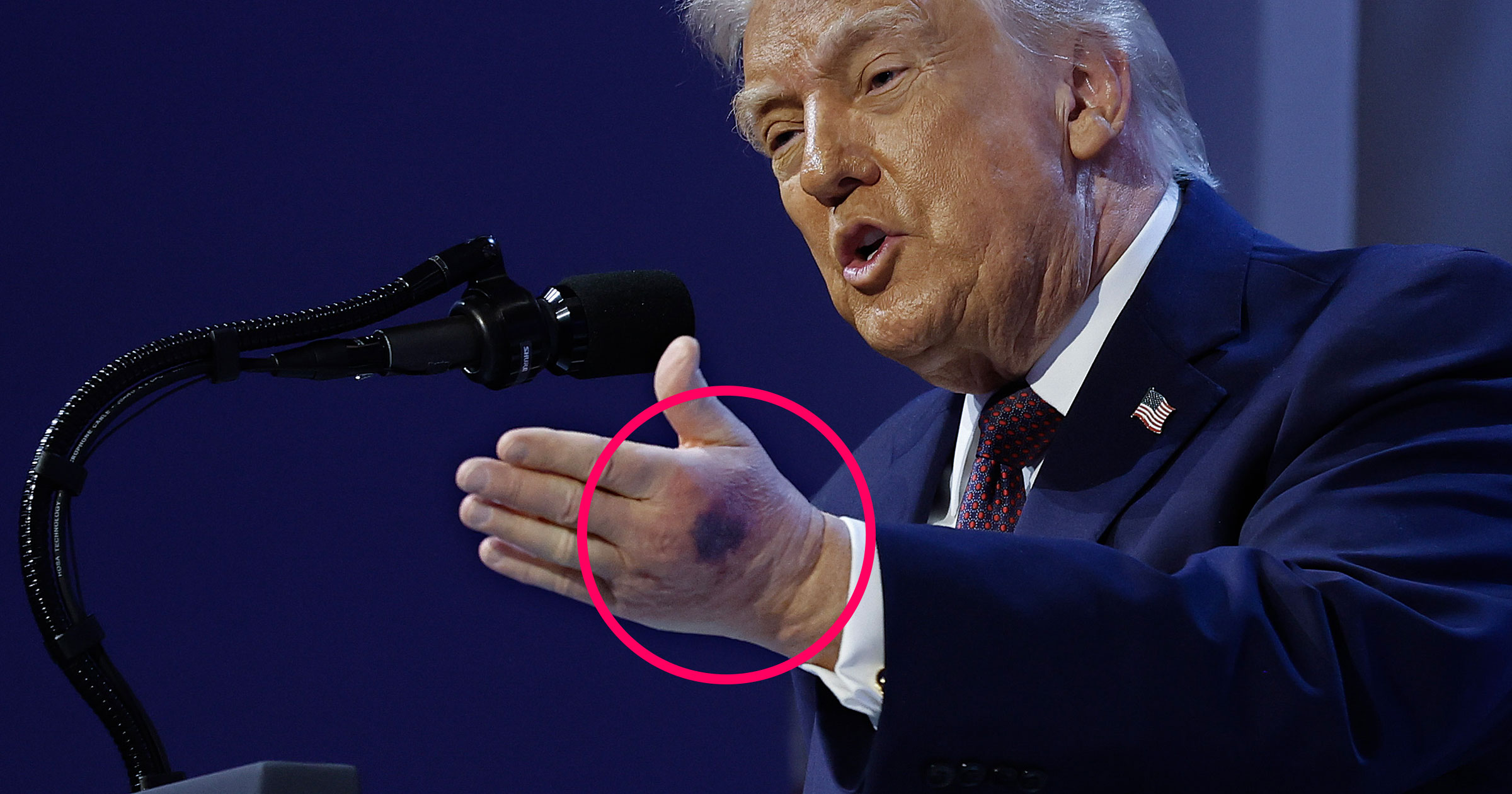
Questions surrounding the physical health of former President Donald Trump have intensified following the appearance of a new bruise on his left hand. This marked a continuation of concerns that began last year when a similar bruise was seen on his right hand. White House press secretary Karoline Leavitt previously attributed the injuries to Trump’s busy schedule of shaking hands, but the emergence of the additional bruise raises further doubts about the official narrative.
During the recent World Economic Forum in Switzerland, images captured the dark bruise on Trump’s left hand, prompting speculation about its origin. Medical experts suggest a potential link between the bruising and blood being drawn through an intravenous needle. Such procedures can cause blood to leak into surrounding tissues if a needle punctures the walls of veins.
This latest health development aligns with Trump’s previously diagnosed condition of chronic venous insufficiency, which was revealed in July 2023. This condition, common among older adults, results in blood pooling in the extremities, leading to swelling and discomfort. Observers noted that Trump, who is now 79 years old, had exhibited significant swelling in his legs prior to this diagnosis.
Dr. Jonathan Reiner, a professor at George Washington University, highlighted a concerning trend regarding Trump’s health. He noted that similar bruising can occur in patients taking potent blood thinners, medications that exceed the effects of aspirin, a drug Trump has been known to use.
The sensitivity surrounding inquiries into Trump’s health was evident when officials reacted strongly to questions about his condition. White House communications director Steven Cheung criticized those raising concerns, stating, “Any so-called medical professionals engaging in armchair diagnosis or false speculation for political purposes are clearly breaking the Hippocratic Oath.”
Aside from physical health issues, there are also growing apprehensions about Trump’s cognitive abilities. Recent observations have highlighted difficulties in his speech and movement, leading to discussions about possible neurological events. Bruce Davidson, a professor of medicine at Washington State University, suggested during a podcast that Trump may have experienced a stroke, impacting his mobility.
The implications of these health concerns extend beyond immediate physical symptoms. Former White House attorney Ty Cobb remarked on a perceived decline in Trump’s cognitive faculties, stating, “He’s always been driven by narcissism… but I think the dementia and cognitive decline are, you know, palpable.”
As the public continues to scrutinize Trump’s health, the visibility of these bruises serves as a stark reminder of ongoing uncertainties regarding his well-being. Observers are left to consider how these developments might shape the political landscape as Trump remains a prominent figure in American politics.