
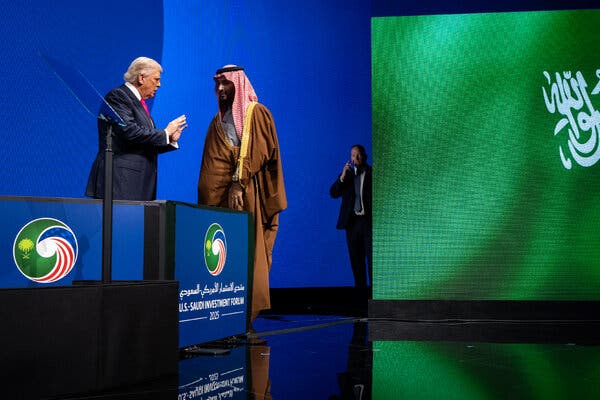
Tensions between Saudi Arabia and the United Arab Emirates (UAE) escalated into a public feud following a phone call from former President Donald Trump in November 2023. This call involved discussions about a private conversation Trump had with Saudi Arabia’s de facto ruler, Mohammed bin Salman. According to multiple sources briefed on the call by Emirati officials, the conversation revealed underlying conflicts that had been brewing for years between these two key U.S. allies.
During the call, Trump reportedly conveyed to the Emirati president, Sheikh Mohammed bin Zayed, that Crown Prince Mohammed bin Salman had requested the imposition of sanctions on the UAE. This request stemmed from the UAE’s alleged support for an armed group involved in Sudan’s ongoing civil war. Four individuals familiar with the discussions indicated that Trump’s communication was pivotal in revealing the tensions that had remained mostly hidden until that point.
In contrast, a Saudi official provided a different perspective, asserting that the request made by Prince Mohammed was focused on imposing sanctions on the Sudanese armed group to hinder its ability to secure external support, rather than targeting the UAE directly. This official argued that the Saudi leadership believed if the Emirati government ceased its support for the group, it could lead to a resolution of the conflict in Sudan.
A U.S. official confirmed that while Prince Mohammed did not ask Trump to impose sanctions on the UAE, he refrained from commenting on the details of the call. The differing accounts highlight the complexities of the diplomatic relationships at play.
Escalation of Diplomatic Conflicts
The fallout from Trump’s call was swift. What had been a simmering tension between the Saudi and Emirati governments quickly erupted into a public dispute. The rift brings to light the intricate dynamics of Middle Eastern politics, particularly in relation to external influences and regional conflicts.
The UAE and Saudi Arabia have historically maintained a strong alliance, largely due to their shared interests in regional stability and economic cooperation. However, the recent developments indicate that fractures in this relationship could have significant repercussions for regional security and U.S. foreign policy in the area.
The implications of this feud extend beyond mere diplomatic disagreements. Both nations play critical roles in the geopolitical landscape of the Middle East and their actions can influence broader regional stability. With ongoing conflicts in Sudan and other neighboring countries, the international community will be closely monitoring how this public rift unfolds.
As the situation continues to develop, it remains essential to observe how the UAE and Saudi Arabia will navigate their relationship in light of these tensions. The fallout from a single phone call has underscored the fragility of alliances in an ever-evolving geopolitical landscape.