
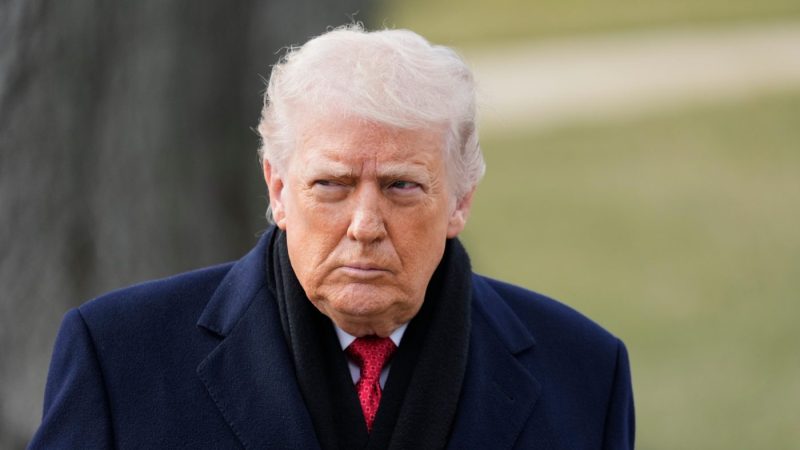
President Donald Trump held a press briefing at the White House on August 20, 2019, addressing the ongoing controversy regarding his interest in purchasing Greenland. This appearance coincided with the first anniversary of his second term, marking a significant moment for his administration.
During the briefing, Trump reaffirmed his administration’s commitment to exploring potential opportunities for expanding U.S. territory. “Greenland is a large landmass with tremendous resources,” he stated. His comments came after reports revealed that he had expressed interest in acquiring the territory from Denmark, prompting a variety of reactions both domestically and internationally.
The Danish government swiftly rejected the notion of selling Greenland, describing it as “absurd.” The announcement sparked widespread discussions about the implications of such a purchase, with many questioning the feasibility of acquiring a territory that is home to approximately 56,000 residents.
Trump’s remarks at the briefing were characterized by a blend of humor and seriousness. He acknowledged the backlash but insisted that the idea was not entirely off the table. “I’m just saying, if it were for sale, I’d be very interested,” he added, highlighting his unconventional approach to foreign policy.
The Greenland controversy has underscored the broader themes of Trump’s presidency, particularly his focus on nationalism and economic expansion. Many analysts have interpreted his comments as part of a strategy to secure resources and strengthen the United States’ geopolitical position.
As the press briefing unfolded, Trump also took questions from reporters, further emphasizing his administration’s priorities. He discussed various topics, including trade negotiations and military readiness, in addition to the Greenland situation. His responses reflected a consistent narrative of prioritizing American interests on the global stage.
The implications of Trump’s remarks extend beyond mere speculation about real estate. The incident has reignited discussions about colonialism and the historical context of territorial acquisitions. Experts suggest that the conversation surrounding Greenland may serve as a pivotal moment in U.S. foreign policy, illustrating the complexities of international relations in the modern era.
As the briefing concluded, it was clear that the Greenland controversy would remain a topic of discussion in political circles. Trump’s unconventional approach continues to challenge traditional diplomatic norms, raising questions about the future direction of U.S. foreign policy under his leadership.
In the weeks following this event, analysts and policymakers alike will likely scrutinize the administration’s actions regarding Greenland and similar territories, as the international community watches closely.