
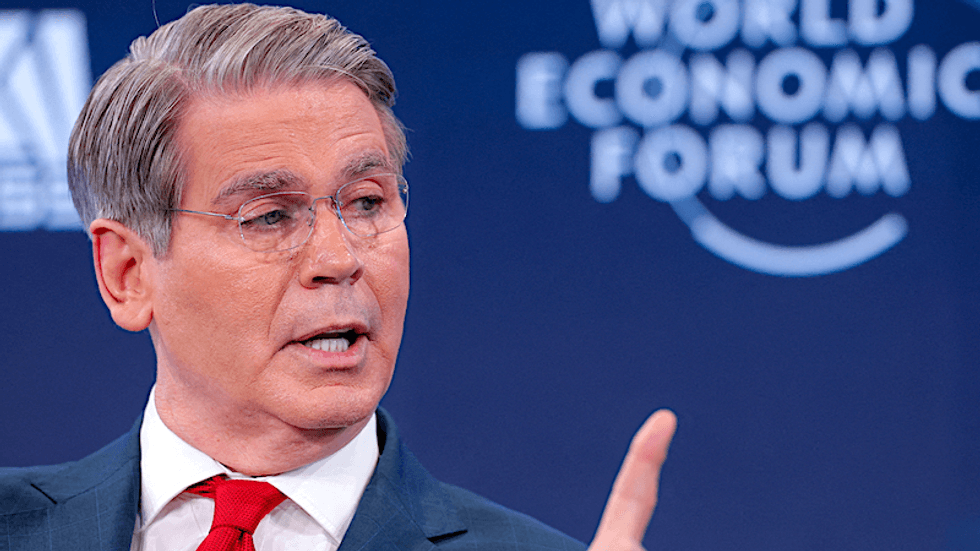
Treasury Secretary Scott Bessent faced significant criticism after he suggested that average middle-class investors might own as many as a dozen homes. The remarks occurred during a forum at the 2026 World Economic Forum, where Bessent responded to a question from Fox Business host Maria Bartiromo regarding former President Donald Trump‘s proposal to restrict large institutional investors from purchasing single-family homes.
Bessent expressed support for Trump’s idea, describing it as a “good idea” but acknowledged that further clarification was necessary. He stated, “We are going to give guidance at some point to see what a mom and pop is. Someone, maybe your parents for their retirement, have bought five, 10, 12 homes.” His comments about the typical middle-class investor owning multiple properties quickly drew ridicule on social media and from political figures.
Critics were quick to label Bessent’s statements as out of touch with reality. Senator Ruben Gallego from Arizona remarked, “Just your everyday soybean farmer, Scott Bessent explaining that mom and pop save for retirement by buying 12 homes. This man is so out of touch it hurts.”
Many took to social media to express disbelief. NFL writer Aaron Schatz questioned, “Whose parents have bought 12 homes?” while author and journalist Otto English added, “Even King Charles doesn’t have 12 homes.” Animator Craig Roblewsky chimed in with, “10 or 12 homes? This guy is just a true man of the people.”
Commentary on platforms like Bluesky highlighted the disconnect between Bessent’s comments and the realities faced by ordinary Americans. User Sloan Ashton noted, “Who among us hasn’t bought an extra dozen homes? This cabinet is filled with billionaires who are incapable of understanding the working poor and middle class.”
The backlash continued with users on social media pointing out the absurdity of Bessent’s remarks. One user, writer Chantal James, asked, “WHOSE parents have 5-12 homes? My parents, who are doing way better than I ever will, have ONE home.”
This incident underscores a growing concern regarding the disconnect between policymakers and the everyday experiences of citizens. As discussions about housing affordability and investment strategies continue, it remains critical for leaders to understand the realities faced by the average family.