
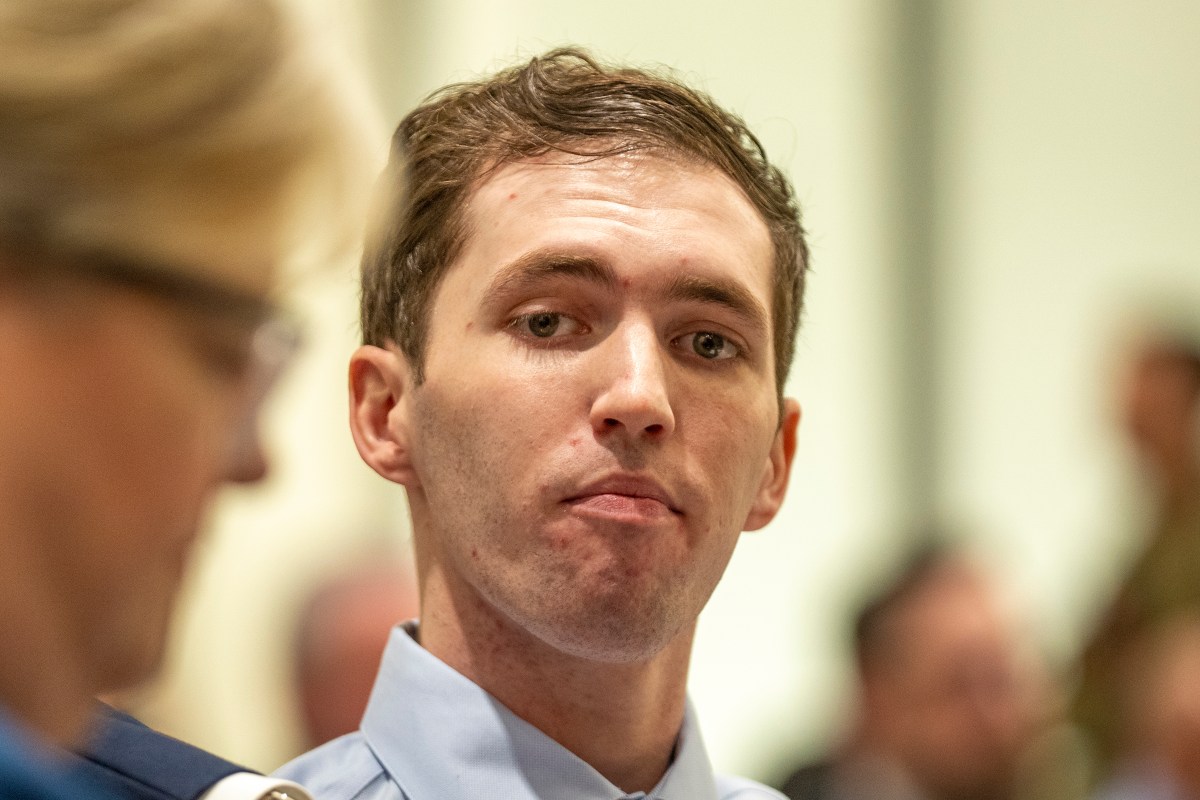
UPDATE: A transcript from a crucial hearing in the murder case against Tyler Robinson, the man accused of killing conservative activist Charlie Kirk, was released today, shedding light on the ongoing legal battle. The hearing took place on October 24, and was partially redacted by Fourth District Judge Tony Graf Jr., with only 246 words omitted from the 80-page document.
Kirk, 31, was fatally shot on September 10 at Utah Valley University in Orem, Utah, during a public event. Robinson, 22, was arrested shortly after and reportedly confessed to the crime to his father. He now faces serious charges, including aggravated murder, obstruction of justice, and felony discharge of a firearm.
The release of the transcript comes after several media outlets, including the Associated Press, advocated for transparency in the case, arguing it is essential for maintaining public confidence in the judicial process.
During the hearing, Robinson’s defense attorney, Richard G. Novak, requested that his client be allowed to appear in civilian clothing rather than jail attire, citing concerns about public perception and the dignity of the courtroom. “He should be depicted as a citizen of the United States with a presumption of innocence,” Novak argued. The judge ultimately ruled that while Robinson could wear civilian clothes, he must remain restrained for safety.
The prosecution, led by Deputy Utah County Attorney Christopher Ballard, expressed that allowing Robinson to wear civilian clothes could complicate identification in a crowded courtroom. The judge indicated that media discussions regarding Robinson’s clothing would be limited to ensure a fair trial.
Robinson’s defense team has raised alarms about the extensive pretrial publicity potentially compromising the fairness of his trial. Novak emphasized the need for an impartial process, stating, “The nature, content, scope, pervasiveness of the pretrial publicity may have a significant impact on the fairness of his trial.”
As the legal proceedings unfold, prosecutors are planning to seek the death penalty against Robinson, with a preliminary hearing scheduled to begin in May 2024. Robinson has yet to enter a plea.
This case continues to evolve, and the public is urged to stay informed as more details emerge. The implications of this trial could resonate deeply within political circles and the broader community, given the high-profile nature of the victim and the serious charges against the defendant.