
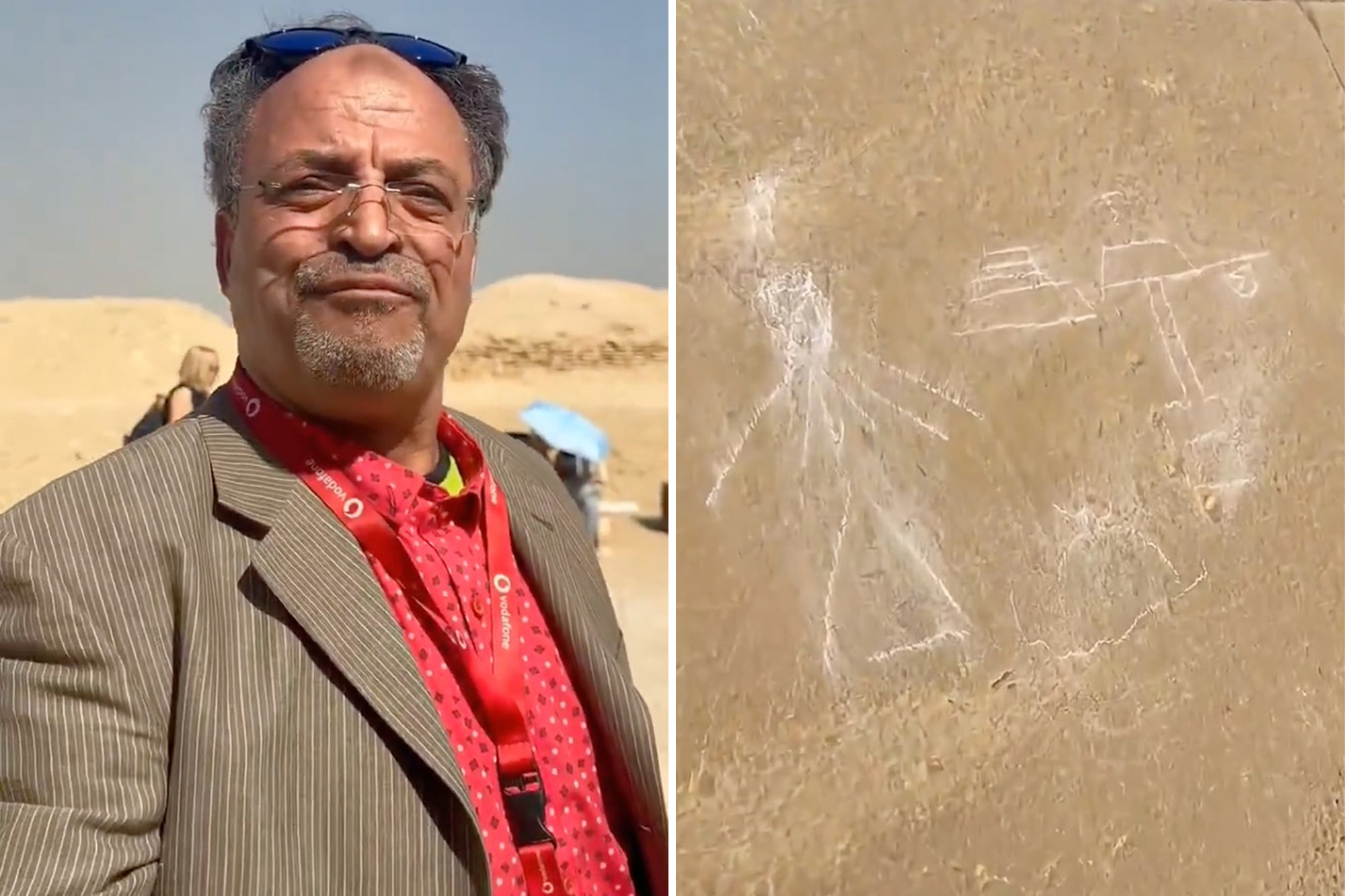
A tour guide in Egypt has been arrested after he allegedly defaced the side of the ancient Pyramid of Unas by sketching a stick figure while leading a group of tourists. The incident occurred during his explanation of the pyramid’s historical significance, which dates back approximately 4,000 years. Footage released by the Egyptian Ministry of Interior captures the moment the guide inscribed the drawing onto the structure’s outer casing.
Following the act, the guide attempted to erase the drawing but was unsuccessful, as shown in the video. Authorities responded after receiving a report about the damage to the antiquity. As a result, the suspect was detained for violating Egyptian law, which strictly protects cultural heritage.
According to the ministry, the accused “confessed to committing the incident as described.” The sketch was subsequently removed by “the competent authorities.” Legal actions have been initiated against him, although specific details regarding those measures have not been disclosed.
Under the provisions of Egypt’s 1983 Antiquities Law, defacing an antiquity can lead to a prison sentence of at least one year and a fine of 500,000 Egyptian pounds, equivalent to approximately $10,400. This law reflects Egypt’s commitment to preserving its invaluable historical sites.
The Pyramid of Unas is located about 32 kilometers (20 miles) from the more famous Pyramids of Giza. It is particularly renowned for containing some of the earliest-known examples of Pyramid Texts, which include over 200 religious spells designed to ensure the protection and resurrection of the pharaoh Unas, who was the ninth and final king of the Fifth Dynasty. This pyramid was constructed in the 24th century BC as a preparation for Unas’ death, marking a significant cultural shift in ancient Egypt towards the worship of the sun god, Re, and the establishment of various sun temples.
The incident has raised concerns about the preservation of Egypt’s rich archaeological heritage, highlighting the importance of adhering to laws that protect such invaluable sites. As tourism continues to play a vital role in Egypt’s economy, maintaining the integrity of its ancient landmarks is crucial for future generations.