
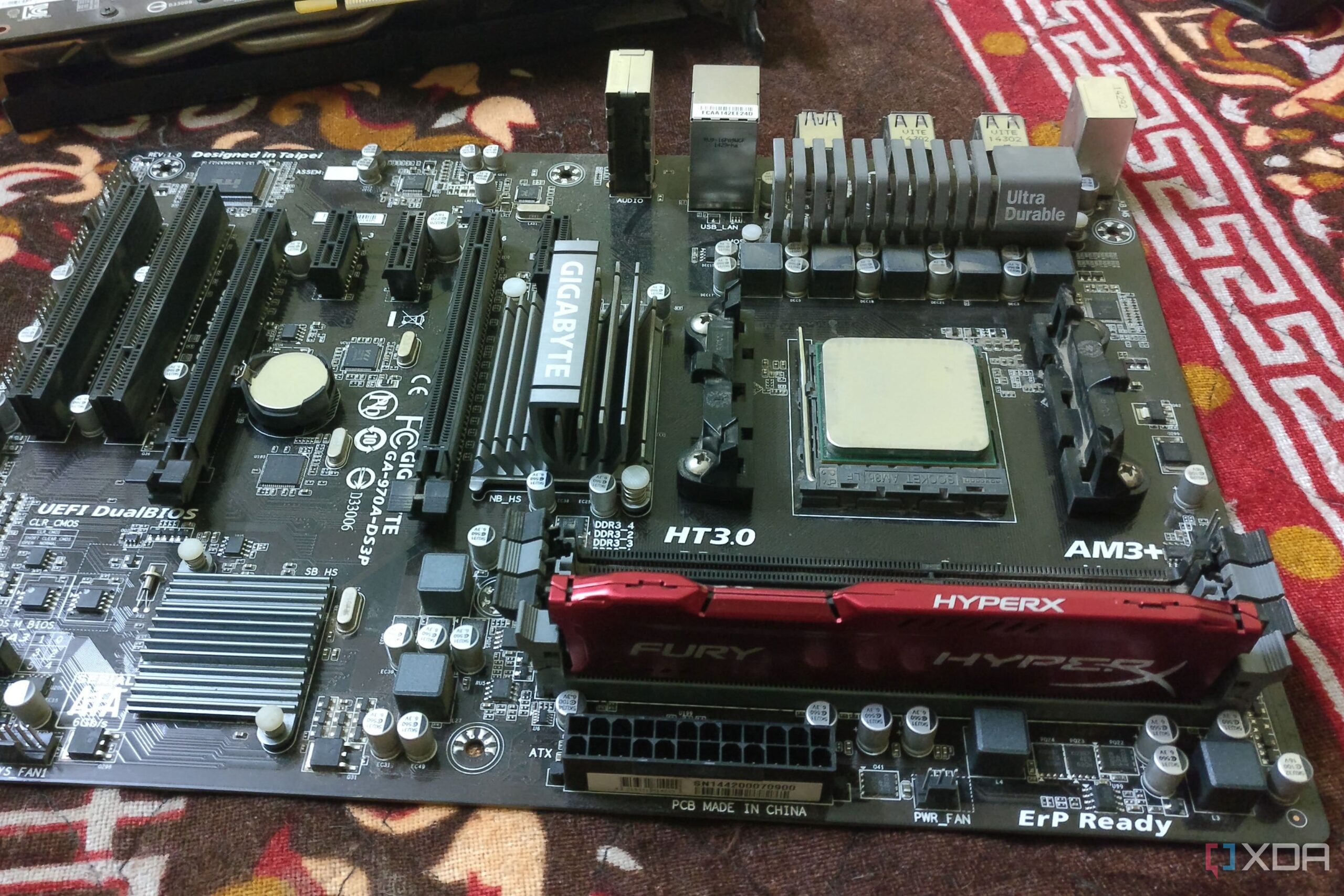
URGENT UPDATE: Tech enthusiasts are increasingly raising concerns over misleading motherboard marketing practices, with four features now deemed overrated and often unnecessary. As consumers gear up for new builds, understanding these pitfalls is crucial to making informed buying decisions.
Motherboards are packed with features that sound premium but often fail to deliver real-world benefits. Many buyers will find themselves paying extra for components that, while marketed as essential, provide little to no value in everyday use.
1. SLI and Crossfire Support
Once a staple in high-end gaming rigs during the early-to-mid 2010s, support for Nvidia SLI and AMD Crossfire has become a costly burden. Despite the allure of multi-GPU setups, performance gains often plateaued at just 70–80%, with significant issues like micro-stuttering and poor game support. As single GPU performance surged with advancements like the GTX 1000 series, the need for dual setups diminished. Buyers are now left with motherboards that demand a premium price without delivering proportional benefits.
2. Misleading Storage Solutions
Some motherboards tout additional third-party SATA controllers as a means to enhance storage capabilities. However, these often bottleneck performance due to a single PCIe x1 link that struggles to support multiple drives. With a theoretical bandwidth ceiling of 500 MB/s to 1 GB/s, the performance of SATA SSDs is compromised, leading to frustration for users expecting faster speeds. This marketing tactic adds unnecessary costs for features that many average consumers will never utilize effectively.
3. U.2 Ports: A Rarely Used Feature
U.2 ports, originally designed for enterprise-level 2.5-inch NVMe drives, have found their way into some consumer motherboards. But these bulky and expensive drives remain underutilized by the average user. The inclusion of U.2 ports can also drain bandwidth from other slots, creating further inefficiency and leaving consumers with a more costly motherboard for a feature few will ever need.
4. Audiophile-Grade Audio Systems
The promise of “audiophile-grade” sound has long been a marketing tactic for motherboards. Despite enhancements like gold-plated jacks and isolated audio zones, the reality is that these features rarely improve sound quality significantly. Most improvements are marginal and do not equate to studio-grade audio quality. For serious audiophiles, external DAC and amplifier setups remain the gold standard, rendering motherboard audio features largely irrelevant.
5. Questionable VRM Designs
Extensive VRM (Voltage Regulator Module) setups have been marketed as essential for high-performance computing. However, many of these designs rely on doublers that do not increase total current. This can lead to micro-stutters when paired with high-end CPUs. While doublers may offer some cooling benefits, they often mislead buyers into thinking they are investing in superior performance.
As the tech community continues to dissect motherboard features, consumers are urged to evaluate their actual needs before investing in costly upgrades. Many of the components marketed as essential are merely gimmicks that add unnecessary expense.
WHAT’S NEXT?
In light of these revelations, prospective buyers should stay informed on motherboard specifications and prioritize features that genuinely enhance performance. By understanding what truly matters, consumers can save money and avoid the pitfalls of flashy marketing.
Stay tuned for more updates as we continue to explore the evolving landscape of computer hardware. Share this article to help fellow tech enthusiasts make informed decisions!