
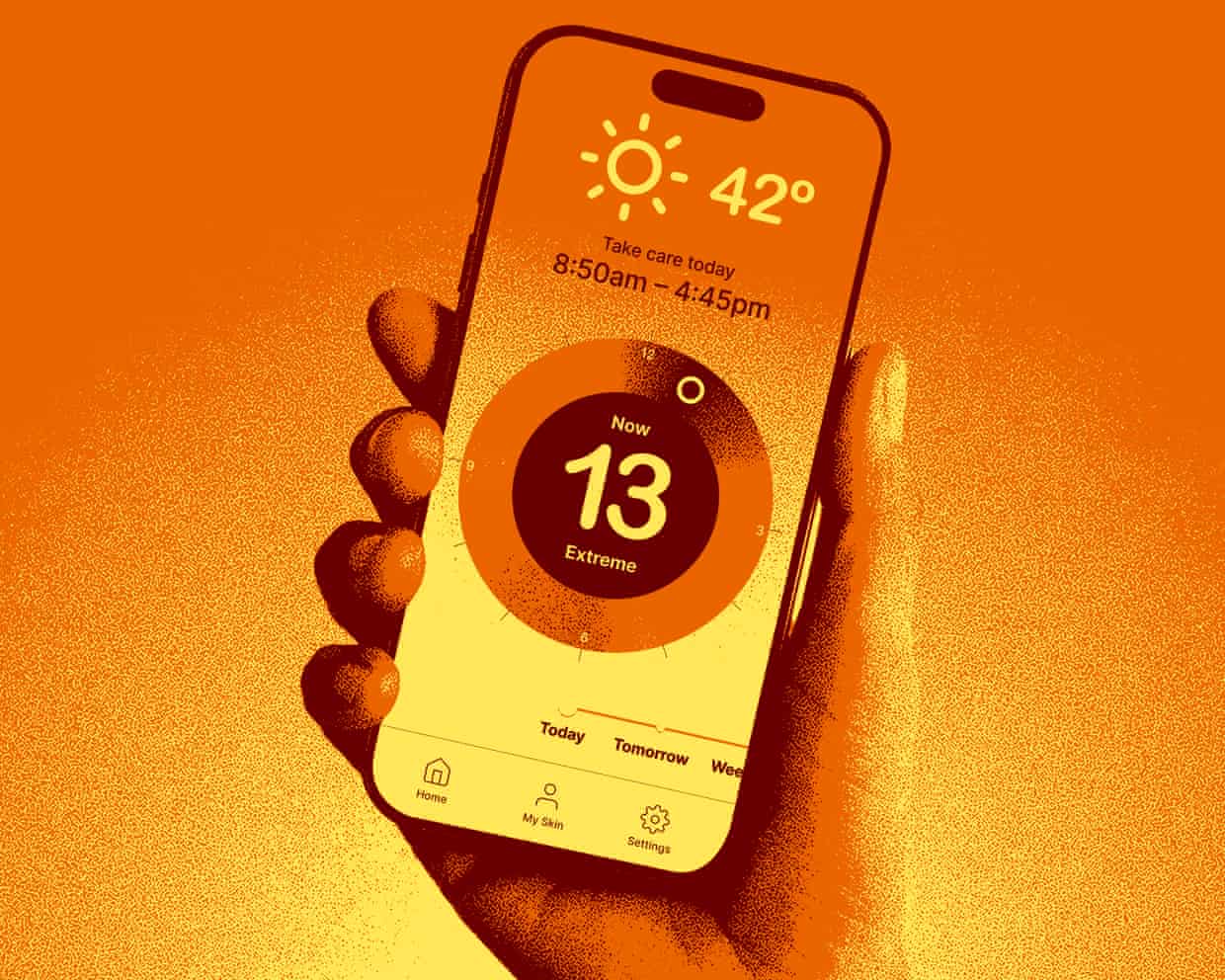
Smartphone applications promoting “safe” tanning routines for users as young as four are becoming increasingly popular, driven largely by social media influencers. These apps, which suggest methods for achieving a “healthy glow,” are contributing to a worrying trend among Australian adolescents toward tanning culture. Titles such as “Get your best tan safely” are common among the top free downloads in the “weather” category on platforms like the Apple App Store.
Users of these apps can select their desired skin tones, ranging from “espresso glow” to “golden bronze.” They are then guided through tanning intensity levels, such as “mild,” “medium,” or “intense.” Some applications even recommend the use of body oils and tanning accelerants, along with tailored routines that encourage deliberate exposure to ultraviolet (UV) radiation. A promotional advertisement for one of these apps features a young woman with tanned skin, captioned: “Didn’t check UV. Didn’t reapply. Didn’t even think about it.”
Health Experts Express Alarm Over Tanning Culture
Dr. Deshan Sebaratnam, a dermatologist and associate professor at the University of New South Wales, strongly criticizes the notion of a “safe tan.” He states, “A tan is actually a distress signal from your skin,” indicating damage caused by UV radiation. He emphasizes that there is no such thing as a safe tan, declaring, “The only safe tan is a fake tan.”
Dr. Sebaratnam warns that any change in skin color signifies damage, regardless of the speed at which it occurs. He highlights the particular risks associated with UV exposure during youth, as early-life damage can lead to a higher lifetime risk of skin cancer. “When you acquire enough mutations, that’s what causes cancer,” he explains.
While melanoma is rare in children, Dr. Sebaratnam has treated young patients who required surgery and lymph node removal due to skin cancer. He categorically denounces the use of tanning oils recommended by some apps, which may include ingredients that increase photosensitivity and elevate the risk of severe burns.
Public Health Concerns Grow
Emma Glassenbury, head of the Cancer Council Victoria‘s SunSmart program, has noted an uptick in parental concerns regarding their children’s pursuit of tanned skin. “We’re hearing from parents who are worried their kids are chasing tan lines again,” she said. A poll released by the Royal Children’s Hospital in December 2023 revealed that 23% of teenagers aged 12 to 17 mistakenly believe that a tan can protect them from skin cancer. Furthermore, half of those surveyed expressed a preference for looking tanned.
The statistics are sobering, as approximately 2,000 Australians die from skin cancer each year. Glassenbury emphasizes the need for heightened awareness of the dangers posed by these tanning applications. “We’re urging all Australians not to buy into these dangerous tanning apps,” she said, noting that they undermine public health efforts aimed at reducing skin cancer rates.
The long-standing campaign by SunSmart has sought to shift Australian attitudes away from tanning, emphasizing that promoting tanning trends significantly jeopardizes these public health initiatives. The rise of tanning apps represents not only a troubling cultural shift but also a serious public health challenge that demands urgent attention.